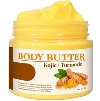


Body butter looks straightforward when you see the finished product: a rich moisturizer in a wide-mouth jar, perhaps built around shea butter, mango butter or a signature fragrance.
Developing one for commercial sale is less straightforward.
A formula that feels excellent in a laboratory sample may become too greasy in humid weather, develop a grainy texture after repeated temperature changes, soften during summer shipping or simply feel different when it is produced at scale. Packaging can create another set of problems. A beautiful jar is of little value if the formula leaks, reacts with the liner or arrives with a different texture from the one the brand originally approved.
This is why we prefer to think of body butter as a product system rather than just a formula. Texture, lipid structure, fragrance, packaging, filling conditions, stability and the destination market all influence the finished product.
For brands developing a private label body butter, getting those decisions right early usually matters more than adding another fashionable ingredient to the label.

Why Body Butter Works So Well for Private Label Brands
Body butter occupies an interesting space in a body care line. It feels more substantial than an everyday lotion, yet it can still be designed for regular use rather than positioned only as a treatment-style balm.
That richer sensory experience gives brands room to differentiate. A product can be dense and protective, soft and creamy, lightly whipped, fragrance-led or deliberately fast-absorbing. The same category can work for a winter collection, a spa range, a premium gift set or a botanical body care line.
The starting point, however, should be the customer rather than the ingredient story.
A brand selling mainly through e-commerce may care about heat exposure, parcel handling and how quickly the product absorbs under clothing. A spa line may deliberately want more slip and massage time. A premium fragrance brand may accept a richer after-feel because scent, jar design and ritual are a larger part of the experience.
These are very different briefs, even if all three products are called "body butter."
If body butter is part of a wider product collection, our Private Label Body Care Guide explains how different body care formats, formulas, packaging and manufacturing decisions fit into a complete product line.
Body Butter, Body Cream or Body Lotion?
The names are sometimes used loosely in the market, but the formats are not interchangeable from a product-development perspective.
| Format | Typical Experience | Often Makes Sense For |
|---|---|---|
| Body lotion | Light, easy to spread, quick to absorb | Daily hydration, warmer climates, broad-use body care |
| Body cream | Richer and more cushioning than lotion | Everyday dry-skin care and mid-rich textures |
| Body butter | Dense, substantial and more protective | Intensive moisture, premium care, spa and sensory-led concepts |
The choice is not simply "light versus rich." Formula structure influences the type of packaging you can use, how the product behaves in different climates, production conditions and, ultimately, what customers expect when they open the pack.
For that reason, a brand planning a complete body care range may decide to offer both lotion and body butter rather than asking one formula to serve every use occasion.
For a deeper comparison of product format, texture, packaging and brand positioning, see our Body Butter vs Body Lotion vs Body Cream guide.
For a broader look at moisturizer formats and formula direction, see our private label body moisturizer formula guide.
Start With Formula Structure, Not the Hero Butter
One of the first questions we would clarify in an OEM project is whether the desired product should be anhydrous or emulsified.
That decision has a much greater effect on texture, preservation, filling and stability than whether the front label says shea, cocoa or mango butter.
Anhydrous Body Butter
An anhydrous butter is built without intentionally added water. Its structure normally comes from a combination of solid butters, liquid oils or esters, and sometimes waxes or other structurants.
This route can support a relatively simple ingredient story and a satisfying melt-on-skin texture. It can also be technically unforgiving.
Natural lipids change structure as they heat and cool. If the balance of hard and soft materials is wrong-or the thermal process is poorly controlled-the result may be graininess, oil bleed, excessive hardness or a product that becomes much softer than expected in transit.
So when evaluating an anhydrous sample, we are interested in more than how it feels on the day it leaves the laboratory.
Emulsified Body Butter
An emulsified butter contains a water phase as well as oils and butters. Emulsifiers, humectants, preservatives and texture modifiers allow the product to retain a substantial, creamy feel while often absorbing more cleanly than a traditional oil-rich butter.
That can be particularly useful for brands that like the positioning of body butter but do not want an extremely oily finish.
The trade-off is a different set of technical responsibilities. Once water is part of the formula, emulsion stability, preservation, microbiological control and pH become important parts of development.
Whipped and Climate-Adapted Textures
Whipped body butter is a sensory variation rather than simply another ingredient list. Controlled aeration creates an airy, scoopable texture and strong visual appeal, but the incorporated air also affects filling, volume, collapse and sensitivity to heat.
Likewise, a body butter intended for warm distribution may need a deliberately different lipid structure and emollient profile. Making the product harder by adding wax is not automatically the answer; the jar may become more stable while the application becomes draggy and unpleasant.
The formula has to solve both problems at once.

Useful Starting Architecture
These ranges are development references rather than finished formulations. Actual ratios depend on raw-material specifications, the target texture, processing method, packaging and stability requirements.
| Formula Route | Illustrative Starting Direction | Main Development Question |
| Anhydrous | Approx. 35–70% solid butters, 20–50% oils/esters, with structurants as needed | Will it remain smooth and stable through temperature changes? |
| Emulsified | Approx. 50–75% water phase and 15–30% oils/butters with an appropriate emulsifying system | Can richness and clean absorption be balanced without compromising stability? |
| Whipped | Lipid base with controlled aeration | Will volume and texture survive filling, storage and transport? |
| Hot-climate direction | Modified lipid structure with lighter-feel emollients | Can heat resistance improve without making the product waxy? |
The percentages are not the product concept. They are simply tools for reaching it.
"Rich but Non-Greasy" Needs a Better Definition
This is one of the most common phrases in a body butter brief, and also one of the least precise.
Two people can apply the same sample and disagree about whether it feels greasy. Instead of arguing over adjectives, sampling becomes much more productive when the desired experience is broken into things that can actually be evaluated: how easily the product is picked up from the jar, how quickly it spreads, the amount of drag during rub-in, how long it takes to absorb and what remains on the skin afterwards.
A winter butter, for example, may intentionally leave a noticeable protective film. That would be undesirable in a daytime product designed for a warm climate. A massage butter needs enough playtime to remain workable, while a customer getting dressed immediately after a shower is likely to prefer a much faster dry-down.
Fragrance matters here as well. A warm gourmand scent can make the same base feel heavier and more indulgent than a fresh citrus or clean floral direction. For that reason, final sensory approval is more meaningful when the intended fragrance has already been incorporated into the sample.
Texture is not decoration. For body butter, it is part of the commercial specification.
Shea, Cocoa and Mango Butter Are Not Interchangeable
Hero ingredients matter, but not always for the reasons marketing copy suggests.
Shea butter is familiar to consumers and works naturally with nourishing, botanical and dry-skin positioning. In formulation it can contribute richness and cushion. Push it too far, however, and the rub-out may become heavy; processing also matters because poorly controlled crystallization can contribute to graininess.
Cocoa butter tends to bring more firmness and structure. That can be useful in richer or more protective products, although an unbalanced system may become stiff or waxy.
Mango butter is often useful when the desired profile is smoother and somewhat less heavy while still retaining a botanical-butter story.
In practice, a well-balanced commercial body butter often gets better results from combining different lipids than from maximizing one recognizable butter simply so a larger percentage can be printed in marketing materials.
For a deeper comparison of butter selection, sensory roles and blending strategy, see our guide to shea butter, cocoa butter and mango butter in body butter formulas.
When Body Butter Goes Wrong
Three complaints appear repeatedly in body butter development: greasy feel, graininess and melting. They can look like simple problems, but the cause is rarely as simple as "too much oil" or "not enough wax."
A greasy after-feel usually reflects the overall emollient system. Changing part of the heavy oil phase, adjusting the solid-butter balance or modifying the sensory system may clean up the finish without making the product feel thin.
Graininess is different. Natural butters contain lipid fractions that can crystallize differently when a batch experiences uncontrolled heating or cooling. The melting temperature, hold time, cooling rate, agitation and filling temperature may all influence the final structure. A smooth sample immediately after filling does not prove that the texture will remain smooth after storage.
Melting and oil separation become particularly important when the product will travel through warm warehouses, delivery vehicles or summer fulfilment networks. The right response is to test the formula under relevant conditions and adjust the structure intelligently-not simply make it harder until it no longer feels like the product the brand originally wanted.
For a deeper troubleshooting framework, see our guide to common body butter formula problems, including greasy feel, graininess, melting and stability.
Packaging Has to Work With the Formula
Body butter packaging is usually discussed in terms of appearance: glass looks premium, PET is practical, aluminum can support a minimalist aesthetic.
For development, the first question is more basic: will the product and the pack work together?
A wide-mouth jar remains the most forgiving option for dense or whipped textures because the customer does not have to force the formula through an opening or pump. PP and PET also keep freight weight relatively low, which can matter for an e-commerce product.
Glass can give a collection more physical presence, but the brand takes on additional weight and breakage considerations. Aluminum can look excellent for natural or refill-oriented concepts, provided the liner is suitable for the actual formula.
Softer emulsified butters create more options. Some can work in tubes or suitable airless systems, but that decision should be made with the finished viscosity rather than an early packaging mood board. A pack that dispenses correctly at room temperature may behave differently after cold storage.
Compatibility work should therefore use the final formula, fragrance and decoration wherever possible. Seals, liners, leakage, discoloration, label or print performance and changes in odor all deserve attention before a large packaging order is committed.
For a wider comparison of jars, bottles, tubes and other packaging options, see our Private Label Body Care Packaging Guide.
A Good Sample Still Has to Survive the Real World
There is a point in product development where repeatedly smelling and rubbing a sample on the back of a hand stops telling you very much.
The next questions are about what happens over time.
For body butter, stability work may track changes in appearance, odor, firmness or viscosity, separation and crystallization under different storage conditions. Temperature cycling can be especially revealing for lipid-rich systems because a texture that looks stable at a constant room temperature may respond differently when it is repeatedly warmed and cooled.
Packaging compatibility belongs in the same conversation. Formula and package should be assessed together for leakage, seal performance, liner interaction, dispensing and visual changes.
For emulsified products, microbiological control and an appropriate preservation strategy also need to be built into development. A "natural" positioning or high percentage of botanical butter does not remove that requirement.
Scale-up then adds another variable. Heating, mixing and cooling do not behave exactly the same way in a production vessel as they do in a laboratory beaker. Filling temperature can change texture; cooling can affect
crystallization; aeration can influence the apparent volume of a whipped product.
This is why the approved sample should be thought of as a reference standard, not the end of development.
Climate and Sales Channel Change the Brief
It is tempting to divide body butter markets into simple geographic groups-rich products for cold countries and lighter ones for hot countries. Reality is more complicated.
A product sold in Northern Europe may still sit in a warm warehouse. A U.S. DTC brand may ship from a fulfilment centre to several climate zones. A Middle Eastern premium product may need a rich fragrance story while still coping with considerable heat during distribution.
Sales channel can therefore matter almost as much as geography.
Retail products need to maintain shelf appearance. E-commerce products have to survive parcel handling. Spa formulas may prioritize massage playtime. Giftable DTC products can put more emphasis on whipped texture, fragrance and presentation, but only if those features remain intact when the parcel reaches the customer.
Instead of asking, "Is body butter suitable for this market?", a better development question is:
What will happen to this product between the filling line and the customer's bathroom?
That usually leads to a more useful formula brief.
From Product Idea to OEM Production
A private label body butter project does not need an intimidating 15-step process. Most projects can be understood in four stages.
First, Get the Brief Right
At the beginning, we need enough information to understand the commercial idea. That usually means knowing who the product is for, where it will be sold and what the customer should feel when using it.
The brand does not need to arrive with a finished formula. In fact, it is often more useful to bring a good reference product and explain what you like and dislike about it. "I like the cushion but want a faster dry-down" gives a formulator more useful direction than a long list of fashionable ingredients.
Price positioning and order volume belong in this discussion too. They affect what formula and packaging options are commercially realistic.
Then Build and Refine the Sample
Once the formula route is clear, laboratory samples establish the texture, fragrance, appearance and after-feel.
This stage is rarely improved by giving feedback such as "make it more premium." More specific comments-softer pickup, less oily residue, longer massage time, a firmer jar texture-make the next sample much easier to develop.
Not every project needs many rounds. What matters is reaching a specification both sides understand well enough to reproduce later.
Lock Formula and Packaging Together
Packaging should be confirmed against the approved formula, followed by the stability and compatibility work appropriate to the project.
This is also the right time to check destination-market requirements, because changing a claim, ingredient or label after artwork and packaging have been finalized can create unnecessary rework.
Scale It Without Losing the Product
Bulk manufacturing is not simply a larger laboratory batch.
Processing parameters have to be controlled so the production batch stays close to the approved reference in appearance, fragrance, texture and fill. After filling and packing, finished-product checks give the brand and manufacturer a common standard for release.

Brands looking for a broader view of this process can also review Poleview's OEM/ODM personal care manufacturing capabilities.
What Actually Changes MOQ, Cost and Lead Time?
There is rarely a useful answer to "What is your MOQ?" until the manufacturer understands what is being made.
A body butter using an established formula and standard jar has a very different supply chain from one requiring a custom fragrance, special-color container, printed lid and individual retail carton. In many projects, packaging-component minimums influence the commercial MOQ as much as the formula itself.
Cost works the same way. Butter and oil selection matters, but so do fragrance, specialty ingredients, decoration, secondary packaging, testing and the number of units over which development and setup costs are spread.
Lead time is affected by how much has to be created from scratch. Formula revisions take time; custom packaging can take considerably longer than selecting an existing component; compatibility work and market documentation can add further stages.
The useful question is therefore not "What is the cheapest body butter you can make?" It is:
What specification gives the brand the product experience and shelf position it needs at a commercially workable cost?
That is a much better OEM conversation.
Regulatory Planning Should Start Before Artwork
Destination market matters because cosmetics are not placed on every market under the same regulatory framework.
In the European Union, cosmetics are governed by Regulation (EC) No 1223/2009. Requirements include an EU Responsible Person, product safety assessment, a Product Information File and notification through the Cosmetic Products Notification Portal before applicable products are placed on the market. Brands should confirm the responsibilities and documentation for their particular product with the Responsible Person or qualified regulatory adviser.
In the United States, MoCRA introduced facility-registration and cosmetic product-listing requirements for businesses to which those provisions apply, together with exemptions in defined circumstances. Current requirements should be checked against FDA guidance before launch.
The practical OEM lesson is simple: tell the manufacturer where the product is going before the formula, claims and artwork are locked.
Late compliance changes tend to be expensive changes.
Developing a Body Butter for Dry Skin or a Premium Line
"More shea butter" is not a complete dry-skin strategy.
A product intended to feel comforting on dry skin has to balance emollient softness, occlusive character, spreadability and the amount of film that remains after application. In an emulsified system, humectancy can also be part of the design.
Premium positioning is equally multidimensional. Fragrance, the way the butter melts under the fingers, jar weight, decoration and the ingredient story all influence perceived value. A relatively simple formula in excellent packaging with a distinctive sensory profile may feel more premium than a complicated formula with a long ingredient story but an ordinary user experience.
This is where the planned supporting article How to Develop Body Butter for Dry Skin and Premium Body Care Lines should go deeper. The Pillar Page only needs to establish the decision framework.
What Should You Tell a Manufacturer Before Sampling?
You do not need to send a 16-point questionnaire to start a useful conversation.
Begin with the customer and the market: who will use the product, where it will be sold and whether you are aiming for an accessible daily-care product, a natural body care concept, spa positioning or a more premium line.
Then describe the experience. Tell the manufacturer whether you imagine something dense, whipped, creamy, fast-absorbing or intentionally protective. If you already have hero ingredients, a fragrance direction, claim ideas or a reference product, include them-but leave room for the formulation team to tell you when those ideas conflict.
Finally, give the commercial boundaries. Pack size, packaging style, expected order quantity, target cost or retail level, destination market and approximate launch timing help turn an interesting sample into something that can actually be manufactured.
A good brief does not need to be long.
It needs to make the trade-offs clear.
Frequently Asked Questions
Q: 1. What type of body butter is best for a new private label brand?
A: There is no universal best formula. An emulsified butter is often worth considering when a brand wants richness with cleaner absorption, while an anhydrous system can suit minimalist, massage or more intensive body care concepts. Climate, packaging, positioning and sales channel should influence the choice.
Q: 2. Can body butter be rich without feeling greasy?
A: Yes. Richness is not the same thing as oiliness. Cushion, viscosity, spread, absorption and residual film all contribute to the sensory profile. Adjusting the butter and emollient system can change the finish without turning the formula into a light lotion.
Q: 3. What packaging works best for body butter?
A: Wide-mouth PP or PET jars are versatile for many dense formulas. Glass can support premium positioning, while tubes and airless packs may work for softer formulations. The correct pack depends on viscosity, temperature behavior, dispensing and distribution.
Q: 4. Why does body butter sometimes become grainy?
A: Graininess can develop when the lipid structure crystallizes unevenly, particularly after inappropriate heating, cooling or temperature exposure. Formula composition and production conditions should be considered together when troubleshooting it.
Q: 5. Does body butter need stability testing?
A: Commercial products should be evaluated under conditions relevant to the formula, packaging and distribution plan. The exact test program depends on the product, but appearance, odor, texture, separation and packaging compatibility are common areas to monitor.
Q: 6. Can an existing body butter formula be customized?
A: Yes. Depending on the manufacturer's development model, an existing base may be adjusted for texture, butter blend, emollients, fragrance, color, selected ingredients and packaging. A more extensive custom project may be more appropriate when the desired sensory profile or formula architecture is substantially different.
Q: 7. How long does private label body butter development take?
A: There is no single reliable timeline. A straightforward project based on an established formula and available packaging will move differently from a fully custom formula with several sampling rounds and custom components. Testing, artwork, packaging availability and destination-market requirements can all affect the schedule.
The Best Body Butter Is the One That Still Works After the Sample
A successful private label body butter has to do more than impress during the first sample review.
It has to feel right to the customer, support the brand's positioning and remain reproducible when hundreds or thousands of units move through production, storage and shipping.
That is why formula, texture and packaging should not be developed as separate decisions. A lightweight mango butter cream, a dense winter shea butter and an airy gourmand whip may all belong to the same product category, but they require very different development priorities.
If you already have a concept in mind, explore Poleview's custom body butter manufacturing service to review formula directions, texture customization, packaging and OEM/ODM options.
Or send us your target market, reference product and packaging idea. That is usually enough to start a much more useful body butter development conversation.