



Handmade Soap
Private Label Handmade Soap Manufacturer in China
Poleview is a China-based personal care OEM/ODM manufacturer supporting beauty, bath, wellness and personal care brands with private label and custom handmade soap development.
We manufacture a wide range of bar soap concepts, including cold process, botanical, ingredient-led, exfoliating and specialty soaps. Formula, fragrance, color, bar weight, shape, logo embossing and retail packaging can all be developed around your brand positioning, target market and launch plan.
Some brands come to us with a clear formula brief and finished packaging concept. Others begin with a product idea and need help choosing the most practical soap system, ingredients and packaging route. In both cases, our role is to help turn the concept into a product that can be sampled, manufactured consistently and prepared for commercial sale.

Personal care manufacturing and OEM/ODM experience since 1995.
Integrated production, R&D, filling and packaging facilities.
Supporting product development, production, QC and export projects.
Supporting flexible private label and custom manufacturing programs.
Private Label Handmade Soap Types We Manufacture
Handmade soap is not a single product category from a manufacturing perspective. Different formulas can require different processing methods, curing conditions, molds and packaging, so the right starting point depends on what the brand wants the finished bar to look and feel like.
Cold process soap is a strong option for brands seeking a traditional, artisanal or naturally positioned product. Plant oils, fragrance, botanical powders, color and selected functional ingredients can be adjusted according to the concept. Because the bars need sufficient conditioning and curing, formula composition, hardness and lead time should be considered early rather than after the packaging has already been selected.
Botanical and ingredient-led soaps are often developed around recognizable materials such as turmeric, clay, charcoal, goat milk, plant oils or herbal powders. These ingredients can help create a clear product story, but they also influence color, fragrance, hardness and long-term appearance. A strong concept therefore needs to work technically as well as visually.
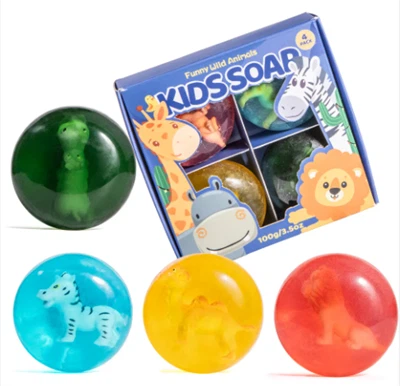
For brands looking for more distinctive retail presentation, soap can also be developed with exfoliating particles, decorative effects, customized shapes or logo embossing. Gift, hospitality and seasonal programs may use different bar sizes or molds, while simpler rectangular bars usually offer more flexibility in production and packaging.

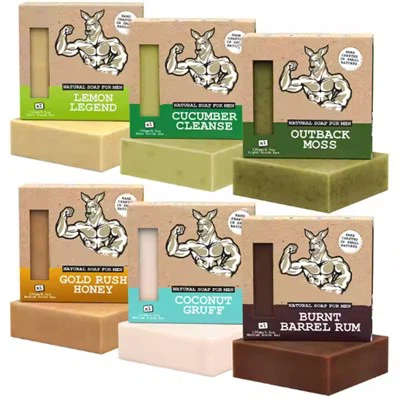
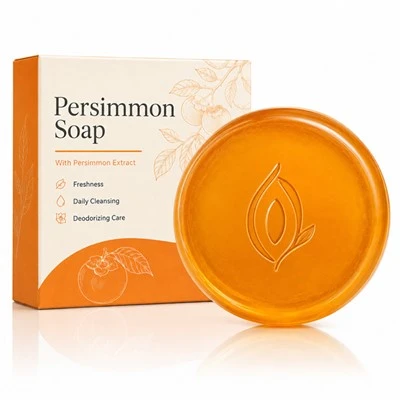
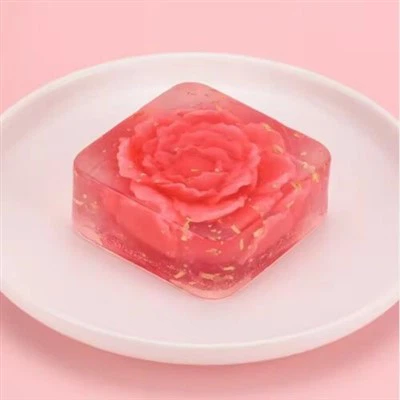
Private Label Handmade Soap Products
Explore selected handmade soap formats available for private label and custom OEM/ODM projects. Formula, fragrance, color, shape, logo and packaging can be customized according to your brand requirements.



Choose the Right Soap Type for Your Brand
The best soap system depends on more than ingredient preference. Production timeline, appearance, retail positioning and packaging all affect the decision.
| Soap Type | Best Suited For | Main Development Consideration |
|---|---|---|
| Cold Process Soap | Natural, artisanal and premium collections | Curing time, hardness and moisture |
| Botanical Soap | Ingredient-led and clean beauty concepts | Botanical stability and appearance |
| Decorative & Glycerin-Based Soap | Transparent or visually creative concepts | Appearance, heat sensitivity and packaging |
| Functional Cleansing Bar | Targeted cleansing and sensory concepts | Formula performance and claim review |
| Exfoliating Soap | Texture-led body cleansing products | Particle size and bar integrity |
| Custom Shape Soap | Gift, hospitality and seasonal programs | Mold, weight, MOQ and packaging |
For a multi-SKU collection, it is often more efficient to keep the same basic soap system and create differentiation through fragrance, color, hero ingredients or surface design. This helps the range feel coordinated while avoiding unnecessary production complexity. Not sure which production route fits your product concept? See our comparison of cold process soap and soap bases.

Custom Handmade Soap Formula Development
A commercial soap formula needs to do more than look attractive in the first sample.
The balance of oils, fatty acids, alkali system, fragrance, color and added ingredients influences hardness, lather, cleansing feel, moisture content and the way the bar changes during curing and storage. A formula that looks good immediately after molding may behave differently several weeks later. For more background on oils, alkali and saponification, see our guide to what soap is made of.
For a faster private label launch, brands can begin with an existing formula direction and adjust fragrance, color, appearance and packaging. More differentiated projects may require changes to the oil system, hero ingredients, exfoliation level, sensory profile or bar design.
During development, we pay particular attention to practical problems that can appear later in production. A bar may be too soft to handle efficiently, develop surface sweating, lose fragrance, discolor around botanical ingredients or crack as moisture changes. Decorative particles may also distribute unevenly if they are added without considering the structure of the soap.
This is why formula development should be reviewed together with the actual bar format and packaging. The goal is not simply to approve a beautiful sample, but to approve a product that remains practical when production moves to commercial scale.
Customization for Your Soap Line
Customization can go far beyond choosing a fragrance.
The formula can be developed around suitable plant oils, clays, botanical powders, milk-based concepts, exfoliating materials and other compatible ingredients. Fragrance may follow floral, citrus, herbal, woody, fresh or gourmand directions, while color can range from restrained natural-looking tones to more decorative swirls or layered effects where technically appropriate.
Bar size and shape also affect the manufacturing route. Standard molds generally allow more flexibility, while custom shapes or special weights may require dedicated tooling. Logo embossing or debossing can be incorporated into selected bar designs when the artwork, mold depth and soap characteristics work together.
Packaging is normally considered at the same stage. Paper wraps, sleeves, cartons, protective film, pouches and gift boxes all create different requirements for bar size, surface condition and moisture.
Private Label, Custom Development, MOQ & Sampling
For some brands, the priority is speed. For others, the priority is stronger differentiation.
A private label project is usually the more efficient route when the brand can begin with an existing soap base and customize fragrance, color, label, embossing or packaging. This reduces development complexity and can make the sampling process more straightforward.
Custom development is better suited to brands that want the product itself to be more distinctive. The formula, ingredient system, appearance, bar format or packaging can be adjusted to create a clearer point of difference, but a more customized project normally requires more development time and may affect MOQ.
MOQ is influenced by several elements at once, including formula, bar weight, mold, packaging method and the number of SKUs. Standard bar formats and existing formulations usually provide more flexibility than custom molds or highly specialized retail packaging.
Samples are available as part of the development process. Existing samples can help with initial quality evaluation, while customized samples are prepared after the main formula, fragrance, appearance and packaging direction have been discussed.
Lead time depends on the selected soap system. Cold process products may need additional curing or conditioning time, while other bar systems can follow a shorter production cycle. Final timing should therefore be confirmed after the formula, mold and packaging requirements are approved.
How We Manufacture Private Label Handmade Soap
The manufacturing route depends on the soap system. Cold process bars, glycerin-based soaps and decorative specialty products do not all follow exactly the same process.
A typical project begins with raw material preparation. Oils, fragrance, colorants, botanicals and other approved ingredients are checked and prepared according to the final product specification.
For cold process formulas, the oil and alkali systems are processed under controlled conditions so saponification can begin. Other soap systems use a different preparation route depending on the approved formula.
Fragrance, color and additional ingredients are then incorporated at the appropriate stage. Mixing needs to maintain good distribution without unnecessarily damaging botanicals or creating separation. Once the soap reaches the required condition, it is transferred into the selected mold.
After molding, bars may be cut, trimmed, shaped or embossed depending on the final design. Cold process soap then moves through a curing or conditioning period so moisture and hardness can develop appropriately before final packaging.
The last stage is not simply “putting soap into a box.” Bar condition, dimensions, surface appearance and packaging fit are reviewed before the finished units are prepared for shipment. For a more detailed look at the production stages, read our guide on how handmade soap is made.

Quality Control for Commercial Soap Production
Moving from an approved sample to commercial production requires more than reproducing the same formula at a larger scale. The finished bars need to remain consistent in weight, dimensions, hardness, appearance and fragrance throughout the production run.
For cold process and other handmade soap systems, moisture and curing condition are also important before packaging. Bars packed too early may continue to change in hardness or surface condition, while botanical, exfoliating and embossed soaps require additional attention to ingredient distribution and visual consistency.
Where the selected soap system calls for it, relevant product parameters such as pH or other agreed specifications can also be reviewed as part of the production standard.
Packaging is included in final quality control because the retail unit is what the customer ultimately receives. The bar needs to fit properly inside the selected wrap, carton or pouch, and the packaging should remain clean and stable during handling and shipment. Representative finished units can be reviewed throughout production to help maintain consistent presentation across the batch.
Custom Soap Packaging
Soap packaging needs to protect the bar while also supporting the brand's retail positioning.
Paper wraps and sleeves work particularly well for natural, artisanal and minimalist concepts, while printed cartons offer more room for branding, ingredients and product information. Window boxes are useful when the shape, swirl, botanical texture or color of the bar is part of the product's visual appeal.
Protective film may be appropriate for selected soap formats where additional surface or moisture protection is needed. Individual pouches can work for travel, hospitality or specialty retail, while gift boxes are suitable for multi-bar collections and seasonal programs.
The key is to select the packaging using the actual soap rather than an empty package alone. Depending on the formula, a bar may still contain meaningful moisture after production, and oils or fragrance can sometimes affect paper, labels or printing over time. Packaging compatibility should therefore be evaluated before a large packaging order is finalized.

Handmade Soap Manufacturing Capabilities at Poleview
From formula development to finished packaging, our manufacturing capabilities are designed to support a more consistent and practical private label soap project.

01
Formula & Sample Development
We turn your product brief into a practical soap concept by reviewing formula, fragrance, appearance, bar format and packaging together. Samples can then be evaluated and adjusted before mass production, helping identify potential issues with curing, mold release or packaging at an early stage.

02
Soap Production & Curing
Production methods are adjusted according to the approved soap system. Cold process bars require controlled curing and moisture management, while molded or decorative soaps may need closer attention to shape, surface appearance and handling to maintain consistent quality throughout commercial production.

03
Custom Molding & Logo Embossing
Custom molds and logo embossing can give a soap line stronger visual identity. Mold design is reviewed together with bar dimensions, weight and formula characteristics so the finished shape and embossed details can be reproduced consistently during mass production, not only in the first sample.

04
Packaging & Final Inspection
Packaging and finished-product inspection are handled together at the final stage. We review bar appearance, packaging fit, wrapping and overall presentation against the approved specification, helping ensure that each retail-ready unit remains consistent and properly prepared for packing and shipment.
Who We Work With
Poleview works with beauty and personal care brands that want bar soap to sit naturally within a wider body care, bath care or solid care collection.
We also support ingredient-led and natural-positioned brands developing botanical, mineral or hero-ingredient soaps, as well as spas and hospitality programs that require custom sizes, individual packaging or embossed guest bars.
For distributors and retailers, the priority is often repeatability and stable presentation across larger orders. Emerging brands may instead start with a simpler private label route and move toward more customized formulas and packaging as the product line grows.
Documentation & Export Project Support
Documentation requirements vary according to the soap system, ingredients, claims, destination market and sales channel.
Depending on the approved project, available supporting documentation may include product specifications, ingredient information, COA, SDS/MSDS, batch information and relevant manufacturing records.
For products intended for the United States, European Union, United Kingdom or other regulated markets, formula, claims and label requirements should be discussed before production is finalized. This becomes especially important for ingredient-led or targeted cleansing bars because the wording used to market the product may affect how it needs to be presented in the destination market.
Poleview can provide the manufacturing documentation available for the approved project, while final market-specific regulatory responsibilities should be confirmed according to the product classification and destination.
Handmade Soap Resources
Natural Handmade Bar Soap for Private Label Brands
Learn what brands should consider when developing natural-positioned handmade soap, including formula structure, ingredients, fragrance, packaging and commercial scalability.
Explore the main production stages behind handmade soap, from formula preparation and saponification to molding and finished bars.
Cold Process Soap vs Soap Base
Compare two different soap development routes and understand how processing time, customization and finished appearance differ.
Learn how oils, alkali, water and additives work together through saponification to create a finished soap bar.
Frequently Asked Questions About Private Label Handmade Soap
Q: 1. What types of handmade soap can you manufacture?
A: We can support cold process, botanical, ingredient-focused, exfoliating, specialty and customized bar soap concepts. The most suitable soap system depends on the formula, desired appearance, ingredients, production timeline and target positioning.
Q: 2. Can you develop a custom soap formula for our brand?
A: Yes. A project can begin with an existing private label formula or be adjusted around selected oils, fragrance, botanicals, color, exfoliating materials and other suitable ingredients. The development route depends on how much differentiation the final product requires.
Q: 3. What is the MOQ for private label handmade soap?
A: MOQ depends on formula, bar weight, mold, packaging and the number of SKUs. Standard bar formats and existing formulations generally offer more flexibility than custom molds, unusual shapes or highly customized packaging.
Q: 4. Can you create custom shapes or embossed logos?
A: Yes. Selected soap projects can use customized molds, shapes and logo embossing. Mold cost, MOQ and production feasibility depend on the complexity of the design, dimensions and final bar weight.
Q: 5. How long does cold process soap production take?
A: Cold process soap normally requires additional curing or conditioning after production. The exact schedule depends on the formula, bar size and moisture requirements, so lead time should be confirmed before the order is finalized.
Q: 6. What packaging options are available?
A: Packaging options may include paper wraps, sleeves, printed cartons, window boxes, protective film, pouches and gift packaging. The best format depends on the soap system, bar size, moisture condition, shipping requirements and retail positioning.
Q: 7. Can I request samples before mass production?
A: Yes. Existing samples may be available for initial evaluation, while custom development samples can be prepared after the main formula, fragrance, appearance and packaging requirements have been discussed.
Q: 8. What documents can you provide for US and European projects?
A: Available documentation depends on the specific formula and project. Product specifications, ingredient information, COA, SDS/MSDS and relevant manufacturing records may be available where applicable. Market-specific labeling and compliance requirements should be reviewed before final production.
Ready to Develop Your Private Label Soap Line?
Whether you are launching a single handmade soap or building a coordinated bar soap collection, Poleview can help turn the initial idea into a practical manufacturing project.
Share your preferred soap type, hero ingredients, fragrance direction, bar size, packaging style, target market and estimated order quantity. Our team can then recommend a suitable route for formula development, sampling, production and packaging.