



Body Butter
CUSTOM FORMULATION · PRIVATE LABEL · OEM/ODM
Private Label Body Butter Manufacturer in China
Develop body butter around the texture, skin feel, ingredients, fragrance and packaging your market requires.
Poleview works with skincare, body care, spa, retail, Amazon and DTC brands. Start with a proven formula base, refine an existing direction or discuss a more customized formula with our development team.
Since 1995 · 40,000㎡ Facility · 22 Production Lines · Up to 1,000,000 Pieces per Month
Body Butter Manufacturing at a Glance
A commercial body butter needs to feel right on the skin, remain suitable for its intended climate and work with the selected packaging. We review these decisions together before sampling begins.
Formula Development
Choose a proven formula base, make targeted adjustments or discuss a more customized body butter formulation.
Texture and Skin Feel
Define firmness, scoopability, spreadability, absorption and the amount of residue left after application.
Ingredients and Fragrance
Select suitable butters, oils, emollients, botanical ingredients and fragrance directions around the product position.
Packaging Support
Evaluate jars, selected tubes or suitable pump formats according to viscosity, filling process and consumer use.
Sampling
Standard sample development usually takes 7–14 days after the brief is confirmed. Sample freight is arranged separately.
OEM Manufacturing
Move from an approved formula and package to testing, production, inspection and shipment through one project process.
MOQ is confirmed according to the formula, materials, packaging and filling process. Share your expected quantity when requesting a quotation.
Body Butter Products You Can Develop
The right product depends on who will use it, where it will be sold and how it should feel. These six directions cover the most common starting points for private label body butter projects.
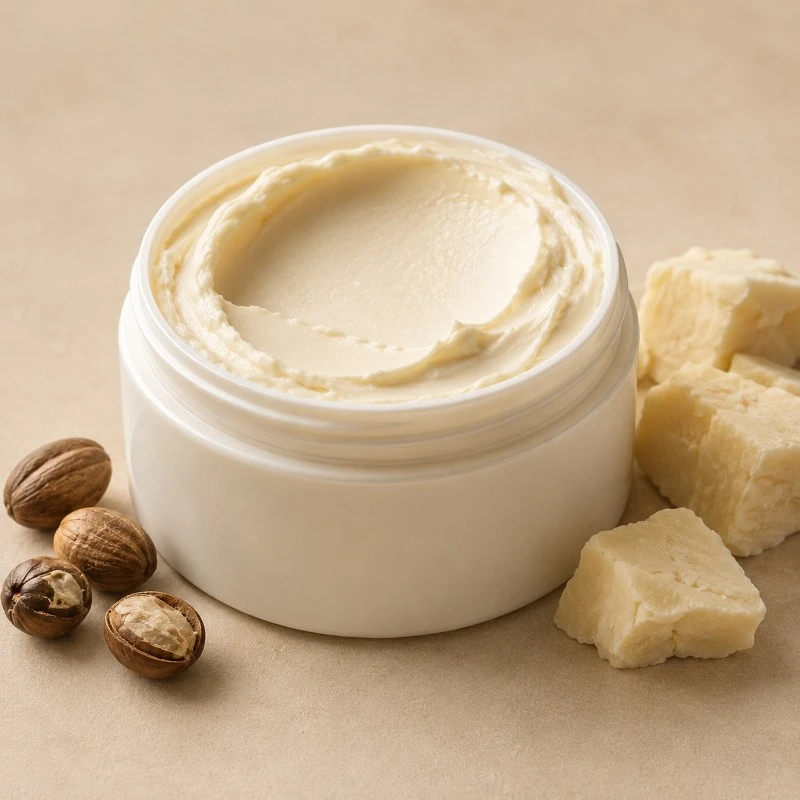
Rich Shea Body Butter
A dense, nourishing direction for dry-skin, winter-care and intensive-moisturizing ranges. Firmness, scoopability and residue can be adjusted during sampling.

Whipped Body Butter
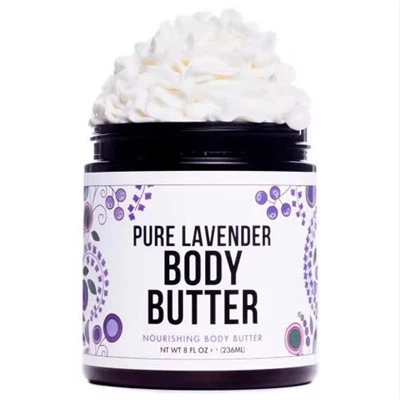
A soft, voluminous texture suited to spa, gift and sensory-led positioning. Density, filling accuracy and temperature-related changes require careful review.
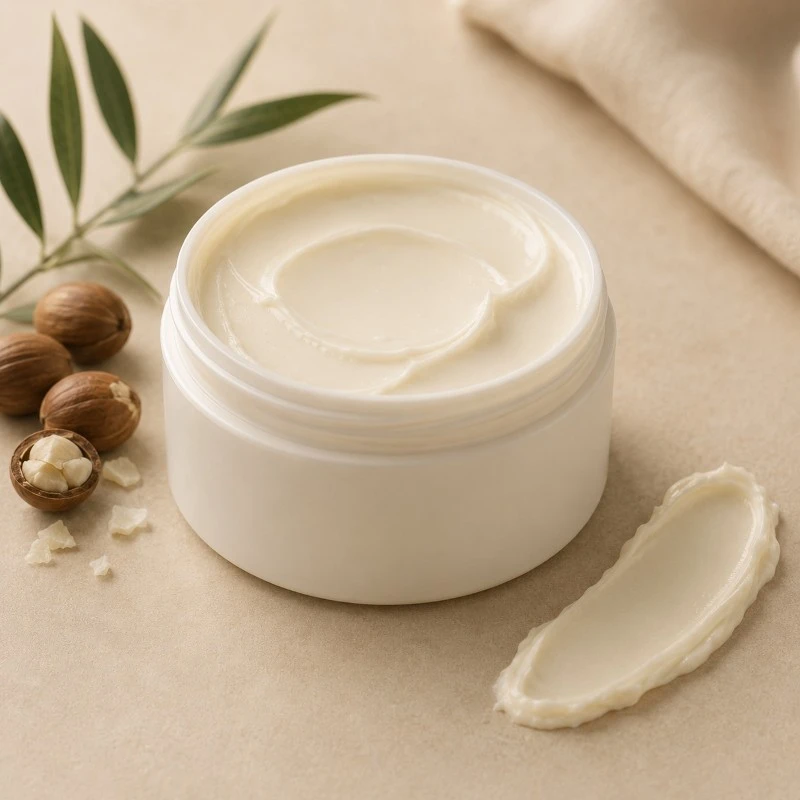
Lightweight Body Butter
A faster-spreading direction for customers who want body butter richness without an overly heavy or greasy finish.
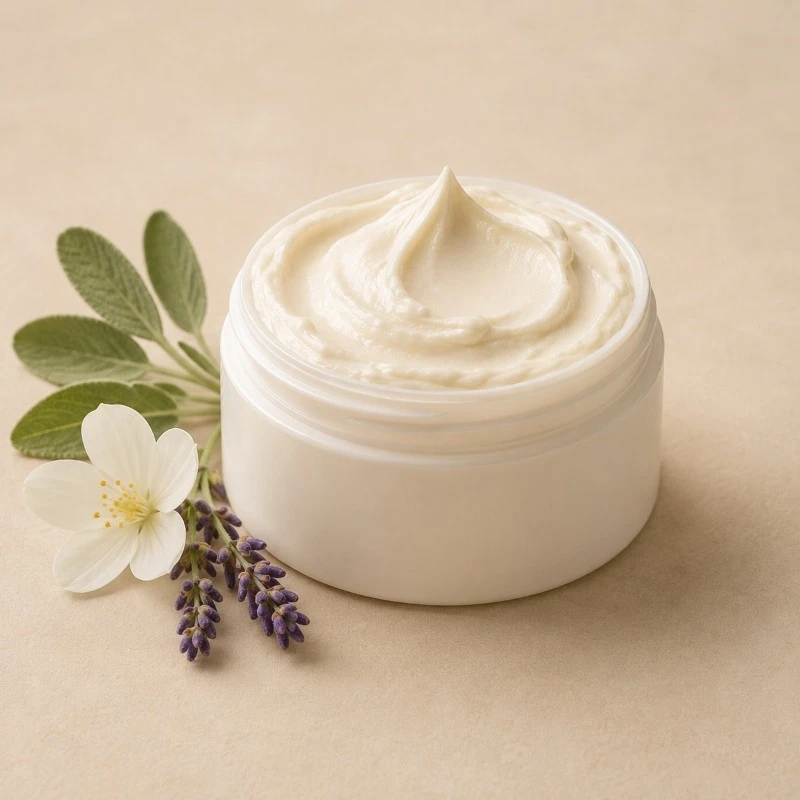
Fragrance-Led Body Butter
Develop botanical, gourmand, fresh, woody or seasonal scents in a base that supports the desired fragrance strength and character.

Fragrance-Free Body Butter
A minimalist direction for fragrance-avoiding positioning. The natural odor of oils and butters still needs to be considered during development.
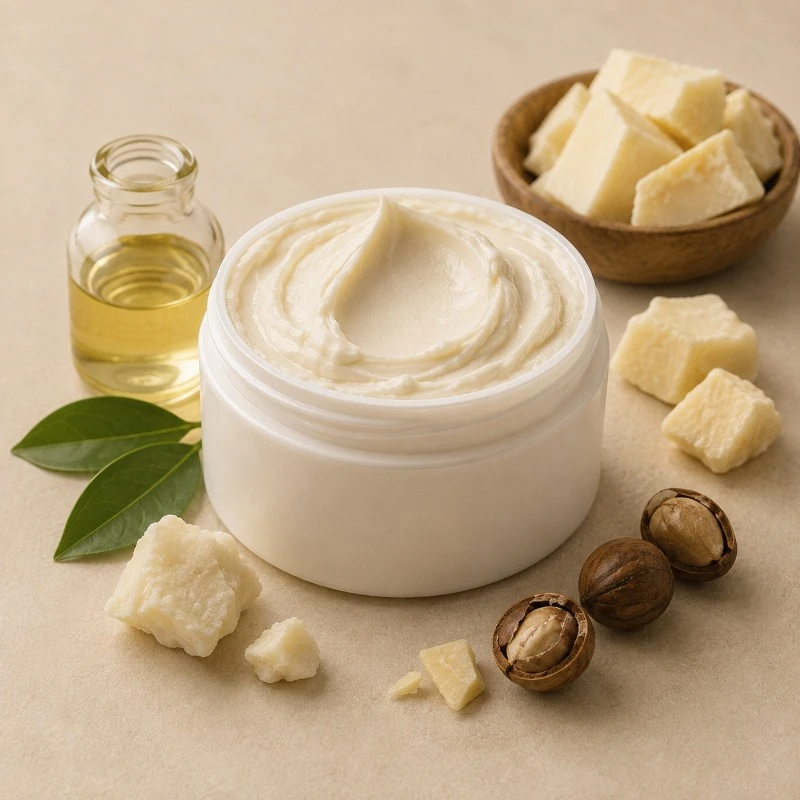
Ingredient-Led Body Butter
Build a concept around shea, cocoa, mango butter or selected botanical oils while keeping texture, stability and realistic use levels in view.
Choose the Right Body Butter Formula System
The term “body butter” is used for several different product types. Clarifying the formula route early helps align the texture, packaging, testing and market positioning.

Anhydrous Body Butter
An anhydrous body butter is built mainly around oils, butters, waxes and other oil-phase materials. It can provide a concentrated, rich and melt-on-contact experience.
Development may need to address graininess, oil separation, oxidation, scoopability and the amount of residue left on the skin. Temperature is especially important because the product may soften or change appearance during storage and international transportation.
This route is often selected by brands that want an oil-rich formula and a relatively straightforward ingredient story.
Emulsified Body Butter
An emulsified formula combines oil and water phases. It can provide easier spreading and a creamier application while retaining a richer feel than a typical body lotion.
The emulsion system, preservative strategy, pH, viscosity and microbiological requirements need to work together. Packaging compatibility must also be reviewed because a formula that feels good in a sample jar may not dispense correctly from a tube or pump.
This route is suitable when the brand wants body butter positioning with a cleaner or less oily finish.
Whipped or Hybrid Texture
Whipped and mousse-like body butters create a soft, generous appearance, but the texture must remain practical during filling and transportation.
Density, container headspace, fill weight and volume stability all need attention. A hybrid formula can also be developed for brands that want more cushion than lotion without the density of a traditional anhydrous butter.
The final product name and claims should reflect what the formula actually is.
Not sure whether body butter, lotion, cream or balm is the right format for your product line? Compare the main systems in our body moisturizer formula development guide.
Define the Texture and Ingredient Direction
Two body butters can contain similar hero ingredients and still feel completely different. Texture should therefore be described in practical terms rather than simply as “rich” or “premium.”
During sample development, consider how easily the product lifts from the jar, how quickly it softens against the skin and whether it spreads without excessive drag. Absorption speed and residue matter as well. One brand may want a long-lasting oil-rich layer, while another may prefer a cleaner finish suitable for everyday use.
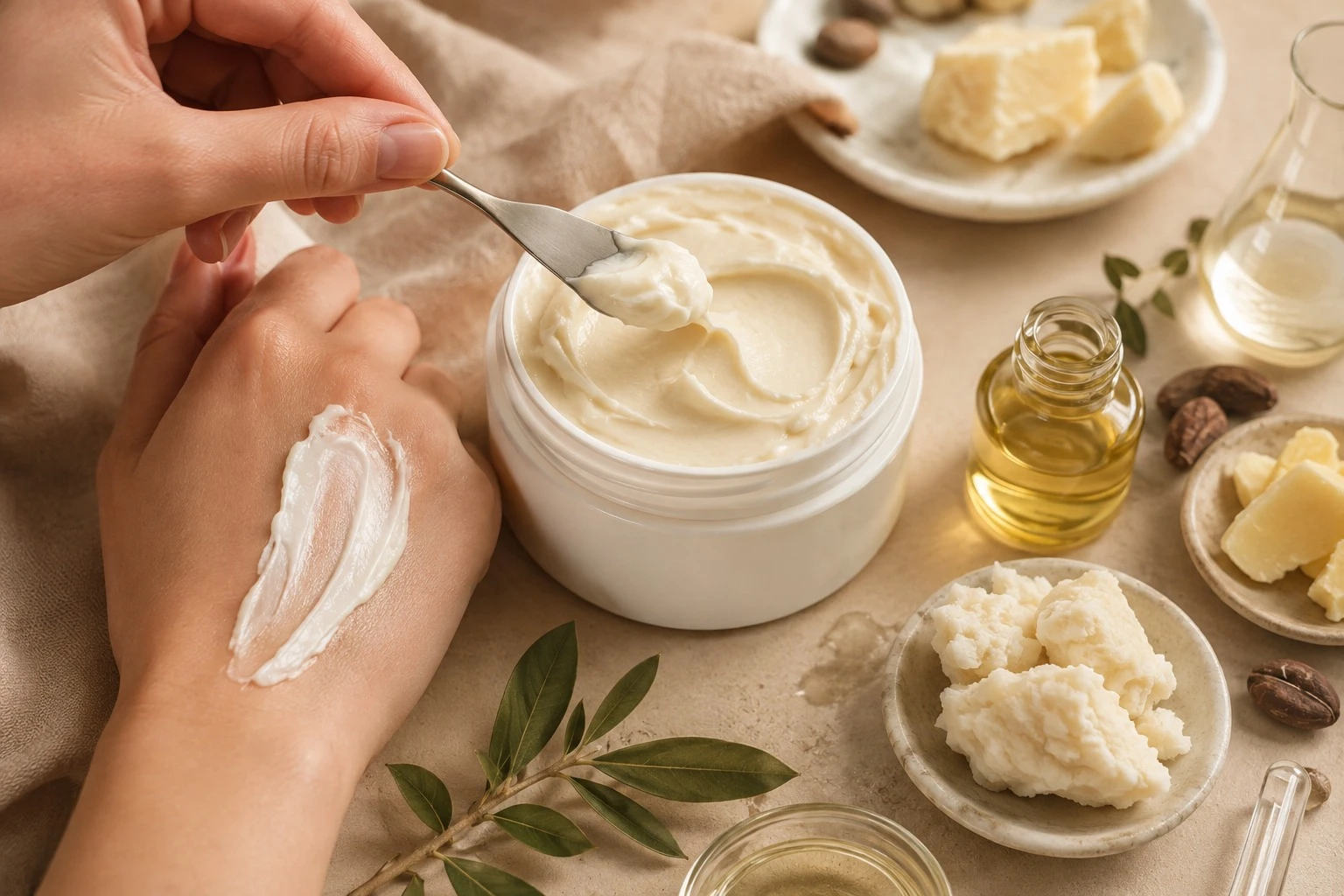
Useful texture feedback includes:
- Easier to scoop
- Faster spreading
- Quicker absorption
- Less oily residue
- More cushion during application
- Smoother finished surface
Ingredient choices should support this target experience.
Shea, cocoa and mango butter can influence firmness, melting behavior, color and natural odor. Not sure which butter should lead your formula? Compare shea, cocoa and mango butter for private label body butter before finalizing the ingredient direction. Plant oils and emollients change spreadability and after-feel. In an emulsified body butter, humectants and water-phase ingredients can contribute to a creamier, more hydrated experience.
Botanical extracts may support the product story, but their compatibility, solubility, color contribution and realistic use level still need to be assessed.
Fragrance should be tested in the actual body butter base. A fragrance that performs well in body wash may smell or behave differently in an oil-rich product.
Final claims must be reviewed against the approved formula, available evidence and destination-market requirements.
Match the Formula With the Packaging
Packaging protects the formula, affects how the product is used and helps communicate the intended price position. It should be selected alongside the formula rather than after development is complete.
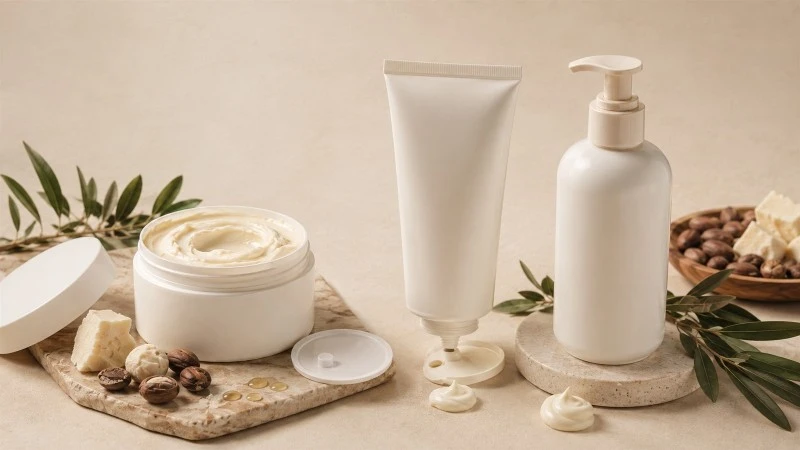
Wide-Mouth Jars
Jars are the most common choice for rich, dense and whipped body butter. They allow customers to scoop the formula directly and provide a useful surface for labels or decoration.
The jar material, neck diameter, closure, inner lid and product headspace should be confirmed with the filling process.
Tubes
A tube may suit a smoother emulsified body butter that can move through the opening without excessive force. Very dense or highly aerated textures may not be appropriate for this format.
Pump Formats
Selected pumps may work for lighter body butter or rich cream formulations. Suitability depends on viscosity, actuator output, dip tube and the amount of product dispensed with each press.
Formula and packaging review may include closure fit, leakage, oil migration, label adhesion, filling temperature and dispensing performance.
Read our private label body care packaging guide for a broader comparison of jars, bottles, tubes, pumps and gift packaging.
Review Samples Before Final Approval
A body butter sample should not be approved only because its fragrance and color look attractive on the first day.
Open the package, examine the surface and use the product as the customer would. Review how it spreads, how long it takes to absorb and what remains on the skin after several minutes.
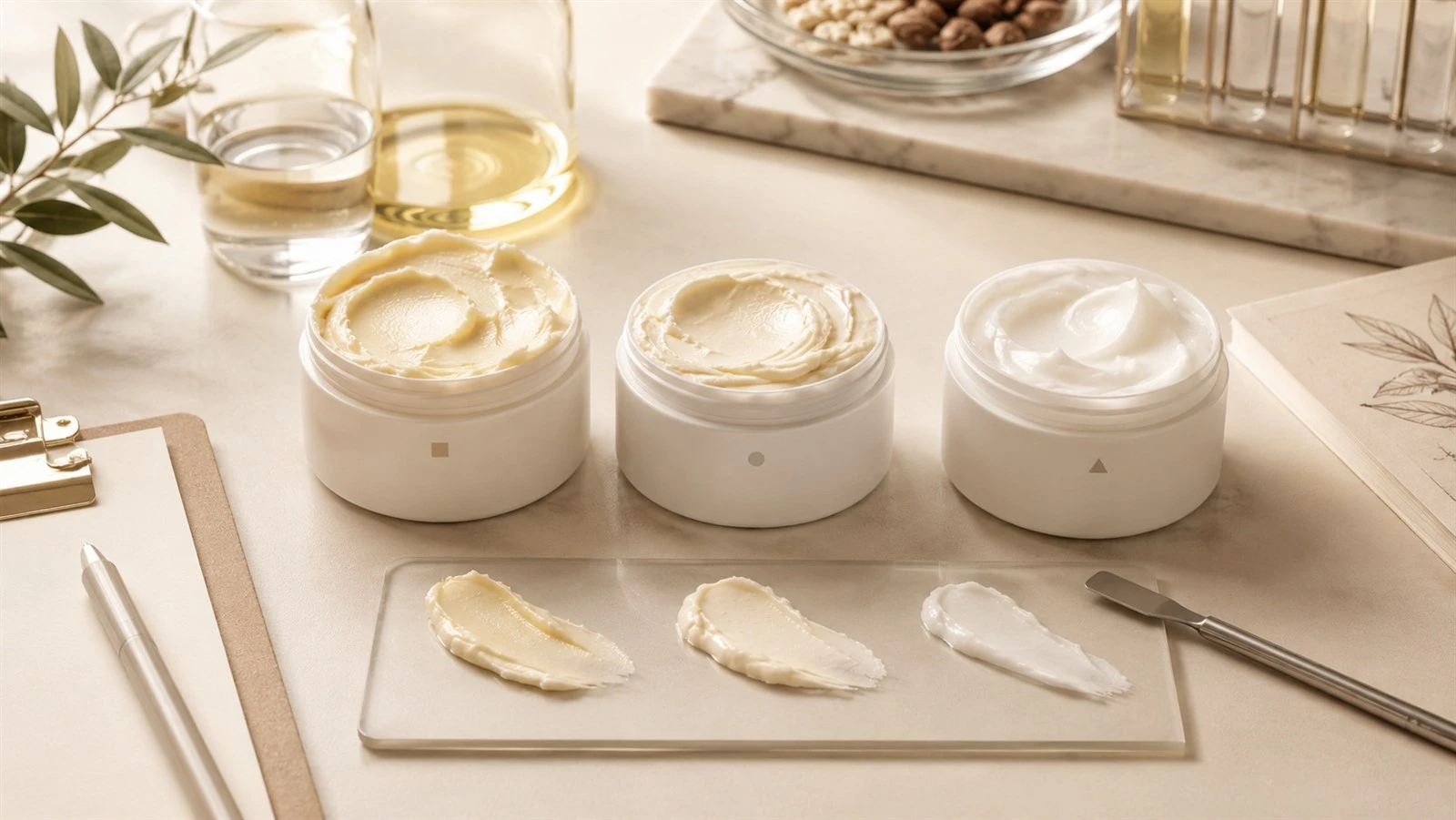
If several formulas are being compared, label them Sample A, Sample B and Sample C and evaluate each one against the same criteria:
Sample A
A richer texture with slower absorption and a more noticeable oil-rich finish.
Sample B
A balanced creamy texture with moderate absorption and controlled residue.
Sample C
A lighter texture with faster spreading and a cleaner after-feel.
The goal is not to choose a universal “best” sample. It is to identify which option fits the customer, market, packaging and price position.
Before production, confirm:
- Approved formula or sample code
- Texture and after-feel
- Color and fragrance
- Packaging components
- Filling weight
- Label and carton artwork
- Production quantity
- Destination market and documents
Changes made after approval can affect cost, compatibility, testing and delivery time.
Quality Control From Mixing to Finished Packing
Body butter texture can be affected by raw-material variation, mixing sequence, processing temperature, cooling and filling conditions. Quality review begins before the jar reaches the packing line.
Raw Material Review
Incoming materials are checked according to the relevant specifications and manufacturing requirements.
Formula Preparation
Materials are weighed and processed according to the approved production instructions. Temperature, mixing sequence and processing time can affect the final texture.
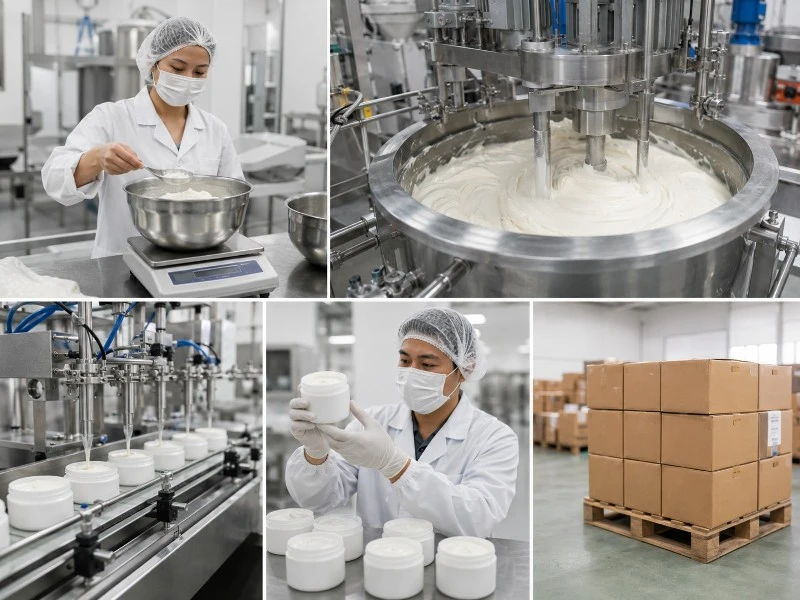
In-Process Check
The production team reviews applicable characteristics such as appearance, uniformity, fragrance, viscosity or texture before filling.
Filling and Cooling
The filling process is selected around the formula and package. Some products may require controlled temperature or cooling conditions.
Packaging Inspection
Filling weight, closure, label position, batch information and carton condition are checked against the approved requirements.
Finished Product Review
Finished goods are reviewed against the applicable specification before release and shipment.
For anhydrous body butter, the quality plan may focus on melting, graininess, oil separation and oxidation-related changes. Emulsified formulas may also require pH, preservation, emulsion and microbiological review. For a deeper explanation of these failure modes and troubleshooting priorities, see our body butter formula problems guide.
Testing requirements are confirmed according to the final formula, packaging, claims and destination market.
Body Butter Manufacturing and Documentation Support
Poleview was established in 1995 and operates a 40,000㎡ personal care manufacturing facility with 22 production lines. Our manufacturing scope covers both liquid and solid personal care products.
Facility-wide output can reach up to 1,000,000 pieces per month. Actual body butter scheduling depends on the formula, package, filling process and order quantity. If you are comparing suppliers, use our guide to choosing a private label body care manufacturer to evaluate formulation capability, quality systems, packaging support, MOQ and documentation.
Depending on the project, documentation support may include:
Ingredient documentation
Certificate of Analysis
SDS or MSDS where applicable
Product specifications
Relevant testing records
Batch information
Packaging information
Destination-market documentation support
Poleview maintains manufacturing and quality-system information relating to GMPC, ISO 22716, FDA registration and SMETA where applicable.
For EU projects, CPNP notification, CPSR, PIF and responsible-person requirements should be planned around the final formula, claims and market.
Documents do not all serve the same purpose and should not be presented as interchangeable product certifications. The final documentation package must be confirmed for the individual project.
Learn more about Poleview's OEM/ODM personal care manufacturing process, from formula development and sampling to production and quality control.
Build One Body Butter or a Complete Collection
A body butter can launch as a hero SKU or become the moisturizing step in a larger body care range.
A coordinated collection may share a fragrance direction, ingredient story, label structure, color palette and packaging family. Each product should still use a formula suited to its function.
Custom Body Lotion
Develop a lighter daily moisturizer to sit alongside a richer body butter.
Custom Body Scrub
Pair the body butter with a sugar, salt, cream, gel or oil-based exfoliating product.
Beef Tallow Balm
Explore a more concentrated balm direction for tallow-based or oil-rich product positioning.
Brands planning more than one product can review Poleview’s complete private label body care manufacturing capabilities.
Related Products


From the First Brief to Bulk Production
1. Product Brief
Share the target customer, market, sales channel, desired texture, ingredient direction, packaging preference and expected quantity.
2. Development Route
Choose a proven formula base, make focused adjustments or begin a more customized development route.
3. Sample Review
Standard sample development usually takes 7–14 days after the brief is confirmed. Sample freight is arranged separately.
4. Formula and Packaging Confirmation
Confirm the texture, fragrance, color, package, filling weight and artwork direction.
5. Testing and Pre-Production Review
Review the applicable stability, compatibility, quality and documentation requirements before production.
6. Manufacturing and Shipment
Production begins after the specifications and commercial terms are approved. First-order arrival is generally planned within 6–10 weeks, depending on packaging, production scheduling and shipping.
Body Butter Development Resources
How to Choose a Body Care Manufacturer
Compare formulation capability, sampling, quality control, packaging support and export experience before choosing a supplier.
Read the Manufacturer Selection Guide
How to Develop Body Butter for Sale
Understand the differences between handmade, white-label and private label production routes.
Read the Body Butter Development Guide
Body Moisturizer Formula Development
Compare lotion, cream, body butter and balm for different texture and market requirements.
Frequently Asked Questions
Q: 1. What types of body butter can Poleview manufacture?
A: Poleview can support anhydrous body butter, emulsified formulas, rich shea butter directions, whipped textures, lighter-feel products, fragrance-free options and selected ingredient-led concepts. The most suitable route depends on the desired texture, packaging, climate and market position.
Q: 2. What is the difference between anhydrous and emulsified body butter?
A: Anhydrous body butter is mainly built around oils, butters and structuring ingredients. It normally provides a concentrated, oil-rich experience. Emulsified body butter contains both oil and water phases and can provide easier spreading and a lighter finish. Each route has different stability, preservation and packaging requirements.
Q: 3. Can the texture and fragrance be customized?
A: Yes. Development can adjust firmness, scoopability, spreadability, absorption, residue and fragrance strength. A clear sensory description or benchmark sample helps the team understand the intended result.
Q: 4. What is the MOQ for private label body butter?
A: MOQ depends on the formula, raw materials, packaging, decoration and filling process. A proven formula in a standard jar may have a different requirement from a customized formula using special materials or packaging. Include the expected quantity in the RFQ for an accurate assessment.
Q: 5. How long does body butter sampling take?
A: Standard sample development usually takes approximately 7–14 days after the brief is confirmed. Complex formulas or special ingredients may require additional time. Sample freight is normally arranged separately.
Q: 6. Can Poleview source jars, labels and cartons?
A: Yes. We can support suitable jars, selected tubes or pump formats, labels, surface decoration and cartons. Recommendations consider viscosity, filling method, compatibility, order quantity and price position.
Q: 7. How do you evaluate body butter for warm-weather shipping?
A: The review depends on the formula. Anhydrous products may be checked for melting, separation, graininess and appearance after temperature changes. Emulsified products may require additional emulsion, preservation and microbiological evaluation. Packaging closure and leakage should also be considered.
Q: 8. What information should be included in a body butter RFQ?
A: Include the target market, sales channel, expected quantity, desired texture, ingredient or fragrance direction, packaging preference, filling size, benchmark product and launch timing. If some details remain open, share the information already available and our team can identify the next decisions.
Start Your Private Label Body Butter Project
You do not need a finished formula before contacting a manufacturer. A clear product idea, benchmark sample, ingredient direction or packaging reference is enough to begin.
Tell us where the body butter will be sold, who it is for and how you want it to feel. Our team will review the formula route, packaging, quantity and timing before recommending the next step.
Include in Your RFQ:
- Brand or company name
- Target market and sales channel
- Preferred formula or texture
- Ingredient and fragrance direction
- Packaging and filling size
- Expected order quantity
- Benchmark product, if available
- Target launch timing