



Beef Tallow Balm

Private Label Beef Tallow Skincare Manufacturer
Create a beef tallow balm or develop a wider tallow skincare range around your brand, target customer and sales channel.
Poleview provides ODM formula development, sampling, packaging and scalable manufacturing for private label skincare brands. Projects can begin with our mature beef tallow balm base or move into a more customized direction, including whipped tallow moisturizers, tallow and honey balms, body butters and cream-style products.
Rather than treating the formula, packaging and product story as separate decisions, we review them as one development project. Our broader OEM and ODM manufacturing service connects raw material selection, formula development, packaging, sampling and bulk production within one coordinated process.
Since 1995 | 40,000㎡ Manufacturing Facility | 20+ Production Lines | 150+ Employees
Private Label Tallow Skincare Project Information
| Project Item | Available Support |
|---|---|
| Product Formats | Firm balm, soft balm, whipped moisturizer, body butter and cream-style products |
| Formula Development | Mature balm base, modified formula or custom ODM development |
| Standard MOQ | 1,000 units per formula |
| Sample Development | 3–7 days |
| Bulk Production | 25–35 days after formula and packaging approval |
| Packaging | Glass jars, PET jars, aluminum tins, cartons and custom sets |
| Customization | Texture, ingredient direction, scent, appearance, size, packaging and label |
| Testing & Documents | Confirmed after the formula, packaging and destination market are defined |
Develop Private Label Tallow Skincare Around Your Brand
A successful tallow product needs more than an attractive jar and a short ingredient list. The formula must suit the intended customer, deliver the expected skin feel and remain commercially workable through filling, storage and shipment.
The right development direction depends on the brand. A minimalist skincare label may want a dense balm with a restrained ingredient story and little or no added fragrance. A DTC brand may prefer a softer texture that spreads easily and feels less heavy. Products sold through Amazon or shipped into warm climates may require greater attention to melting behavior, sealing and warehouse conditions.
Poleview begins by understanding the product the brand is trying to build. We review the intended customer, sales channel, retail position, formula direction, packaging, order quantity and launch schedule before recommending a sampling route. This helps prevent a common problem in private label manufacturing: approving an attractive formula first and discovering later that it does not suit the packaging, shipping conditions or planned price.
Some projects arrive with a complete formula brief. Others begin with a reference product, an ingredient concept or a desired texture. We can work from any of these starting points, provided the commercial objective is clear enough to guide development.
Our beef tallow skincare manufacturing service is intended for natural skincare brands, DTC and ecommerce businesses, Amazon sellers, importers, distributors, SPA collections and established personal care brands adding tallow products to an existing range.
Discuss Your Tallow Skincare Line
Beef Tallow Skincare Products We Manufacture
Beef Tallow Balm is the most established product in our current tallow skincare range. Brands can evaluate a mature base formula and then adjust the texture, supporting oils, scent and packaging around their market position. This base gives development a practical starting point, but it is not treated as an in-stock generic product. The final balm is still sampled and approved around the brand’s selected formula direction and packaging.

A traditional tallow balm is usually developed as a concentrated, water-free product with a firm or soft texture that melts during application. A denser balm can support minimalist or traditional skincare positioning, while a softer version is easier to spread over larger areas. The balance is created through the tallow content, supporting oils, wax structure and intended climate.
Whipped tallow moisturizer offers a different product experience. Its aerated texture gives the product a softer appearance and lighter application, which can work well for DTC and premium lifestyle brands. However, whipping also changes density, fill volume and sensitivity to temperature. Development therefore needs to consider what happens after filling and shipment, not only how the first laboratory sample looks.
Tallow and honey balm provides a warmer, naturally inspired ingredient story. Depending on the formula format, development may explore honey-derived ingredients, beeswax, jojoba oil or selected botanical oils. The exact system needs to be decided during sampling because ingredient compatibility differs between a water-free balm and an emulsified product.
Botanical tallow balms can be developed around ingredients such as calendula, chamomile, rosehip or olive oil. These additions can change the natural odor, color, spreadability and oxidation behavior of the finished balm. They should therefore be selected for a clear formula purpose rather than added only to create a longer marketing list.
For brands planning a broader collection, Poleview can also develop tallow body butter and cream-style products. These formulas follow a different technical route from traditional balm, particularly when water, emulsifiers or a preservation system are introduced. Brands comparing tallow with plant-butter-based products can also review our private label body butter manufacturing options.
Choose the Right ODM Formula Development Path
Brands do not all need the same level of development. A mature base formula may be the most efficient starting point for one project, while another needs a more distinctive texture or an entirely new product structure.
The mature balm route allows the brand to evaluate a known starting texture before requesting focused adjustments. This can shorten early-stage sampling while still producing a formula and presentation suited to the project.
A modified formula is more appropriate when the brand wants recognizable differentiation. The existing structure may be adjusted to create a softer application, lighter after-feel, different oil profile, customized scent or stronger ingredient story.
Full ODM development begins with the commercial brief rather than an existing formula. The target customer, texture, packaging, sales region and cost expectation are reviewed together. If a reference product is provided, we assess which characteristics should be retained and which need to change for the new brand.

| Development Path | Best For | Development Scope |
|---|---|---|
| Mature Balm Base | Brands that want to evaluate an established starting texture | Adjust scent, supporting oils, firmness, packaging and label direction |
| Modified Formula | Brands seeking clearer differentiation without starting from zero | Change ingredient story, skin feel, melting behavior, appearance and positioning |
| Custom ODM Development | Brands with a defined concept, target customer or reference benchmark | Develop the formula structure, texture, ingredient system, packaging and specifications |
In all three routes, bulk production begins only after the formula and packaging direction have been approved.
Brands that are still deciding between small-batch production, a mature base formula and custom manufacturing may find our private label body butter development guide useful. It explains how formula structure, texture stability, packaging, cost and production scale affect the move from an early product idea to a commercially manufactured body care line.

Select Beef Tallow Raw Materials for the Formula
The grade and processing of beef tallow influence its natural odor, color, consistency and oxidation behavior. Raw material selection should therefore be treated as part of the product specification rather than added later as a marketing statement.
Poleview can source grass-fed beef tallow when this is required by the project brief. Before formula approval, we review the available supplier specifications and supporting documents so the brand understands which sourcing statements can be supported.
The decision is not based on one claim alone. We also consider the intended cosmetic use, refining or deodorization requirements, natural odor, color range, batch consistency, formula compatibility and target cost. A premium minimalist balm, a scented body butter and a daily cream may not need the same tallow grade or processing direction.
We do not describe every product as grass-fed by default. The selected raw material and available supplier documents are confirmed for the individual project before the label and product claims are finalized. If your team is still comparing suppliers, our guide to beef tallow balm manufacturers in China outlines the raw material, traceability, formula, packaging, MOQ and communication factors buyers should review before choosing a production partner.
Develop the Right Texture, Skin Feel and Stability
Adding popular oils or botanical ingredients does not automatically create a commercially successful tallow formula. The finished product must feel intentional, fill consistently and remain acceptable through storage and shipment.
Texture begins with how the product will be used. A firm balm may be suitable for targeted application, while a softer balm can work better as an all-over body product. A whipped texture may look lighter and more premium, but its aerated structure can respond differently to heat, filling and transport.
Poleview reviews how the tallow content, supporting oils, waxes, antioxidant approach, fragrance and processing conditions work together. The objective is not to make the formula more complicated than necessary. It is to achieve the sensory profile and retail position described in the product brief.
Natural odor is another important part of development. Tallow has a characteristic odor that varies with sourcing and processing. “Unscented” does not automatically mean odorless, and “no added fragrance” is a separate formulation description. Brands may choose a natural low-scent direction, a no-added-fragrance product or a customized aromatic profile, but the final wording must match the actual formula.
The complete oil system also affects long-term odor, color and texture. This becomes particularly important when delicate botanical oils are included or the brand wants a very short ingredient list. A simple formula may look straightforward on a label, but it still requires careful technical choices.
Climate and distribution should be discussed before the final texture is approved. Products sold through ecommerce, stored in warm warehouses or shipped across different regions may experience temperature changes. The formula and packaging should therefore be reviewed around the expected route to market rather than evaluated only under room-temperature sample conditions.
Customize Ingredients Without Losing Product Focus
Customization should give the product a clear reason to exist. It should not become a competition to add the greatest number of oils, extracts and marketing ingredients.
A minimalist balm may use tallow with carefully selected supporting oils and only the structural ingredients needed for the desired texture. A softer daily balm may use lighter-feel emollients to improve spreading. A tallow and honey concept may use compatible honey-derived ingredients, beeswax or jojoba to create a richer product story.
Botanical directions can be built around calendula, chamomile, rosehip, olive oil or another oil that fits the target customer. Scented collections can also be developed for SPA, seasonal or gift-set positioning where the formula and intended market allow it.
Each ingredient is reviewed in the context of the finished product. We consider its effect on color, odor, texture, oxidation behavior, documentation and production feasibility. Ingredient availability and supplier information are confirmed during development rather than assumed at the content-writing stage.
Final consumer claims should be based on the completed formula and the evidence required in the destination market. Ordinary cosmetic products should not be presented with disease-treatment, healing or therapeutic claims unless the appropriate regulatory route has been established.
Have a reference formula or product concept?
Send us the reference sample, ingredient brief or target positioning. Our team will evaluate a suitable ODM development route.

Match Tallow Skincare Packaging to the Formula
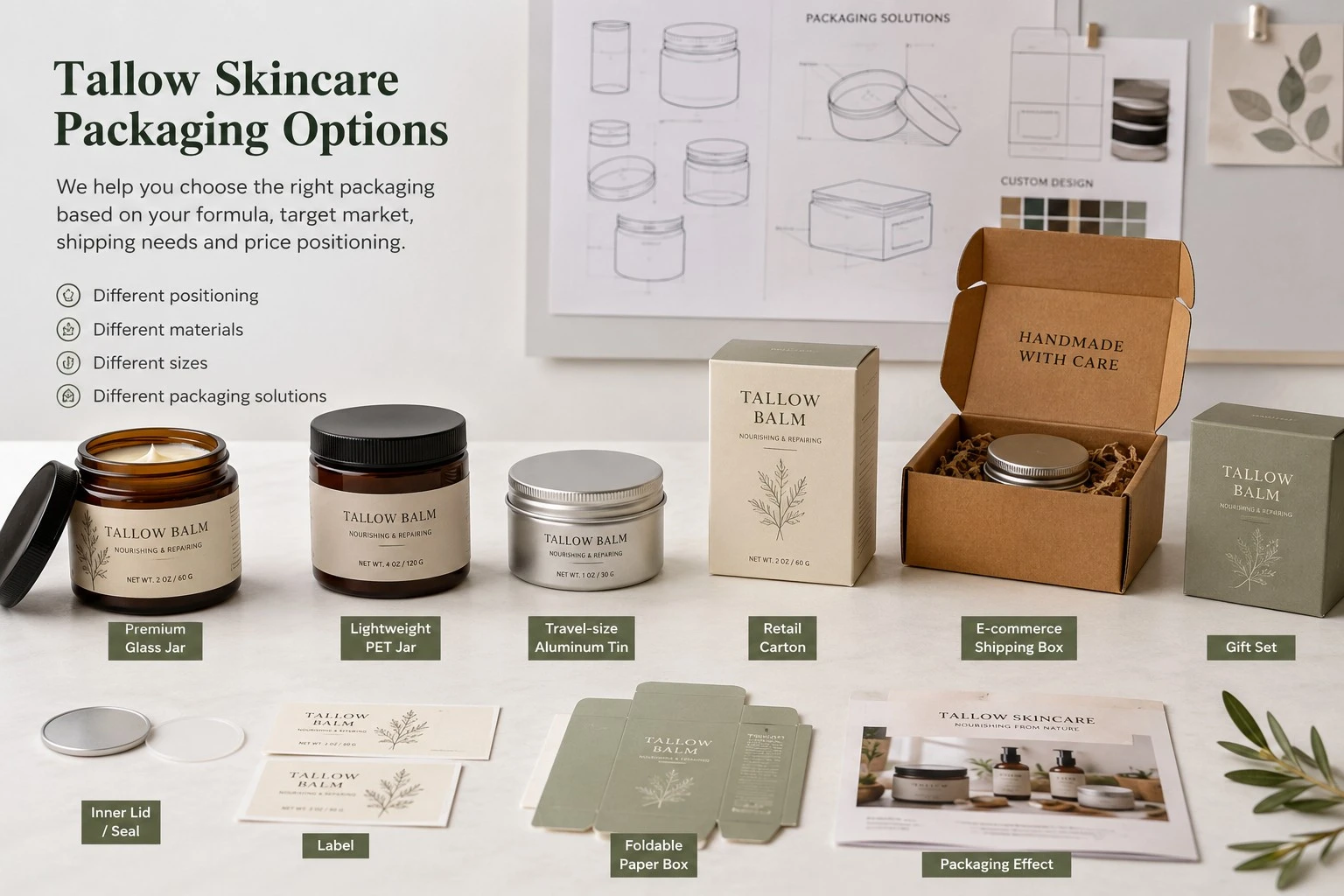
Packaging for beef tallow skincare should be chosen around the product, not only around how the container looks in a product photograph.
Glass jars can support a premium natural skincare position, while PET jars reduce shipping weight and breakage risk. Aluminum tins work well for compact balms and travel-focused products. Printed cartons provide additional space for directions, ingredients, brand information and retail presentation.
Before packaging is approved, we consider the formula texture, filling conditions, jar opening, closure, sealing method and expected shipping route. A container designed for a dense balm may not be the best choice for a whipped moisturizer or softer body butter.
Poleview can work with several common packaging directions:
- Glass jars, PET jars and aluminum tins
- Inner lids, sealing options, labels, printed cartons, retail sets, ecommerce sets and custom decoration
This is one of only two places where a list is retained because buyers need to scan the available formats quickly.
The final recommendation may also consider leakage risk, oil contact with the label, breakage, shipping weight and the way the consumer removes the product from the container. Custom colors, printing and decoration are discussed after the basic container has been matched to the formula.
Packaging suppliers may apply their own MOQs. When the packaging MOQ differs from the standard formula MOQ, the difference is explained during quotation so the brand can make an informed decision before artwork begins.
Plan Testing and Documentation for the Target Market
An anhydrous balm, a whipped moisturizer and an emulsified cream do not require exactly the same evaluation. The appropriate testing and documentation plan depends on the final formula, packaging, claims and intended sales market.
Once the product direction is clear, Poleview reviews the possible stability, packaging compatibility, microbiological, finished-product and raw material documentation requirements. Available support and any necessary third-party services are then confirmed before production.
Once the product direction is clear, Poleview reviews the possible stability, packaging compatibility, microbiological, finished-product and raw material documentation requirements. Buyers can also review our cosmetic manufacturing certifications and quality standards when evaluating Poleview as a long-term production partner.
This is more reliable than presenting every buyer with the same generic compliance list. Some documents depend on the formula, while others may need to be prepared by a local Responsible Person, safety assessor, importer or qualified third-party provider.
If your brand already has a retailer standard, importer checklist or destination-market document list, send it with the initial product brief. Reviewing these requirements before sampling can prevent formula, claims or packaging changes later.
Discuss Your Testing and Documentation Requirements
From Tallow Balm Samples to Bulk Production
Development begins with the product brief. The brand shares its target market, preferred product format, desired texture, ingredient direction, packaging size, estimated quantity and intended launch schedule. A reference sample, competitor product or packaging example can also be included.
Poleview then recommends whether the project should begin with the mature balm base, a modified formula or full custom ODM development. Raw material requirements, target cost, packaging and requested documents are discussed before sample work starts.
Initial samples are normally prepared within 3–7 days. A longer period may be needed when the project requires special raw materials, customized packaging samples or a more complex product structure.
The brand evaluates the sample for texture, application, natural odor or fragrance, appearance and overall fit with the intended positioning. Clear feedback is documented before the next sample is prepared. This makes each revision purposeful and avoids repeated adjustments based on general descriptions such as “more premium” or “more natural.”
Once the formula and packaging are approved, the final specification, quotation, testing requirements and production details are confirmed. The standard MOQ is 1,000 units per formula.
Bulk production normally takes 25–35 days after formula and packaging approval. The final schedule depends on raw material availability, order quantity and packaging lead time. Finished products are inspected, packed and prepared with the agreed project documents before shipment.
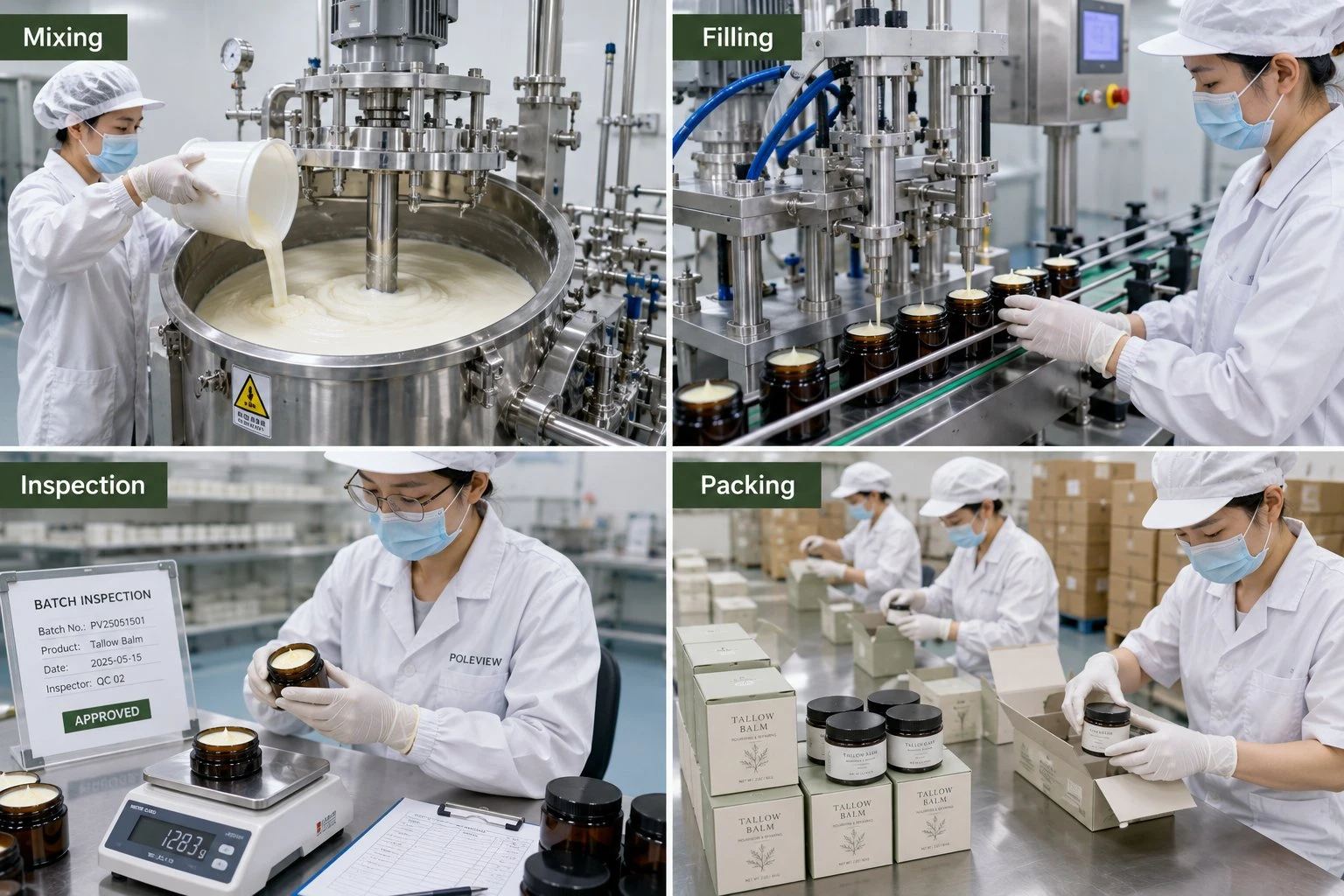
Why Brands Choose Poleview as Their Tallow Skincare Manufacturer
Poleview has manufactured personal care products since 1995. Our 40,000㎡ facility, 20+ production lines and team of more than 150 employees support formula development and scalable production across body care, solid care, hair care and bath products.
This wider manufacturing experience is valuable for a beef tallow skincare project. A brand may begin with one balm and later expand into body butter, soap, lip care, bath products or coordinated gift sets. Our broader private label personal care product range makes it easier to plan those extensions around one brand and manufacturing strategy.
Our role extends beyond placing a label on a standard jar. We connect the commercial brief with raw material selection, texture development, sample review, packaging, bulk production and inspection. Each part of the project is considered in relation to the finished product.
Formula and packaging development are handled together because decisions made in one area affect the other. Container opening, filling method, sealing, label material and shipping conditions can all influence the practicality of the selected formula.
The sample-first process gives the brand an opportunity to evaluate the product before committing to bulk production. Texture changes, ingredient adjustments and packaging decisions are recorded and confirmed through a clear approval process.
As the product range grows, the same manufacturing partner can help coordinate related body care, solid care and bath products. This creates greater consistency across formulas, packaging and production planning.
Private Label Beef Tallow Skincare FAQ
Q: 1. What is the MOQ for private label beef tallow skincare?
A: The standard MOQ is 1,000 units per formula. Custom packaging, special decoration or exclusive components may have separate supplier MOQs. Any difference is confirmed during quotation.
Q: 2. Do you have an existing beef tallow balm formula?
A: Yes. We have a mature beef tallow balm base that can be used as a development starting point. The final texture, supporting ingredients, scent and packaging are still reviewed around the brand rather than supplied as an in-stock generic product.
Q: 3. Can you manufacture whipped tallow moisturizer and body butter?
A: Yes. Whipped moisturizer, tallow body butter and cream-style products can be developed around the desired texture, ingredient direction, packaging and intended market. Because whipped, water-free and emulsified systems behave differently, they are evaluated through separate development routes.
Q: 4. Can Poleview source grass-fed beef tallow?
A: Grass-fed beef tallow can be sourced when required by the project brief. Available supplier specifications and supporting documents are reviewed before formula approval. We do not present grass-fed sourcing as an automatic claim for every product.
Q: 5. How long do sampling and bulk production take?
A: Initial sample development normally takes 3–7 days. Bulk production normally takes 25–35 days after the formula and packaging are approved. Special ingredients or custom packaging may affect the final schedule.
Q: 6. What testing and compliance documents are available?
A: Testing and documentation are evaluated after the formula, packaging, claims direction and destination market are clear. Tell us where the product will be sold and which documents your retailer or importer requires. We will confirm the available support and any third-party requirements before production.
Start Your Private Label Tallow Skincare Project
Tell us what you want to create, where the product will be sold and how you want it to feel.
Share your preferred product format, target texture, ingredient direction, packaging size, estimated quantity and launch schedule. Poleview will review the brief, recommend a suitable ODM development route and prepare the next sampling steps.
Standard MOQ: 1,000 units per formula
Sample Development: 3–7 days
Bulk Production: 25–35 days after formula and packaging approval