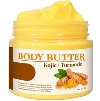


A body butter formula can look surprisingly simple on an ingredient list: plant butter, botanical oils, perhaps an antioxidant, fragrance and a few supporting ingredients.
For a private label brand, however, choosing the butter base is not a minor formulation decision.
Shea butter, cocoa butter and mango butter can influence how firm the product feels in the jar, how quickly it melts during application, how easily it spreads, how much residual film remains on the skin and how the formula behaves when temperature changes.
They also create different commercial opportunities.
Shea butter is familiar and versatile. Cocoa butter can contribute more structure and an indulgent sensory identity. Mango butter can support a smoother, more refined direction and give brands an ingredient story that feels less conventional.
So the useful question is not:
Which butter is best?
It is:
Which butter-or combination of butters-best supports the texture, fragrance, positioning and target market of the product you are trying to create?

Quick Comparison: Shea vs Cocoa vs Mango Butter
The three butters can all work well in body care, but they should not be treated as interchangeable ingredients.
Their exact behavior varies by grade, supplier, processing and the complete formulation, but they tend to contribute different characteristics.
| Factor | Shea Butter | Cocoa Butter | Mango Butter |
|---|---|---|---|
| Typical texture contribution | Creamy, rich and cushioned | Firmer and more structured | Smooth and refined |
| Sensory direction | Nourishing and versatile | Substantial and indulgent | Often lighter-feeling and elegant |
| Natural odor | Mild to characteristic depending on grade | Cocoa/chocolate note may be noticeable in unrefined grades | Usually relatively mild |
| Useful formula role | Versatile foundation | Structure and firmness | Sensory refinement and spread |
| Consumer familiarity | Very high | High | Lower, but more differentiating |
| Works well in blends | Yes | Yes | Yes |
This comparison is more useful than relying on a generic melting-point number.
A raw material specification can tell the formulator how one butter behaves under defined conditions, but the finished body butter is a complete system. Oils, esters, other butters, structurants, fragrance and manufacturing conditions all affect the final result.
That is why two products carrying the same "shea body butter" label can feel completely different.

Why Butter Choice Changes the Finished Product
Plant butters are not only ingredients for front-label storytelling.
They help create the physical structure of the formula.
A butter that contributes more firmness can change scoop resistance and melting behavior. A softer or more easily spreading butter may help reduce drag. Natural odor and color can influence fragrance development and visual consistency.
The difference becomes particularly important when the brief includes phrases such as:
rich but non-greasy
soft and whipped
dense but easy to spread
premium but not waxy
Those descriptions cannot be achieved simply by selecting the butter with the strongest consumer recognition.
The complete lipid system has to be built around the sensory target.
For a wider explanation of body butter formula architecture, texture and commercial manufacturing, see our Private Label Body Butter Guide.
Shea Butter: The Versatile Foundation
Shea butter is often the most straightforward starting point for a private label body butter because it combines formulation versatility with strong consumer familiarity.
For many customers, "shea body butter" already communicates richness and nourishment before they have read the ingredient list.
That recognition can be commercially useful for brands launching a first body butter or building around natural, dry-skin, spa or premium-but-accessible positioning.
From a formulation perspective, shea can provide a creamy, cushioned character without necessarily creating the same degree of firmness associated with a cocoa-heavy system.
It can work in dense traditional-style body butters, softer emulsified formulas and whipped textures.
Its versatility is also why it works so well in blends.
Instead of asking shea butter to provide structure, glide, richness and heat performance by itself, the formulator can let it provide the main creamy body of the product while other lipids adjust the parts of the sensory profile that need refinement.
That approach becomes especially useful for premium dry-skin products, where richness needs to be balanced with repeat-use comfort.
Our guide to developing body butter for dry skin and premium body care lines explains that balance in more detail.
Cocoa Butter: Structure and Indulgence
Cocoa butter usually brings a more structured character to a body butter formula.
That can be useful when the product needs more firmness, a slower melt or a substantial feel in the jar.
Commercially, cocoa butter also brings a familiar and highly sensory identity.
Consumers already associate it with rich body care, while its natural connection to cocoa makes it especially compatible with warm fragrance directions such as vanilla, chocolate, amber or gourmand concepts.
The grade matters.
An unrefined cocoa butter may contribute a noticeable cocoa aroma. That can be an advantage when the fragrance story supports it, but a disadvantage when the brand wants a delicate floral, fresh or perfume-inspired direction.
In those cases, a more neutral refined or deodorized grade may offer greater formulation freedom.
Cocoa butter also needs to be used with restraint.
A product built too heavily around firm lipids can become difficult to scoop in cooler conditions or feel waxy during application.
This is why cocoa butter is often more valuable as a structural partner than as the only butter carrying the formula.
In a blend, it can contribute firmness while softer or more elegant emollients keep the product comfortable to spread.
Mango Butter: Sensory Refinement and Differentiation
Mango butter offers a different type of opportunity.
It does not have the same mass-market recognition as shea or cocoa butter, but that can help a brand create a more distinctive ingredient story.
Depending on the grade and complete emollient system, mango butter can support a smoother, somewhat lighter-feeling sensory direction.
That makes it particularly useful when the product still needs to feel like a body butter but should avoid an excessively heavy or waxy finish.
This can work well for premium botanical concepts, boutique body care, lighter sensory profiles and brands looking for an ingredient story beyond the familiar shea-led formula.
Mango butter also integrates well into multi-butter strategies.
For example, a formulator might use shea for the main creamy body of the product and mango to help refine spreadability and after-feel.
The important word is help.
No single butter guarantees a non-greasy or fast-absorbing result. The final sensory experience depends on the entire lipid and structuring system.
That distinction matters when developing a product commercially rather than simply choosing ingredients for marketing appeal.
Should You Use One Butter or Blend Several?
For many private label body butter projects, this is the most useful question in the entire development process.
The strongest formula is often not:
Shea vs Cocoa vs Mango.
It is:
What should each butter do?
A blend gives the formulator more control.
Shea can provide the familiar creamy foundation.
Cocoa can increase structure when the product needs more firmness.
Mango can support a smoother or more elegant sensory direction.
The exact proportions should follow the target texture rather than a marketing rule.

| Product Direction | Butter Strategy | Main Goal |
| Classic premium body butter | Shea-led | Balanced richness and broad consumer familiarity |
| Ultra-rich winter butter | Shea + cocoa | More structure and a substantial skin feel |
| Elegant premium butter | Shea + mango | Richness with a smoother sensory profile |
| Whipped body butter | Shea + mango | Soft, airy and easy-spreading texture |
| Gourmand body butter | Cocoa + shea | Structure plus a warm fragrance story |
| Multi-butter hero SKU | Shea + cocoa + mango | Balance texture, differentiation and ingredient storytelling |
These are development directions rather than fixed formulas.
A brand should not turn a table like this into a percentage recipe.
The final balance still needs to account for oils, lightweight emollients, fragrance, antioxidants, structural ingredients, packaging and the way the product will be manufactured and transported.
This is also why "triple butter" can be more than a marketing phrase when the formula is designed intelligently.
Each butter can have a different technical role.
Refined or Unrefined? Follow the Brand Brief
The decision between refined and unrefined butter should also follow the intended product experience.
Unrefined grades may retain more characteristic color and odor. That can strengthen a raw, botanical or artisan-style ingredient story.
But those same characteristics can make fragrance and visual consistency more difficult.
A naturally aromatic cocoa butter may work beautifully in a vanilla or gourmand formula. It may be much less desirable underneath a delicate floral fragrance.
Shea can create a similar consideration. A brand that wants a very neutral white base with a precise fine-fragrance profile may value a more neutral raw-material grade over a strong "raw ingredient" character.
Neither refined nor unrefined is automatically more premium.
The better choice is the one that supports the brief.
This matters because ingredient philosophy sometimes conflicts with the consumer experience.
A brand may initially ask for the most natural, least processed butter possible while simultaneously requesting a very pale formula with little raw-material odor and a highly controlled fragrance.
Those requirements need to be discussed together rather than treated as separate decisions.
Climate and Fragrance Can Change the Best Butter Choice
Butter selection should not be separated from the conditions in which the finished product will be sold and shipped.
A very firm lipid system may feel appropriate in one environment and become harder than expected in colder storage conditions.
At the other extreme, a very soft whipped body butter can lose its visual structure when exposed to elevated temperatures during warehousing or delivery.
This does not mean one butter should automatically be labeled "for cold climates" and another "for hot climates."
The complete butter-and-oil system matters more than the identity of one ingredient.
Fragrance creates another important interaction.
Cocoa butter with a noticeable natural aroma can reinforce chocolate, vanilla or other warm concepts. A more neutral butter base may make sense for citrus, fresh floral or perfume-inspired directions where the fragrance needs a cleaner canvas.
So butter selection should consider at least three things together:
texture, climate and fragrance.
That combination usually gives a formulator far more useful direction than asking for a specific butter percentage.
Butter Choice Still Has to Survive Manufacturing
A butter that looks attractive on an ingredient list still has to behave consistently during production.
Plant butters have crystalline structures, which means heating, cooling and processing conditions can influence the texture that develops after filling.
The same formula can also behave differently when moving from a small laboratory batch to commercial production equipment.
That is why butter selection and blending should be evaluated alongside the manufacturing process.
A formula that feels smooth immediately after production still needs to remain acceptable through storage, transportation and expected temperature variation.
The purpose of this article is not to turn butter selection into a full troubleshooting guide, but brands should understand one principle:
raw-material choice and process control work together.
Butter selection can influence firmness, crystallization and heat behavior, but troubleshooting requires looking at the complete formula and process. For a deeper technical discussion, see our guide to body butter graininess, greasy feel, melting and stability.
Don't Ask for "More Shea"-Give Your Manufacturer a Better Brief
A manufacturer can do much more with a good sensory brief than with a request such as:
"Please make a body butter with a high percentage of shea butter."
That tells the formulator what ingredient the brand wants, but not what product the customer should experience.
A more useful brief sounds like this:
"We want a premium 200 g body butter for a U.S. DTC line. It should feel clearly richer than lotion but spread easily and avoid a heavy greasy film. Shea should remain the recognizable hero butter, while mango butter can be used if it helps create a smoother finish. We want a soft whipped-cream appearance, a warm vanilla fragrance and a formula that can be evaluated for summer e-commerce shipping."
Now the R&D team understands the commercial target.
The brand has explained:
who the customer is,
what the product should feel like,
which ingredient needs to remain recognizable,
what fragrance direction is intended,
and what distribution challenge matters.
The manufacturer can then decide whether shea should dominate the blend, whether mango supports the sensory target, whether additional structure is required and which other emollients or formulation tools are needed.
That is a much stronger starting point than maximizing one butter because it sounds premium.
Final Recommendation: Shea, Cocoa or Mango Butter?
There is no universal winner.
Choose shea butter when versatility, familiarity and a reliable creamy foundation matter most.
Choose cocoa butter when the product needs more structure or when rich, indulgent and gourmand positioning supports the brand concept.
Choose mango butter when sensory refinement and a less familiar botanical story are priorities.
For many private label projects, however, the strongest answer is a blend.
Shea can provide creaminess.
Cocoa can contribute structure.
Mango can help refine the sensory direction.
The formulator can then adjust the rest of the system around the target consumer, climate, fragrance, packaging and commercial cost.
The goal is not to put the largest possible butter percentage on the ingredient story.
It is to build a body butter that feels intentional from the first scoop to the final after-feel.
Frequently Asked Questions
Q: 1. Which butter is best for private label body butter?
A: Shea butter is often the most versatile starting point because it combines strong consumer familiarity with flexibility across different texture directions.
Cocoa butter can be useful when more structure or an indulgent sensory profile is required, while mango butter can support smoother and more differentiated premium concepts.
The best option depends on the finished product you are trying to create.
Q: 2. Can shea butter, cocoa butter and mango butter be used together?
A: Yes.
In many formulas, blending several butters can provide more control than relying on one butter alone.
Shea may provide creaminess, cocoa can contribute firmness and mango may support sensory refinement.
The final ratio should be determined through formulation and finished-product evaluation rather than a generic percentage rule.
Q: 3. Which butter is better for hot climates?
A: No individual butter guarantees heat stability.
The finished product depends on the complete lipid system, structural ingredients, processing conditions and packaging.
For warm-market distribution, the formula should be evaluated under temperature conditions that reflect realistic storage and shipping risks.
Q: 4. Is refined or unrefined shea butter better for private label products?
A: Neither is universally better.
Unrefined shea may support a stronger raw botanical story and retain more characteristic color or odor.
Refined grades can provide a more neutral base when the brand requires greater control over color, fragrance or visual consistency.
The product brief should determine the choice.
Q: 5. What percentage of shea, cocoa or mango butter should a body butter contain?
A: There is no universal ideal percentage.
A higher butter level may increase richness, but it can also influence hardness, greasiness, spreadability, cost and temperature behavior.
The correct level depends on the target texture, supporting oils and emollients, packaging, fragrance and intended market.
Develop the Butter Blend Around the Product You Want
The best butter choice is not the one that looks most impressive on an ingredient list.
It is the one that helps create the texture, sensory experience and brand positioning your customer will actually notice.
A classic shea-led butter, a richer shea-and-cocoa winter formula and a smoother shea-and-mango premium product may all be excellent body butters-but they are excellent for different reasons.
Poleview supports custom development across shea, cocoa, mango and multi-butter body butter concepts, including texture, fragrance, formula adjustment, packaging and OEM/ODM production.
If your brand already has a concept, explore our custom body butter manufacturing service or share your target market, desired texture, butter preference, fragrance direction, packaging idea and estimated order quantity with our team.
The goal is not simply to choose a butter.
It is to give every butter in the formula a job.