

Choosing body care packaging is not simply a matter of finding an attractive bottle or jar. The packaging must work with the formula, dispense the product correctly, survive filling and shipping, provide enough space for required information and support the intended retail price.
A pump bottle that works well with a lightweight body lotion may struggle with a rich cream. A wide-mouth jar may suit body butter but require stronger sealing for an oil-rich scrub. A tube may be convenient for travel, yet unsuitable if exfoliating particles cannot pass through its opening.
For private label brands, these decisions affect packaging cost, component MOQ, production efficiency, leakage risk, customer reviews and the time required to bring a product to market.

This guide explains how to compare jars, bottles, tubes and gift sets for a private label body care line. It also covers packaging materials, decoration, compatibility testing, shipping considerations and the difference between standard and fully customized packaging.
For a broader overview of formulas, product categories, packaging and OEM production, start with our private label body care development guide.
Quick Answer: Which Body Care Packaging Should You Choose?
The right packaging usually starts with the formula and how the customer will use it.
| Product type | Common packaging direction | What should be validated |
|---|---|---|
| Body lotion | Pump bottle, squeeze bottle or tube | Viscosity, pump output and product evacuation |
| Body cream | Jar, tube or selected pump bottle | Dispensing performance and formula residue |
| Body butter | Wide-mouth jar | Heat stability, sealing and easy scooping |
| Body scrub | Jar or selected wide-opening tube | Particle size, oil leakage and label resistance |
| Body oil | Bottle with reducer, treatment pump or suitable closure | Leakage, closure compatibility and controlled dosage |
| Body wash | Pump bottle, flip-top bottle or disc-top bottle | Viscosity, cap seal and wet-environment use |
| Hand cream | Tube or compact pump bottle | Portability, tail sealing and controlled dispensing |
| Body care gift set | Folding carton, rigid box or mailer with fitted insert | Product fit, transport protection and total pack weight |
This table should be treated as a starting point rather than a fixed rule. The final choice depends on the actual formula, fill size, sales channel, target price and destination market.

Start with the Formula, Not the Bottle
One of the most common packaging mistakes is selecting a container before the formula has been confirmed.
Body care products that appear similar may behave very differently during filling and use. A lightweight lotion can flow easily through a standard pump, while a rich body cream may dispense slowly or leave a large amount of product inside the bottle. A body scrub containing sugar, salt or coffee particles may block a narrow tube opening. A low-viscosity body oil may leak through a closure that performs well with lotion.
Before packaging samples are ordered, the brand and manufacturer should review several formula characteristics.
Viscosity determines whether the product can be pumped, squeezed, poured or scooped. Particle size affects whether a scrub can pass through a tube or dispensing system. Oil content can influence leakage, label adhesion and the compatibility of seals and gaskets. Heat-sensitive or oxidation-prone formulas may require more attention to light exposure, headspace and closure performance.
The filling process also matters. Some products are filled warm and thicken as they cool. Others require a particular nozzle size or filling speed. A container that looks suitable in a product catalogue may create problems on the production line if its neck size, opening or closure structure does not match the intended formula.
For this reason, the commercial sample should be evaluated in the intended packaging whenever possible-not only in a generic laboratory container. Before selecting the final container, brands developing lotions, creams or other daily moisturizers can also review our private label body moisturizer formula guide to define the intended texture, absorption profile and product positioning.
Wide-Mouth Jars for Body Cream, Body Butter and Scrub
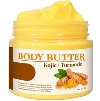
Wide-mouth jars are commonly used for products that are too thick to dispense through a standard pump. They also allow consumers to see, mix and scoop textured formulas.
A body cream jar can support a rich, premium product experience, particularly for dry-skin, spa or nighttime-care positioning. Jars are also suitable for dense body butter, balm-like products and body scrubs containing visible particles.
However, choosing a jar involves more than selecting its shape and color.
Plastic or Glass Jars
Plastic jars are lightweight, less vulnerable to breakage and generally easier to manage for e-commerce and export shipping. PET, PETG and PP structures may be considered depending on the required appearance, formula and decoration method.
Glass jars offer weight and a more substantial feel, which can support premium positioning. The trade-offs are higher shipping weight, greater breakage risk and the need for stronger dividers or inserts. Transparent glass also does not automatically protect a light-sensitive formula; colored, coated or secondary packaging may be needed when light exposure is a concern.
Neither material is universally better. The decision should reflect the formula, retail price, shipping route and customer expectations. This decision is particularly important for butter-based products because texture, heat exposure and shipping weight can all affect the final packaging route. Brands developing this category can review Poleview's custom private label body butter solutions for plastic jars, glass jars, tubes and gift set options.
Single-Wall and Double-Wall Jars
Single-wall jars normally use less material and may be more economical. Double-wall jars can create a thicker, more substantial appearance, even when the inner product chamber is smaller.
Brands should confirm the actual fill volume rather than judging capacity by the outside dimensions. A large-looking double-wall jar may hold less product than expected, which affects net-content declarations, carton dimensions and customer perception.
Seals, Inner Lids and Wet-Environment Use
An inner lid, gasket or sealing film may help reduce movement and improve presentation, but the appropriate sealing method depends on the jar structure and formula.
Body scrub packaging requires particular attention. Oil can move around the jar threads, affect labels or seep during transportation. Scrubs are also frequently used with wet hands in the shower, so label material, print durability and water resistance should be reviewed.
For more detail on matching sugar, salt and coffee scrubs with suitable packaging, see our private label body scrub formulation guide.
Bottles and Pumps for Lotion, Body Wash and Body Oil
Bottles are a flexible option for body lotions, body wash, shower gel and selected body oils. They offer multiple dispensing systems and can work across daily-care, family, hospitality, salon and retail lines.
The closure often matters as much as the bottle itself.
Pump Bottles
Pump bottles provide controlled dispensing and convenient one-handed use. They are commonly selected for body lotion and body wash, but the pump must be tested with the actual formula. Brands planning this product category can explore Poleview's private label body lotion manufacturing options for formula, texture, pump bottle and tube development.
Important points include:
- the amount dispensed with each stroke;
- the force required to press the pump;
- how quickly the pump returns;
- the number of strokes needed for initial priming;
- whether the dip tube reaches the correct position;
- how much product remains when the pack appears empty;
- whether the pump can be locked for transportation.
A pump that works well with a fluid lotion may not be suitable for a dense body cream. If the product is too thick, the pump may return slowly, dispense inconsistently or stop working before the container is empty.
Flip-Top and Disc-Top Bottles
Flip-top and disc-top closures can work well for squeeze bottles, body wash and more fluid lotions. They may be simpler and more economical than pumps, particularly for travel sizes or high-volume products.
The opening size must still match the formula. If the opening is too small, a thick product will be difficult to dispense. If it is too large, a fluid product may release too quickly.
The cap hinge, sealing plug and bottle flexibility should also be reviewed. Customers often use these products with wet hands, so the pack should be easy to grip, open and close.
Bottles for Body Oil
Body oil needs controlled dosage and reliable leakage protection. Depending on the viscosity and product positioning, the brand may consider a reducer, treatment pump, spray system or another suitable closure.
Not every lotion pump works with oil. The oil may interact differently with internal pump components, seals and labels. The complete bottle-and-closure system should therefore be evaluated together.
Brands comparing packaging needs across lotion, cream, butter and oil can also read our guide to choosing body lotion, body cream, body butter and body oil.
Tubes for Body Cream, Hand Care and Travel Sizes
Tubes are frequently used for body cream, hand cream, foot cream, selected body scrubs and travel-size products. They are lightweight, portable and easy to use without placing fingers directly into the formula.
A tube can also help consumers use more of the product because it can be squeezed from the sealed end toward the opening. However, product evacuation depends on the formula viscosity, tube flexibility and shoulder design.
For thick creams, the opening should be large enough to provide comfortable dispensing. For scrubs or formulas containing particles, both the opening and the internal flow path must be checked. A tube that works with a smooth cream may become blocked when the same base contains exfoliating particles.
Other points to confirm include:
- tube material and layer structure;
- opening diameter;
- cap type;
- tail-seal appearance and strength;
- filling volume;
- print or label area;
- resistance to product oils;
- tube recovery after squeezing.
Tubes can be a practical option for e-commerce and travel because they are lighter than glass and less vulnerable to breakage. They may also reduce contamination during use. However, they should not automatically be treated as the lowest-cost option, as custom tube printing, colors, finishes and low-volume production can carry separate component requirements.
Gift Set Packaging for Retail, E-Commerce and Seasonal Collections
Gift sets can increase the value of a body care line by combining complementary products into a complete routine. Popular combinations include:
- body scrub with body butter;
- body wash with body lotion;
- body oil with body cream;
- hand cream with body mist;
- body care products with bath salts, bath bombs or soap.
- The packaging structure should be developed around how the set will be sold.
A retail gift box needs strong shelf presentation and a neat unboxing experience. An e-commerce set also needs to withstand parcel handling. A decorative box that performs well on a retail shelf may still require an outer shipping carton, protective corners or additional cushioning when sold online.
The internal insert is especially important. Paperboard inserts, molded pulp, EVA and other structures offer different levels of support, appearance and material complexity. The insert should hold each item securely without making removal difficult.
Gift set development should begin after the individual product dimensions are reasonably stable. If the bottle, jar or cap changes after the insert has been approved, the gift box may need to be redesigned and sampled again.
Seasonal projects also require early planning. Custom structures, printed inserts, special finishes and multiple packaging components can create longer lead times than a single product using standard packaging.

Plastic, Glass, Aluminum and Recycled Materials
Packaging material affects appearance, weight, compatibility, cost and shipping performance. It can also influence how easily the complete pack fits into a brand's sustainability strategy.
Plastic
PET is often considered when brands want a clear, lightweight bottle with broad decoration options. PP is commonly used for jars, caps and other packaging components because of its toughness and practical manufacturing characteristics. Other plastics may be selected for squeeze performance, barrier requirements or visual finish.
Material suitability should still be confirmed with the complete formula and closure system. The same resin may perform differently depending on wall thickness, color, coating, label and component design.
Glass
Glass offers weight, clarity and a premium tactile experience. It can work well for body oils, creams and selected high-value products. However, it increases shipping weight and requires stronger protection against breakage.
The closure remains critical. A glass bottle or jar is not leakproof simply because the main container is glass.
Aluminum
Aluminum bottles, tins or tubes may suit selected natural, travel or premium concepts. Brands should confirm whether the inside of the packaging requires a protective lining and whether that lining is compatible with the formula.
PCR and Other Sustainability-Led Options
Post-consumer recycled plastic can help brands reduce their use of virgin material, but it may introduce differences in color, clarity, odor or mechanical performance. The available PCR percentage and supporting documentation should be confirmed with the packaging supplier.
Brands should also avoid assuming that "bio-based" means biodegradable or that a theoretically recyclable container will be accepted by every local collection system. Pumps, metal springs, labels, coatings and multi-material decorations can affect the recyclability of the complete package.
For brands selling into Europe, packaging development should increasingly consider material reduction, recyclability and future labeling requirements under the EU Packaging and Packaging Waste Regulation. Sustainability claims should remain specific and supported rather than relying on broad descriptions such as "fully eco-friendly."
Standard Packaging or Fully Custom Packaging?
Private label brands do not always need a custom mold. The appropriate route depends on launch volume, budget, timeline and the level of differentiation required.
| Packaging route | Suitable for | Main advantages | Main considerations |
|---|---|---|---|
| Stock container with label | New launches and market testing | Faster development and lower initial commitment | Limited container differentiation |
| Stock container with custom decoration | Growing brands | Stronger brand presentation without a new mold | Decoration may have a separate MOQ |
| Custom-colored container | Coordinated product ranges | Better visual consistency across SKUs | Color matching and component MOQ |
| Fully custom mold | Larger-volume or signature packaging | Strongest structural differentiation | Mold cost, longer lead time and additional testing |
| Custom gift set | Seasonal, retail and premium collections | Combines multiple products and raises perceived value | Insert development, box MOQ and shipping tests |
Packaging MOQ and finished-product MOQ are not always the same.
A bottle, pump, cap, label and carton may come from different production processes. Custom colors, printing and decorative finishes may each have their own minimum quantities. If the packaging supplier requires more components than the first production run uses, the brand should decide how the remaining materials will be stored and used in future orders.
For brands validating a new body care concept, a standard container with a well-developed label is often more practical than starting immediately with a custom mold. Structural customization becomes more reasonable when expected order volume and repeat demand can support it.
Decoration and Artwork Planning
Labels and decoration help communicate the product's positioning, but they must also fit the available packaging surface and withstand actual use.
Common decoration options include pressure-sensitive labels, screen printing, hot stamping, color coating, frosted finishes and secondary cartons. The choice depends on the container material, order quantity, budget, exposure to water or oil and the desired retail appearance.
A beautiful design can fail in practice if the label wrinkles on a curved bottle, the adhesive weakens in a humid bathroom or oil from a scrub stains the printed area.
Artwork planning should also begin before the packaging order is finalized. The bottle or jar needs enough usable space for the product identity, net contents, ingredient information, directions, responsible company information and other market-specific content.
For the US market, required information must be arranged according to the applicable cosmetic labeling rules, including the Principal Display Panel and information panels. EU and UK projects may require different artwork and responsible-party information.
Poleview can help coordinate packaging dimensions, label areas and dielines, but final claims and regulatory artwork should be reviewed for the target market before printing.
Packaging Tests Before Bulk Production
Packaging should be assessed as a complete system: formula, container, closure, decoration, label and outer carton.
Formula and Material Compatibility
The manufacturer should observe whether contact with the formula causes discoloration, deformation, cracking, softening, odor changes or other visible problems. Oil-rich, fragranced and active-led formulas may require particular attention.
Dispensing Performance
Pumps, reducers, flip-top caps and tubes should release a practical amount of product. The team should check priming, output consistency, opening size, residue and ease of use.
Leakage and Closure Performance
The appropriate checks depend on the packaging structure and formula. They may include closure fit, inversion, seal integrity, pump locking and the use of an inner lid, gasket or sealing film.
Label and Decoration Resistance
Labels and printed decoration should be reviewed after exposure to the formula, water, handling and relevant storage conditions. This is especially important for body oils, scrubs and products used in showers.
Temperature and Storage Evaluation
Warm and cold conditions can change both the formula and the packaging. Body butter may soften, emulsions may change viscosity, seals may respond differently and labels may lift.
Shipping Protection
The final packing configuration should reflect the actual sales route. Export cartons, e-commerce parcel delivery, retail gift sets and glass containers do not have the same protection requirements.
Before bulk production, the brand and manufacturer should approve a commercial reference sample that confirms the formula, fill volume, container, closure, color, decoration, label and outer packaging.
Common Packaging Mistakes to Avoid
A successful body care package is usually the result of several coordinated decisions. Problems often appear when one decision is made in isolation.
Common mistakes include choosing the container before confirming formula viscosity, approving a pump without testing the actual product, overlooking component MOQ, developing a gift box before individual pack dimensions are final, judging packaging only at room temperature and approving artwork without checking the available label area.
Another common mistake is selecting a heavy or fragile package for a product primarily sold through e-commerce without considering shipping cost and damage risk.
These issues are easier to correct during sampling than after packaging materials have been printed or bulk production has started.
How Poleview Supports Body Care Packaging Development
Poleview supports private label body care projects from formula development and packaging selection through sampling, filling and bulk production.
Established in 1995, Poleview operates a 40,000-square-meter personal care manufacturing facility with 22 production lines. Our packaging support is connected to the product-development process rather than treated as a separate visual decision.
Depending on the project, our team can help brands:
compare stock and customized packaging routes;
select containers around the formula and viscosity;
review pumps, caps, tubes, jars and sealing structures;
coordinate packaging samples and commercial product samples;
check label dimensions and packaging dielines;
review filling and dispensing performance;
plan gift sets, inserts and outer cartons;
confirm packaging components before bulk production.
Brands may also nominate their own packaging suppliers. In that case, the packaging specifications, delivery schedule, filling compatibility and quality responsibilities should be agreed before materials are shipped to the factory.
To receive more relevant packaging recommendations, share your product type, target fill size, formula direction, target market, sales channel, preferred packaging style and estimated order quantity.
Frequently Asked Questions
Q: 1. What packaging is best for body lotion?
A: Pump bottles are a common choice for daily-use body lotion, while squeeze bottles and tubes can work well for travel, e-commerce or more compact products. The best option depends on the lotion's viscosity, fill size, price position and intended use.
Q: 2. Should body butter use a plastic or glass jar?
A: Both can work. Plastic jars are lighter and less vulnerable to breakage. Glass jars provide more weight and can support premium positioning, but they increase shipping cost and require better protection. Heat stability and sealing should be evaluated with either option.
Q: 3. Can body scrub be packed in a tube?
A: Selected cream-based or gel-based scrubs may work in tubes. Particle size, tube opening, viscosity and filling method must be tested. Thick oil-based scrubs with large particles are usually more practical in wide-mouth jars.
Q: 4. Can thick body cream be packed in a pump bottle?
A: Possibly, but the pump must be matched to the formula. Dense cream can cause slow return, inconsistent output or excessive product residue. A jar, tube or pump designed for higher-viscosity products may be more suitable.
Q: 5. Can we use our own packaging supplier?
A: Yes. Brands can nominate their own packaging supplier, but the components should be reviewed for dimensions, filling compatibility, closure performance, delivery schedule and quality requirements before bulk production.
Q: 6. What determines custom packaging MOQ?
A: MOQ can be affected by the container material, custom color, mold, printing process, decoration, pump or closure type and carton structure. Packaging component MOQ may differ from the finished-product MOQ.
Q: 7. How should packaging be tested before production?
A: The test plan should reflect the formula and packaging structure. It may include formula compatibility, dispensing, leakage, closure fit, label adhesion, temperature exposure and shipping evaluation. The intended commercial packaging should be approved before bulk production.
Q: 8. How early should a custom gift set be developed?
A: Gift set planning should begin after the main product formats and approximate dimensions are known. Fully customized boxes and inserts require additional design, sampling, printing and transport evaluation, so seasonal projects should be started well before the planned launch date.
Plan Your Private Label Body Care Packaging with Poleview
The best body care packaging is not necessarily the most expensive or visually complex option. It is the package that protects the formula, works reliably for the consumer, fits the sales channel and can be produced consistently at the intended order volume.
Whether your project requires a body cream jar, lotion pump bottle, cosmetic tube or multi-product gift set, Poleview can help connect packaging selection with formula development, sampling and manufacturing. Explore our private label body care manufacturing capabilities for body wash, lotion, butter, scrub, oil and related product categories.
Share your product brief with our team to discuss suitable packaging routes, sample options and an OEM/ODM production plan.