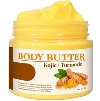


A body butter can pass the first sample review and still fail later.
It may feel much greasier than expected after the final fragrance is added, develop a sandy texture after repeated temperature changes, soften during summer shipping or lose the whipped structure the brand originally approved.
These failures rarely come from one ingredient alone.
In commercial body butter development, texture problems are usually system problems. Butter selection, liquid emollients, structural ingredients, heating and cooling conditions, filling, packaging and distribution temperatures can all influence what the customer eventually experiences.
That is why troubleshooting should not begin with:
"What ingredient should we add?"
A better question is:
Which part of the formula, manufacturing process or distribution environment is causing the behavior?
For a broader explanation of formula architecture, texture, packaging and OEM production, see our Private Label Body Butter Guide.

Quick Diagnosis: What Is Going Wrong?
Before changing a formula, define the problem clearly.
| Problem | What the Customer Sees or Feels | What the Development Team Should Review |
|---|---|---|
| Greasy feel | Heavy film, slow dry-down or oily residue | Complete emollient system, butter load, spread and after-feel |
| Graininess | Small crystals, particles or sandy texture | Lipid crystallization, heating/cooling profile and later temperature cycling |
| Melting / excessive softening | Product loses firmness or becomes partially liquid | Lipid structure, transport temperature and packaging |
| Oil separation / sweating | Liquid oil appears on the surface | Solid/liquid balance, internal structure and temperature exposure |
| Whipped collapse | Loss of volume, shape or airy texture | Aeration, filling, heat exposure and transport |
| Emulsion instability | Separation, thinning or major texture change | Emulsifier system, process conditions, pH and preservation where applicable |
This table is a starting point, not a troubleshooting recipe.
The same visible problem can have more than one cause, and changing the wrong variable may simply replace one defect with another.

Why Body Butter Feels Too Greasy
Body butter is expected to feel richer than lotion, but richness and greasiness are not the same thing.
A well-developed product can feel substantial and protective while still spreading smoothly and leaving a controlled finish. When the formula feels heavy, oily or slow to settle, the first thing to review is usually the complete emollient system rather than one ingredient in isolation.
Two formulas can contain similar levels of oils and butters and still feel completely different.
One may have good slip, fast rub-out and a comfortable residual film. Another may drag during application and leave an oily layer several minutes later.
The difference can come from the interaction between:
- solid butters,
- liquid oils,
- esters or other lightweight emollients,
- structurants,
- sensory modifiers,
- and the overall texture of the product.
The solution is therefore not automatically to reduce the oil phase.
Doing that may remove the richness the brand actually wanted.
Instead, formulators may review how heavy and lighter-feeling emollients are balanced, how quickly the formula spreads, how much film remains after application and whether the texture is appropriate for the intended use occasion.
A winter or nighttime body butter may intentionally leave more protection on the skin. A premium daytime product may need a noticeably cleaner dry-down.
If the commercial goal is a richer body butter with a more elegant finish, our guide to developing body butter for dry skin and premium body care lines explains that sensory balance in more detail.
Why Body Butter Becomes Grainy
Graininess is one of the most frustrating body butter problems because the formula may appear perfectly smooth when it is first filled.
The defect can emerge days or weeks later as small crystals, particles or a sandy texture.
Natural plant butters contain different lipid fractions that can crystallize differently as the product is heated and cooled. If the final crystalline structure develops unevenly, the consumer may feel those larger crystals during application.
This is why graininess should not automatically be blamed on "bad shea butter."
Butter selection matters, but so does the thermal history of the batch.
Depending on the formulation, the development team may need to review:
melting conditions, hold conditions where relevant, cooling profile, agitation, filling temperature and later temperature exposure.
The correct process is specific to the lipid system.
There is no single universal heating or cooling recipe that should be copied from one body butter formula to another.
Why Temperature Cycling Matters
A smooth product stored continuously at room temperature may behave differently when it repeatedly moves between warm and cool conditions.
That can happen during:
- warehousing,
- international transport,
- seasonal delivery,
- or normal consumer storage.
These temperature changes can alter the way the lipid structure reorganizes over time.
That is why a body butter should not be approved only because it looks smooth immediately after production.
Butter choice also affects firmness and crystallization behavior. If you are still defining the lipid base, compare shea, cocoa and mango butter in private label body butter formulas.
The key point is that raw-material choice and process control work together.
Why Body Butter Softens or Melts During Shipping
A formula that feels ideal in a climate-controlled laboratory can become much softer during summer logistics.
This is especially important for anhydrous and butter-rich systems because their texture depends heavily on the balance between solid and liquid lipids.
Excessive softening can be influenced by the complete formula structure, including:
- the proportion and type of butters,
- liquid oils and emollients,
- structural ingredients,
- processing conditions,
- and the temperatures the product experiences after filling.
One common reaction is simply to add more wax or another hard structurant.
That may improve firmness.
But it can create a new problem.
A formula that becomes more heat resistant may also become harder to scoop, more resistant to spreading and noticeably waxier on the skin.
So the commercial objective is not:
Make the product as hard as possible.
It is:
Maintain enough structure for storage and transport without destroying the sensory experience.
A useful heat-stability discussion therefore starts with the actual supply chain.
Will the product move through e-commerce fulfillment? Could it remain in a delivery vehicle during summer? Is it shipped internationally? Will the final packaging reduce or increase leakage risk?
Those details are more useful than simply describing the destination market as "hot" or "cold."
What Causes Oil Separation or "Sweating"?
Oil appearing on the surface of a body butter is sometimes described as sweating.
It may look like small droplets or a visible layer of liquid oil.
This does not automatically mean the formula contains "too much oil."
The more useful question is whether the internal structure is holding the liquid phase as intended.
Possible areas to review include the balance between solid and liquid lipids, the strength of the structural network, temperature exposure and the manufacturing history of the batch.
A product may remain visually stable under normal storage and begin releasing oil after prolonged heat exposure.
Packaging can make the problem more visible as well. Oil migration around liners, seals or jar surfaces may be interpreted by the consumer as leakage even when the underlying cause begins in the formula.
This is why oil separation should be investigated as a formula + process + storage issue rather than corrected by changing one ingredient blindly.
Why Whipped Body Butter Loses Volume
Whipped body butter introduces another variable: air.
The airy appearance that makes the product visually attractive also makes production and transport more complicated.
When air is deliberately incorporated into the product, the manufacturer needs to consider both mass and apparent volume.
They are not the same thing.
A whipped product may lose its visual structure if aeration is inconsistent, if the formula softens under heat or if the filling and cooling process does not support the intended texture.
Transport can also change the appearance of the product.
A jar that looks full and airy immediately after filling may settle or collapse after repeated vibration and temperature exposure.
Development teams may therefore review:
- aeration consistency,
- fill weight,
- headspace,
- texture firmness,
- temperature sensitivity,
- and transport conditions.
For whipped products, controlling the formula alone is not enough.
The process used to create and fill the texture becomes part of the product specification.
Emulsified Body Butter Has Different Stability Risks
Not every product marketed as body butter is anhydrous.
Some modern body butters are rich emulsions containing both water and oil phases. They may still feel dense and buttery, but they introduce stability considerations that do not apply in exactly the same way to a traditional water-free formula.
An emulsified body butter may require attention to:
emulsion stability, viscosity, pH, preservation and microbiological control, in addition to the sensory and packaging questions already discussed.
Visible separation in an emulsified butter therefore has a different technical meaning from oil sweating in an anhydrous system.
The troubleshooting path needs to begin with the actual formula architecture.
This is another reason product names alone are not enough when discussing a quality problem.
"Body butter" describes the commercial format.
The manufacturer still needs to know what type of system sits inside the jar.
Stability Testing Should Reproduce the Real Risk
A stability program should not be treated as a generic checklist copied from one formula to another.
Testing should answer the problems the development team actually needs to understand.
| Development Concern | What the Evaluation Needs to Reveal |
| Graininess | Whether relevant temperature changes trigger unwanted crystallization |
| Melting / softening | Whether the product loses acceptable firmness under elevated-temperature exposure |
| Oil separation | Whether the internal structure retains the liquid phase during storage |
| Whipped collapse | Whether volume and texture remain acceptable after heat and handling |
| Packaging compatibility | Whether formula, liner, seal and decoration remain compatible |
| Emulsified butter stability | Whether physical and microbiological control remain acceptable for the system |
The exact test plan depends on the product.
A soft emulsified butter in an airless pack and an anhydrous whipped butter in a wide-mouth jar do not necessarily need to be evaluated in exactly the same way.
What matters is that testing reflects the formula architecture, packaging and realistic distribution conditions.
For packaging-specific considerations, brands can also review our Private Label Body Care Packaging Guide.
How an OEM Team Should Troubleshoot a Body Butter Problem
The most effective troubleshooting usually begins by resisting the urge to change the formula immediately.
First, determine whether the problem can be reproduced.
If one jar becomes grainy but every retained sample remains smooth, the investigation is different from a situation in which multiple batches show the same behavior after identical temperature exposure.
Next, isolate when the problem appears.
Does it happen in the laboratory sample?
Only after scale-up?
Only after the final fragrance is added?
Only in a particular package?
Only after warm storage or temperature cycling?
These details help separate three broad categories of causes:
formula, process and distribution.
Once the likely source is clearer, the team can change one or a small number of variables and evaluate the result rather than making several unrelated adjustments at once.
That matters because a change intended to fix one problem can easily create another.
Adding more structure may reduce softening but increase drag.
Reducing heavy emollients may improve dry-down but make the product feel less premium.
Changing the cooling process may improve texture while affecting production throughput.
Troubleshooting is therefore a balancing exercise, not a search for one "correct" ingredient.

Give Your Manufacturer a Better Problem Report
Saying:
"The body butter is unstable."
does not give an R&D team much to work with.
A more useful report might say:
"The approved sample remains smooth at room temperature, but after repeated warm-cool exposure small grains appear. The product also becomes noticeably softer during high-temperature storage, while color and fragrance remain acceptable. The issue was observed in the final commercial jar."
Now the development team knows much more.
The brand has explained:
what changed,
when it changed,
what conditions preceded the change,
whether other characteristics remained acceptable,
and which packaging was involved.
Photos are useful too, especially when the defect involves visible separation, collapse or crystallization.
Batch or sample identification also matters.
A problem seen in one early laboratory sample should not automatically be assumed to represent the same issue in a later pilot or commercial batch.
Clear feedback reduces guesswork and makes reformulation more focused.
Final Recommendation: Fix the Cause, Not Just the Symptom
Greasy feel, graininess, melting and separation often look like separate problems.
In commercial body butter development, they can be connected.
The butter system influences firmness and crystallization.
The emollient system influences spread and after-feel.
The manufacturing process influences how the structure develops.
Temperature and packaging influence what happens after production.
This is why the fastest-looking solution is not always the best solution.
More wax may reduce softening and create excessive drag.
Less oil may reduce greasiness and remove the richness the brand wanted.
A harder butter may increase structure while making cold-temperature application less comfortable.
The better approach is to identify the root cause and then protect the original product brief while solving it.
A stable body butter is not simply one that remains solid.
It is one that continues to look, feel and perform the way the brand approved when it reaches the customer.
Frequently Asked Questions
Q: 1. Why does body butter become grainy?
A: Graininess is often associated with changes in lipid crystallization. Butter composition, heating and cooling conditions, filling and later temperature exposure can all influence the final structure.
The correct process depends on the specific formula rather than a universal cooling method.
Q: 2. Why does my body butter feel too greasy?
A: Greasy feel usually reflects the complete emollient and texture system rather than one oil or butter alone.
Butter selection, liquid emollients, spreadability and residual film should be evaluated together.
Q: 3. How can body butter be made more stable in hot conditions?
A: Heat stability depends on the complete lipid and structural system, manufacturing process, packaging and required sensory profile.
Increasing wax or another structurant may increase firmness, but excessive use can create a hard or waxy product. Commercial development needs to balance temperature resistance with spreadability and skin feel.
Q: 4. Why is oil separating from my body butter?
A: Surface oil or sweating may indicate that the internal structure is no longer retaining the liquid phase as intended.
Solid-to-liquid balance, temperature exposure, process conditions and packaging should all be reviewed before assuming the issue is simply "too much oil."
Q: 5. Can whipped body butter survive summer shipping?
A: It can be developed for more demanding distribution conditions, but whipped products require particular attention to heat exposure, aeration, fill weight, volume stability and packaging.
The product should be evaluated under conditions that reflect its intended supply chain.
Q: 6. Does adding more wax stop body butter from melting?
A: It may increase firmness, but it is not automatically the best solution.
Too much structural material can create excessive hardness, drag and a waxy skin feel. The correct adjustment depends on the entire formula and the sensory target.
Q: 7. Does emulsified body butter have the same stability problems as anhydrous body butter?
A: Not exactly.
Anhydrous products are especially affected by lipid structure, crystallization, oxidation and temperature behavior. Emulsified systems also require control of emulsion stability, preservation, pH and microbiological risk.
Develop a Body Butter That Performs Beyond the First Sample
The most important quality test is not whether a body butter looks good on the day the sample arrives.
It is whether the intended texture can be reproduced, filled, stored, shipped and experienced consistently at commercial scale.
Poleview supports custom body butter development across formula structure, sensory optimization, butter and emollient selection, packaging coordination, sample adjustment and OEM/ODM production.
If your brand is experiencing greasiness, graininess, melting, separation or scale-up texture changes, explore our custom body butter manufacturing service or share the sample history, packaging, target market and problem conditions with our development team.
The goal is not simply to make the problem disappear.
It is to solve it without losing the product your customer was supposed to love.