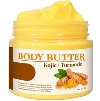


A body butter can look premium in a product photograph and still disappoint when the customer starts using it.
For dry-skin and premium body care concepts, thickness alone is not enough. The product has to feel rich without becoming unpleasantly greasy, spread without excessive drag, remain stable through storage and transport, and deliver a sensory experience that supports the price and positioning of the brand.
This is why developing a premium body butter should not begin with the question, "How much shea butter can we add?"
A better starting point is:
What should the customer feel before, during and after application?
Once that experience is clear, the formula structure, emollient system, texture, fragrance, packaging and manufacturing process can be designed around it.
For private label brands, this approach also makes development more efficient. Instead of asking a manufacturer for a generic "luxury body butter," the brand can define a product that is technically realistic, commercially distinctive and appropriate for its target market.
If you are still deciding whether body butter is the right moisturizer format for your line, compare body butter vs body lotion vs body cream before defining the product brief.

Start With the Dry-Skin Experience You Want to Create
"Body butter for dry skin" can describe very different products.
An intensive winter butter may be deliberately dense and leave a noticeable protective film. A premium daily-care product may still need to feel rich, but absorb cleanly enough for the customer to dress shortly after application.
A spa or evening product may benefit from longer playtime and a more indulgent fragrance profile. A barrier-support concept may place greater emphasis on a comfortable finish, restrained fragrance and carefully selected functional ingredients.
These are different product briefs even though they may all appear under the same "dry skin" category.
Before ingredient selection begins, define the intended use occasion, customer and market.
For example, consider whether the product is primarily designed for everyday body moisturization, very dry-feeling areas, winter care, spa use, nighttime routines or premium self-care.
Climate matters too. A formula that feels luxurious in a cool, dry environment may feel too heavy in warm or humid conditions. Distribution also needs to be considered because the product may experience high temperatures during warehousing or e-commerce delivery even when the end market itself is relatively cool.
The stronger the brief, the easier it becomes to make meaningful formulation decisions.
Build the Formula Around Three Moisturization Functions
A strong dry-skin body butter should not depend on one hero ingredient doing all the work.
A more useful formulation framework is to think about three complementary functions: humectancy, emolliency and protective or occlusive character.
Humectancy
Humectants help support water retention within the cosmetic formula and the hydrated feel of the skin.
Glycerin is one of the most familiar examples, although other humectant systems may be used depending on the product concept.
The development challenge is balance. A formula can contain effective humectant ingredients but still feel sticky if the overall system is poorly designed.
Emolliency
Emollients influence softness, glide, spreadability and the way the product feels during rub-in.
Plant butters can provide richness and cushion, while liquid oils, esters and materials such as squalane can help shape the spread and after-feel.
This part of the formula often determines whether the customer describes the product as "luxurious" or simply "oily."
Protective Character
Richer lipid materials can help create the protective feel customers often associate with products for dry-feeling skin.
But more is not automatically better.
An extremely heavy lipid phase may increase drag, slow absorption or leave a residue that discourages frequent use.
A dry-skin formula therefore performs best when these functions support one another rather than when one recognizable butter is simply pushed to the highest possible level.
| Formula Function | What It Adds to the Experience | Development Question |
|---|---|---|
| Humectancy | Hydrated, comfortable skin feel | Does the formula provide moisture support without excessive tack? |
| Rich emolliency | Cushion, softness and nourishment | Is the product rich without becoming difficult to spread? |
| Lightweight emolliency | Glide and cleaner after-feel | Can the formula feel elegant while retaining substance? |
| Structure | Body, firmness and melt behavior | Does the texture stay consistent during storage and use? |
| Selected functional ingredients | Premium positioning and product story | Does every ingredient have a clear technical or positioning role? |
The objective is not to maximize every category.
It is to create a formula in which each part contributes to the same consumer experience.
Premium Is Something the Customer Feels
Consumers do not experience ingredient percentages directly.
They experience what happens when they put their fingers into the jar.
Does the butter feel too hard to pick up? Does it melt quickly or resist spreading? Does it drag across the skin? Does it leave a comfortable film or an oily layer that remains long after application?
For body butter, these details are part of the product specification.
A useful sensory review can consider pickup resistance, melting speed, spreadability, drag, absorption time, residual film and the skin feel several minutes after application.

This is particularly important for premium products because expectations are higher.
A customer paying more for a body butter may expect not only richer moisturization but also a more refined application experience.
A dense product can still feel elegant.
A protective formula can still spread well.
And a rich body butter can be designed to leave a controlled finish rather than an excessively greasy one.
Fragrance also plays a role in perceived texture. A warm gourmand scent may make the same base feel richer and more indulgent, while a lighter botanical or fresh fragrance can make the sensory experience feel less heavy.
This is why final sample evaluation should ideally use the intended fragrance rather than relying only on an unscented laboratory base.
Build the Ingredient Story Around Function
Premium body care does not require the longest possible ingredient list.
Each ingredient should have a reason to be in the formula and a reason to appear in the product story.
Butters for Richness and Identity
Shea, cocoa and mango butter are commonly associated with premium body care, but they do not perform exactly the same way.
Shea butter can contribute richness and cushion and has strong consumer recognition. Cocoa butter can add more structure and firmness. Mango butter can support a smoother, somewhat lighter sensory profile depending on the complete formula.
The important point is not to choose the butter with the strongest marketing name.
It is to select and combine lipid materials according to the desired texture, melt behavior and after-feel.
For a deeper comparison of how different plant butters affect firmness, melt behavior and sensory profile, see our guide to shea butter, cocoa butter and mango butter in body butter formulas.
Lightweight Emollients for Elegance
A rich formula often benefits from lighter-feeling emollients.
Materials such as selected esters, medium-chain triglyceride systems or squalane may help improve glide and reduce the sensation of heaviness.
This is particularly useful for brands trying to create a "rich but non-greasy" product rather than a traditional dense balm.
Functional Ingredients for Premium Positioning
Some brands want to move beyond a simple botanical-butter story and develop a more targeted premium concept.
Ingredients associated with barrier-support positioning, including selected ceramide systems, can contribute to that strategy when they are appropriate for the formula and the intended cosmetic claims.
But premium positioning should remain credible.
Adding multiple expensive actives without considering stability, compatibility, sensory impact or claim strategy can make the formula more complicated without making the product better.
A useful rule is:
Every ingredient should have both a formulation purpose and a clear reason to matter to the customer.
Match the Formula to the Brand Positioning
The phrase "premium body butter" can describe several different commercial concepts.
A product designed for accessible dry-skin care should not necessarily use the same sensory profile, packaging or ingredient strategy as a fragrance-led spa collection.
| Positioning | Texture Target | Formula Direction | Packaging Direction |
| Everyday dry-skin care | Rich but easy to spread | Balanced butters, humectancy and comfortable emollients | Practical jar or suitable squeeze format |
| Premium daily body care | Creamy, cushioned and elegant | Butters plus refined emollients and selected functional ingredients | Premium jar, tube or suitable dispensing pack |
| Barrier-support positioning | Protective, comfortable, often lower-fragrance | Balanced lipid system, humectants and selected barrier-oriented ingredients | Hygienic or protective packaging where appropriate |
| Spa / sensory line | Melting, whipped or longer-play texture | Butters, sensory emollients and fragrance-led development | Jar, coordinated collection or gift presentation |
| Natural-inspired line | Rich and nourishing without excessive waxiness | Plant butters and botanical oils with a focused ingredient story | Packaging and decoration aligned with the positioning |
The strongest premium lines usually feel coordinated.
Formula, fragrance, packaging and visual identity tell the same story.
A complicated formula in inexpensive or poorly matched packaging can feel less premium than a simpler, well-balanced product presented thoughtfully.
Premium is not about adding more.
It is about making every part of the experience feel intentional.
Rich Does Not Have to Mean Greasy
One of the most common development briefs for premium body butter is:
"We want it rich, but not greasy."
That is achievable, but only when "richness" and "greasiness" are treated as separate sensory characteristics.
Richness may come from cushion, viscosity, controlled melt and the protective film left on the skin.
Greasy feel is more closely related to how the lipid and emollient system spreads, absorbs and remains after rub-in.
Simply reducing the butter phase may make the product feel lighter, but it may also remove the premium character the brand wanted.
A better approach is to balance heavier lipid materials with more elegant emollients and optimize the structuring system so that the formula retains substance without excessive drag.
The intended use occasion should influence this balance.
A nighttime winter butter may intentionally leave more film.
A premium daytime product may need a noticeably cleaner finish.
A spa butter may remain workable for longer before absorption.
There is no single correct texture.
There is only a texture that is appropriate-or inappropriate-for the product brief.
Packaging Should Protect the Premium Experience
Packaging is part of how the customer experiences the formula.
A dense body butter usually works naturally in a wide-mouth jar because the customer can access the product without forcing it through a narrow opening.
A softer emulsified butter may offer more flexibility and may work in a suitable tube or dispensing system, depending on viscosity.
Premium packaging choices also create trade-offs.
A heavy glass jar can strengthen shelf presence but increase freight weight and breakage risk. Lightweight plastic can be more practical for e-commerce. Aluminum may suit some natural or minimalist concepts, but the liner and formula still need to be compatible.
The final decision should be made with the actual formula, not before texture development begins.
Packaging trials should consider dispensing, leakage, temperature exposure, liners, decoration and transport handling.
For a wider comparison of body care packaging formats and compatibility considerations, see our Private Label Body Care Packaging Guide.
A Premium Sample Still Has to Survive Production
A laboratory sample can feel excellent and still fail to become a reliable commercial product.
Body butter texture can change when batch size increases because heating, mixing, cooling and filling conditions do not behave exactly the same way in laboratory and production equipment.
Temperature exposure during storage and transport can also alter firmness or appearance.
This is especially important for lipid-rich systems and whipped textures.
The goal of scale-up is therefore not simply to produce more kilograms of the same recipe.
It is to reproduce the sensory profile the brand approved while maintaining consistency from batch to batch.

Appropriate validation may consider stability, packaging compatibility, microbiological control for water-containing systems, filling behavior and finished-product quality.
These manufacturing and stability questions are covered in more detail in our Private Label Body Butter Guide, which explains formula structure, texture, packaging, testing and OEM production as a complete development system.
For this dry-skin and premium positioning article, the important point is simpler:
a product cannot be truly premium if its texture changes before it reaches the customer.
What Often Goes Wrong With Premium Body Butter
Some development decisions sound attractive in a brief but create problems when taken too far.
More Butter Is Not Always Better
Increasing the percentage of recognizable plant butters can strengthen an ingredient story, but it can also increase heaviness, drag or temperature sensitivity.
The consumer buys the finished experience, not the percentage on the formulation sheet.
More Actives Do Not Automatically Create More Value
A long ingredient list can make a formula more expensive and difficult to stabilize without giving the customer a noticeably better experience.
Selected functional ingredients usually work better when they support a clear positioning rather than being added simply to make the INCI list look more sophisticated.
The First 30 Seconds Are Not the Whole Experience
A sample may feel impressive immediately after application and become less attractive several minutes later.
During evaluation, pay attention to how the product changes as it spreads and settles: residual oiliness, tack, fragrance development and the final skin finish matter just as much as the first scoop from the jar.
Packaging Cannot Be a Last-Minute Decision
A premium jar cannot rescue a formula that leaks, changes texture or is difficult to use.
Likewise, a technically good formula can be undermined by packaging that feels inconvenient or inconsistent with the brand's positioning.
Formula and packaging need to be validated together. For more detailed troubleshooting, see our guide to common body butter formula problems, including greasy feel, graininess, melting and stability.
Frequently Asked Questions
Q: 1. What ingredients are best for a body butter for dry skin?
A: There is no single best ingredient.
A well-designed formula commonly combines humectancy, rich and lightweight emollients, structural lipids and, where appropriate, selected functional ingredients. The balance between these components matters more than maximizing one hero butter.
Q: 2. What makes a body butter feel premium?
A: Premium feel usually comes from the complete sensory experience: pickup, melt, spread, drag, absorption and residual skin feel.
Fragrance, packaging and visual presentation also contribute, but they work best when the base formula already feels refined.
Q: 3. Can body butter be rich without feeling greasy?
A: Yes.
A formula can maintain cushion and substance while using a balanced emollient system to improve spread and dry-down. Richness and oiliness are related but they are not the same sensory characteristic.
Q: 4. Is anhydrous or emulsified body butter better for dry skin?
A: Neither is universally better.
Anhydrous systems can provide a dense, oil-rich and protective experience, while emulsified body butters can combine richness with humectancy and often offer a cleaner absorption profile.
The better format depends on the target consumer, climate, packaging and positioning.
Q: 5. Can a private label manufacturer customize body butter for a premium line?
A: Yes.
Depending on the development model, customization may include formula structure, butter blend, emollients, selected functional ingredients, fragrance, texture, color and packaging.
A clear brief makes this process more efficient because the manufacturer can develop toward a defined sensory and commercial target rather than simply providing generic samples.
Develop a Body Butter People Want to Reapply
A successful dry-skin body butter should do more than feel impressive when the jar is first opened.
It should be rich enough to support the product promise, elegant enough that customers enjoy using it repeatedly, stable enough to survive the supply chain and distinctive enough to justify its position within the brand.
That does not require the maximum possible amount of butter, the longest ingredient list or the heaviest jar.
It requires balance.
If your brief is something like "rich enough for dry-feeling skin, but elegant enough for a premium daily-care line," that is already a useful starting point for development.
Poleview can help translate that target into a custom formula, sensory profile, fragrance and packaging direction. Explore our custom body butter manufacturing service or share your target market, reference product, preferred texture, fragrance direction and estimated order quantity with our team to begin a more focused OEM/ODM development discussion.