

Choosing the right body moisturizer format is one of the first product decisions a private label body care brand needs to make. Body lotion, body cream, body butter and body oil may all sit under the same body care category, but they are not developed, packaged or positioned in the same way.
A body lotion may be easy to use every day, but a rich cream can support a more premium feel. A body butter may create stronger sensory value, but it needs more attention to heat, texture and jar compatibility. A body oil can work beautifully for glow, massage or fragrance layering, but it should not be treated as a simple replacement for a water-based lotion.
For private label brands, this decision is not only about skin feel. It affects formula architecture, packaging compatibility, MOQ, filling method, shipping risk, retail price and how the product line will be understood by buyers.
The best choice is not always the richest texture or the trendiest ingredient story. The best choice is the format that fits your target customer, market climate, sales channel, packaging plan and manufacturing route.
This guide explains how to compare body lotion, body cream, body butter and body oil from a private label and OEM development perspective, so your brand can build a clearer, more scalable body care line. For a complete overview of product types, formula direction, packaging and OEM production, read our private label body care guide.
Why Moisturizer Format Matters for Private Label Body Care
A body moisturizer is more than a formula in a container. Its texture affects how often customers use it, where it is sold, how it is packaged, how it ships and how the brand can price it.
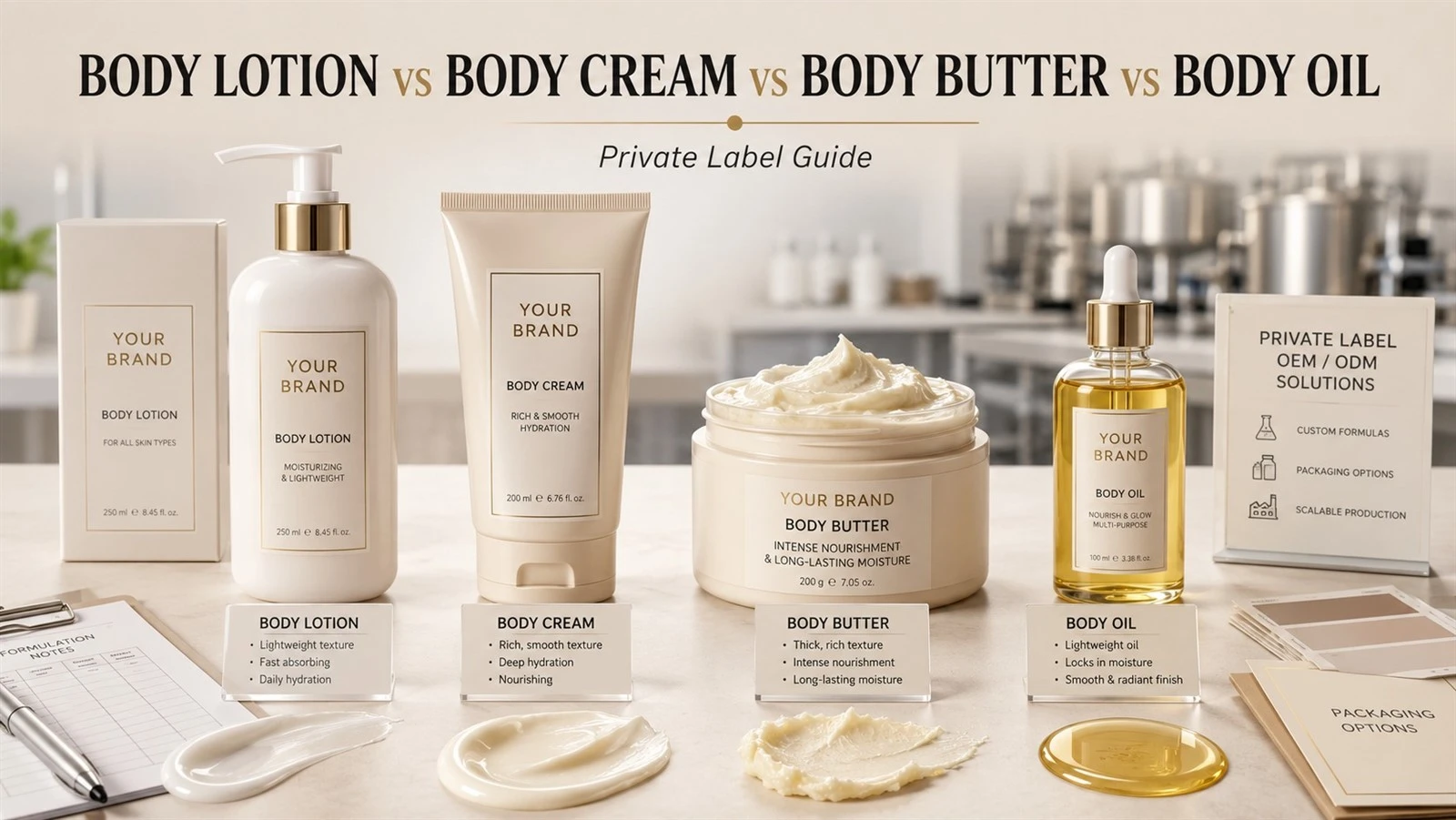
A lightweight lotion can support broad daily use. It is familiar, easy to apply and suitable for pumps, bottles and tubes. A richer cream may feel more targeted and premium, especially for dry-feeling skin or colder seasons. A dense body butter can become a hero product for winter, gift sets or natural body care lines. A body oil can add a spa, massage, glow or fragrance-led direction.
The wrong format can create practical problems. A thick cream may not dispense well through the selected pump. A whipped butter may soften during summer shipping. A botanical oil may feel too heavy for a mass-market customer. A jar that looks beautiful may not protect an oil-rich formula during transport.
That is why format selection should happen before packaging and sampling are finalized. A private label body moisturizer should be chosen as part of a product line strategy, not as an isolated texture idea.
Quick Answer: Which Format Should Your Brand Choose?
Choose body lotion when your brand needs a practical daily-use product with broad market acceptance, easy application and flexible packaging options.
Choose body cream when your brand wants a richer texture, a more cushioned after-feel or a more premium daily care product.
Choose body butter when your brand wants stronger sensory value, a thicker texture, winter positioning, dry-skin-focused messaging or gift set potential.
Choose body oil when your brand is building around glow, massage, spa care, fragrance layering or a premium ritual experience.
For many brands, the right strategy is not choosing one format forever. It is deciding which product should lead the line and which products should support it later.
Body Lotion vs Body Cream: Daily Convenience or Richer Care?
Body lotion and body cream are often the easiest formats for new private label body care brands to compare. Both can be developed as emulsions, but they usually serve different product roles.
A private label body lotion is often the most practical first moisturizer SKU. It spreads easily, feels familiar and can work across e-commerce, retail, hospitality, family care and daily body care lines. A body lotion manufacturer can adjust the formula direction for different concepts, such as fragrance-free daily care, botanical body lotion, after-sun positioning, spa-inspired lotion or lightweight summer care. Brands planning a daily-use moisturizer can also review Poleview's custom private label body lotion development support for formula, texture and packaging options.
Body lotion also works well when a brand needs larger pack sizes, pump bottles or frequent-use positioning. For distributors, hotels, gyms and broad retail channels, lotion is often easier to explain and easier to replenish.
Body cream usually offers a richer feel. It can support dry-feeling skin positioning, colder seasons, nighttime care, smaller premium packs or targeted daily care. A cream may use a more substantial oil phase, a stronger structure or a more cushioned sensory profile, depending on the formula direction.
The packaging choice matters. A lighter lotion may work in a pump bottle, while a richer cream may need a tube, jar or selected airless format. Brands should approve the commercial sample in the intended packaging, not only in a laboratory container.
The key decision is simple: lotion is stronger for high-frequency daily use; cream is stronger when the brand needs a richer texture and a more premium feel.
Body Butter vs Lotion: Concentrated Sensory Value or High-Frequency Use?
The body butter vs lotion decision is not just a texture comparison. It is a product-line decision.
Body lotion is usually designed for daily use. It is easier to apply over larger body areas, easier to dispense and easier to position for broad retail. It can become the core SKU in a private label body care line.
Body butter usually plays a different role. It is thicker, richer and more sensorial. It often uses shea butter, cocoa butter, mango butter, oils, waxes or a dense emulsion system, depending on the formulation. Some body butters are anhydrous or low-water systems, while others are emulsified products with a buttery texture. Buyers should confirm the actual formula type rather than relying only on the product name.
A private label body butter can work well for natural body care brands, spa ranges, winter collections, dry-skin-positioned products and gift sets. It can also support a higher perceived value because the texture feels more distinctive. For brands building a richer winter, spa or gift-set product, Poleview's private label body butter manufacturing page explains available OEM and packaging options.
However, body butter needs more technical control. Poor cooling may cause graininess. Heat may soften the product. Oil-rich systems may seep. Whipped formulas may lose volume. The manufacturer should review melting profile, filling temperature, texture stability, jar compatibility and destination climate before bulk production.
In a broader body care line, lotion can be the replenishment SKU, while body butter becomes the richer upgrade. Each should have a clear reason to exist.

Body Oil vs Lotion: Glow, Slip and Fragrance or Daily Hydration?
Body oil and body lotion are often compared, but they do different jobs.
Body lotion usually combines a water phase, humectants, emollients and oils. This makes it familiar as a daily moisturizer format. Body oil is usually an anhydrous product based on botanical oils, esters, fragrance and antioxidants. It can provide slip, softness, glow and a surface-conditioning feel, but it should not automatically be described as more hydrating than lotion.
A private label body oil may be designed as a rich massage blend, a faster-absorbing dry oil, a fragrance layering product or a post-shower body care item. It can fit spa, premium, natural or fragrance-led body care lines.
For body oil development, brands should define absorption speed, shine level, fragrance strength, garment transfer risk, application method and packaging style. The bottle, pump, reducer, cap or dropper should be tested with the actual oil formula.
Body oil also needs attention to oxidation, light exposure, leakage and packaging compatibility. A formula may look elegant in a sample bottle but fail if the closure is not tight enough or if the oil changes appearance over storage.
Lotion is usually the safer daily-use product. Body oil is stronger when the brand wants a more sensory, premium or ritual-based product.
Private Label Moisturizer Format Comparison
| Format | Best For | Packaging Fit | Main Watch-Out |
|---|---|---|---|
| Body Lotion | Daily care, hospitality, family care, broad retail, warm climates | Pump bottle, squeeze bottle, tube | Emulsion stability, microbial control, pump compatibility |
| Body Cream | Dry-feeling skin, premium daily care, colder seasons, targeted care | Tube, jar, selected airless pack | Viscosity, pack evacuation, heat and cold stability |
| Body Butter | Natural beauty, spa, gifting, winter care, premium hero SKU | Wide-mouth jar, premium jar, gift set jar | Graininess, melting, oil seepage, whipped-volume loss |
| Body Oil | Glow, massage, fragrance layering, spa, premium ritual | Glass bottle, PET bottle, pump, reducer, dropper | Leakage, oxidation, staining, residue and closure fit |
This table should be treated as a starting point, not a fixed rule. A lightweight cream may feel close to a lotion, while a whipped body butter may feel softer than a dense balm. The final product depends on the full formula, packaging and intended customer experience. If your brand is planning a broader body care range, Poleview's body wash and care manufacturing page shows related private label body care categories and OEM service options.
How a Private Label Manufacturer Turns Texture Into a Scalable Product
A good private label body care manufacturer does not simply ask which texture the brand likes. It should translate the brand brief into measurable development targets.
For body lotion and body cream, this may include viscosity, spreadability, absorption speed, fragrance release, pump performance, stability and preservation. For body butter, it may include melting behavior, cooling process, graininess control, filling temperature and jar compatibility. For body oil, it may include absorption feel, oxidation control, fragrance solubility, bottle compatibility and leakage testing.
The manufacturer should also help the brand choose the right development route.
| Development Route | Best For | What to Confirm |
|---|---|---|
| Ready-to-brand private label | Fast testing, startups, seasonal launches | Available formula, fragrance, packaging, MOQ and lead time |
| Semi-custom development | Brands needing faster differentiation | Texture adjustment, fragrance, selected ingredients, packaging and compatibility checks |
| Custom OEM/ODM formulation | Premium lines, unique concepts, market-specific products | Formula structure, sensory profile, testing plan, cost, timeline and exclusivity |
Brands that need broader contract manufacturing support can also review Poleview's OEM/ODM personal care manufacturing service before confirming the development route.
Ready-to-brand private label is useful when speed and lower development risk matter. Semi-custom development works well when a brand wants more differentiation without starting from zero. Full custom OEM/ODM formulation is better when the brand needs a unique sensory profile, special ingredient direction, specific packaging or stronger formula ownership.
The right route depends on schedule, budget, order plan, exclusivity needs and how much differentiation the brand expects from the product.
Approve Formula, Packaging and Testing as One System
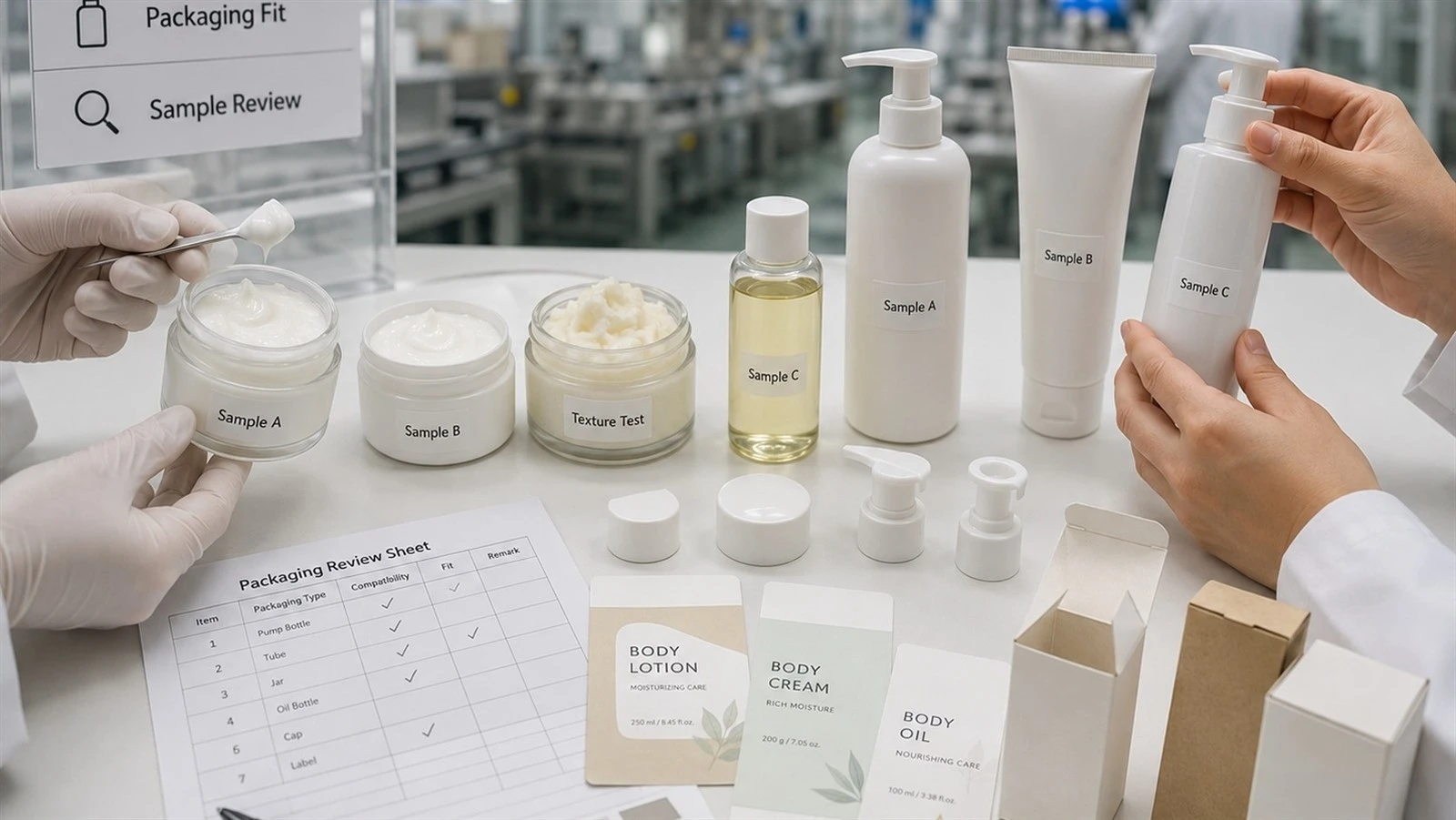
A body moisturizer should be approved in its intended commercial packaging. A formula that performs well in a beaker may fail in the final pack.
For lotion and cream, brands should check stability, viscosity, pH direction where relevant, microbial quality, dispensing performance and after-feel. For body butter, heat exposure, cooling behavior, texture stability and jar compatibility matter. For body oil, oxidation, leakage, closure torque, bottle compatibility and clarity should be reviewed.
Packaging compatibility is especially important. A pump that works with one lotion may fail with a thicker formula. A jar may look premium but may not suit a formula that softens in warm climates. A dropper may look attractive but may not be the best option for a thicker oil blend.
Testing should also reflect the sales channel. E-commerce products need parcel-shipping tolerance. Retail products need stable shelf appearance. Spa products need a premium use experience. Hospitality products need reliable dispensing and low mess.
Before bulk production, brands should approve formula, packaging, label, fill weight, carton packing and quality standards together. For deeper packaging planning, see our body care packaging guide for jars, bottles, tubes and gift sets.
Choose the Format by Market, Climate and Sales Channel
A moisturizer format should fit where and how the product will be sold.
For e-commerce and DTC brands, the product needs to be easy to explain and strong enough for parcel delivery. Lotion offers familiarity, while body butter and body oil create stronger visuals for bundles and product storytelling. Packaging leakage and carton protection should be checked carefully because shipping damage can create returns and poor reviews.
For retail and hospitality, body lotion often works well because pumps, tubes and larger packs support frequent use. Hospitality buyers may care more about easy dispensing, lower residue and consistent supply. Retail buyers may care more about shelf presence, barcode placement, carton packing and reorder reliability.
For spa and gift channels, cream, body butter and body oil may carry stronger value. The texture, fragrance, packaging weight and unboxing experience can affect the perceived quality of the set.
Climate also matters. Warm and humid markets may prefer lighter lotion or dry oil formats. Cold or dry markets may accept richer cream and body butter. However, both winter hardness and summer transport should still be tested.
A practical seasonal line may include one year-round lotion, one richer cream or butter for colder months and one dry body oil for summer or spa positioning.
Build a Product Line, Not Four Versions of the Same Promise
New brands rarely need lotion, cream, butter and oil at the same time. A stronger launch often starts with one core product and one extension product.
A daily care brand may begin with private label body lotion, then add body cream for a richer option. A dry-feeling skin line may pair body cream with body butter. A spa or gift brand may start with body butter and body oil. A summer body care line may combine lightweight lotion with dry oil. A hospitality line may focus on lotion and body wash.
The products should connect through fragrance, ingredient story, packaging or routine, but each product should have a clear role.
Avoid launching four products that all make the same "deep hydration" promise. A clearer structure would be:
Daily lotion. Rich body cream. Intensive body butter. Glow body oil. This product-line logic connects back to the broader private label body care guide, where brands can plan formulas, packaging, manufacturing and brand development together.
This gives buyers and consumers a reason to choose one product, trade up or purchase more than one SKU.
How to Evaluate a Private Label Body Care Manufacturer
A qualified body care manufacturer should explain trade-offs instead of approving every idea. More butter or oil may create a richer feel, but it may also affect stability, absorption, pumpability or shipping performance. A premium glass bottle may look attractive, but it may increase freight risk or cost. A fragrance-heavy concept may need extra review for stability and market suitability.
Before choosing a supplier, confirm whether the factory can manufacture the selected formats and support scale-up from sample to bulk production. Ask how the manufacturer controls viscosity, texture, microbial quality, filling weight, batch consistency, packaging compatibility and final inspection.
The supplier should also be able to provide technical documents according to project needs. These may include INCI information, product specifications, COA, SDS where applicable, microbiological results, stability support, packaging data and manufacturing records.
A low unit price has little value if texture, fragrance, fill weight or packaging performance changes between batches.
This section should not replace a full supplier audit, but it should help brands ask better questions before starting a private label body lotion, body cream, body butter or body oil project.
Plan Claims and Compliance Before Artwork Approval
Formula, claims and artwork should be reviewed together before packaging is printed.
Cosmetic claims such as moisturizes, softens, smooths, leaves skin feeling comfortable or improves the appearance of dry skin are generally more suitable for body care positioning than disease-related or treatment-style claims.
Brands should be cautious with claims such as treating eczema, healing skin, repairing skin disease or curing irritation. These claims may create regulatory issues depending on the destination market.
The manufacturer can provide technical documents and production support, but the responsible brand entity, importer or local adviser should confirm final labeling, claims and market-entry requirements.
This is especially important for international private label body care projects, where the same formula may be sold in the United States, European Union, United Kingdom, Middle East or other markets with different expectations for language, documentation and claim review.
Develop the Right Body Moisturizer Line with Poleview
The best moisturizer format gives customers a clear reason to buy and gives the brand a realistic path to stable production.
Body lotion supports daily scale. Body cream supports richer care. Body butter creates sensory value and gift potential. Body oil supports glow, massage and fragrance-led body care. The right choice should be validated through formula, packaging and market testing before bulk production.
Poleview supports private label personal care and OEM/ODM body care projects for global brands, importers, retailers and e-commerce sellers. Our body care development support can include formula direction, fragrance and texture selection, packaging options, label support, quality control and bulk production.
Share your target market, preferred format, texture direction, packaging idea and order plan with our team to receive a suitable sample proposal and OEM/ODM quotation.
Contact Poleview to discuss your private label body care project. Send your project details through our inquiry form to receive a suitable body care sample proposal and OEM/ODM quotation.
Frequently Asked Questions
Q: 1. What is the main difference between body lotion and body cream?
A: Body lotion is usually lighter and easier to spread or pump, while body cream normally has a richer structure and a more substantial after-feel. The exact difference depends on the complete formula, not only the product name.
Q: 2. Is body butter better than lotion for a private label brand?
A: Body butter is stronger for premium, natural, spa, winter and gift set concepts. Lotion is stronger for everyday use, larger packs, hospitality and broad retail. Many brands use lotion as the core SKU and body butter as a higher-value extension.
Q: 3. Is body oil more moisturizing than lotion?
A: Body oil provides emolliency, slip and surface conditioning, but it contains no water. Lotion can combine water, humectants and oils in one formula. Body oil is often better for glow, massage and fragrance layering, while lotion is usually the more familiar daily moisturizer.
Q: 4. Should a new brand choose ready private label or custom OEM formulation?
A: Ready-to-brand private label is useful for faster and lower-risk launches. Semi-custom development adds differentiation without starting from zero. Full custom OEM/ODM formulation is more suitable when the brand needs a distinctive texture, ingredient system, market-specific positioning or formula ownership strategy.
Q: 5. What should be tested before bulk production?
A: Brands should approve sensory performance, stability, microbial quality where relevant, packaging compatibility, dispensing or leakage, net content, fragrance development, transport conditions, final INCI labeling and market-appropriate claims. The commercial pack should be included in the approval process.
Editorial Note
Body care formula, packaging, labeling and cosmetic claim requirements vary by destination market. Final claims, artwork and market-entry requirements should be reviewed by the brand owner, importer, responsible person or qualified local adviser before launch.