

From Creative Idea to a Manufacturable Bath Bomb
A bath bomb creates expectations before it ever reaches the water. Its shape attracts attention, its color suggests a fragrance or mood, and its size influences how customers perceive the product.
For private label brands, however, these choices are not purely visual. Shape, dimensions, surface detail and color effects also influence molding, packaging, shipping and production consistency.
A striking design has limited value if delicate details break during handling. A beautiful color effect can also disappoint if the finished bath experience looks very different from the product shown online.
Successful custom bath bomb design therefore needs to balance brand identity with practical manufacturing requirements.
For the broader development framework, explore our Private Label Bath Bombs Guide covering formula, design, packaging and manufacturing.
Define the Design Direction Before Choosing a Mold
The best place to start is not a catalog of available shapes. It is the product concept.
A spa collection may use simple forms, muted botanical colors and restrained surface details. A seasonal gift range may rely more heavily on bright colors, distinctive shapes or decorative effects. A premium collection might use a simpler silhouette with an embossed detail that becomes part of the brand identity.
These are different design systems even when the underlying bath bomb formula is similar. The intended customer, retail format, fragrance direction and packaging concept should therefore be clear before mold development begins.
It is also useful to consider two moments in the customer experience: how the unused bath bomb looks in the package and how it performs once placed in water. A design feels more complete when those two experiences support the same product concept.
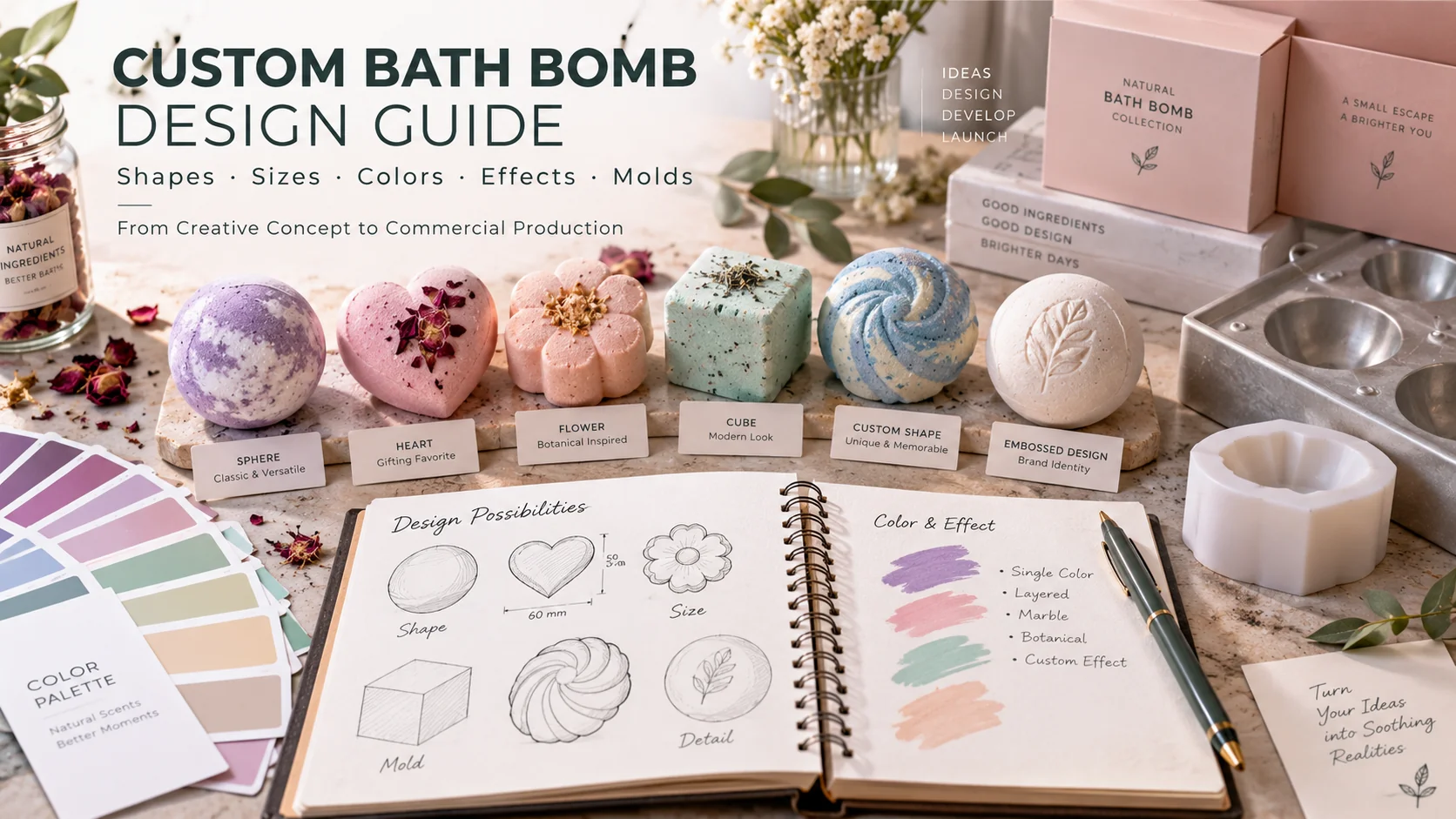
Choosing the Right Bath Bomb Shape
Classic spherical bath bombs remain useful because they work across wellness, botanical, gifting and seasonal collections. The familiar shape also leaves plenty of room for differentiation through fragrance, color and packaging.
Custom shapes can create stronger recognition. Hearts, flowers, cubes, tablets or branded forms may support a particular collection or visual concept.
The challenge is that more detail can introduce more manufacturing variables.
Thin projections, narrow edges and deep grooves may be harder to reproduce consistently or protect during packing. A design that looks impressive in a large digital rendering may lose detail when produced at actual bath bomb size.
During sampling, the finished product should therefore be evaluated in the hand and inside its intended packaging, not only on screen.
Bath Bomb Shape & Manufacturing Considerations
| Design Direction | Best Fit | What to Evaluate |
|---|---|---|
| Sphere | Core ranges and mixed gift sets | Surface consistency and packaging fit |
| Heart or Flower | Gifting and botanical collections | Edge strength and molded detail |
| Cube or Tablet | Minimal or modern collections | Corner strength and dimensions |
| Embossed Design | Brand-led collections | Detail clarity after pressing |
| Sculpted Shape | Seasonal and themed products | Mold release and protection of fine features |
The most effective custom shape is not necessarily the most complex one. It is the design that keeps its visual identity through molding, drying, packaging and transportation.
How Bath Bomb Size Affects Product and Packaging
Bath bomb size influences more than visual impact.
It affects perceived value, packaging dimensions and the number of products that can fit into a set. Smaller pieces may work well for discovery collections or multi-piece gift formats, while a larger bath bomb can create a stronger premium presentation.
Weight and dimensions should be confirmed separately. Two bath bombs can have similar weights but very different diameters or thicknesses, and a sculpted product may require more packaging space than a simple sphere of similar weight.
If the brand already has an existing box, its internal dimensions should be shared early in the development process. For multi-piece sets, product size also needs to be considered together with the insert and overall arrangement.
Final dimensions should always be confirmed using finished physical samples rather than assumed from drawings.
Developing Bath Bomb Colors & Visual Effects
Color can help customers distinguish fragrances, moods or product concepts across a collection.
Some brands use one consistent base color with different accents, while others assign a completely different shade to each fragrance. Either approach can work as long as the collection remains easy to understand.
A useful part of the brief is defining exactly where the color should appear. A brand may want a solid-colored bath bomb, a marbled surface, a contrasting center or a specific water-color effect. These are different development goals.
The appearance of the dry product should also be evaluated separately from the experience in water.
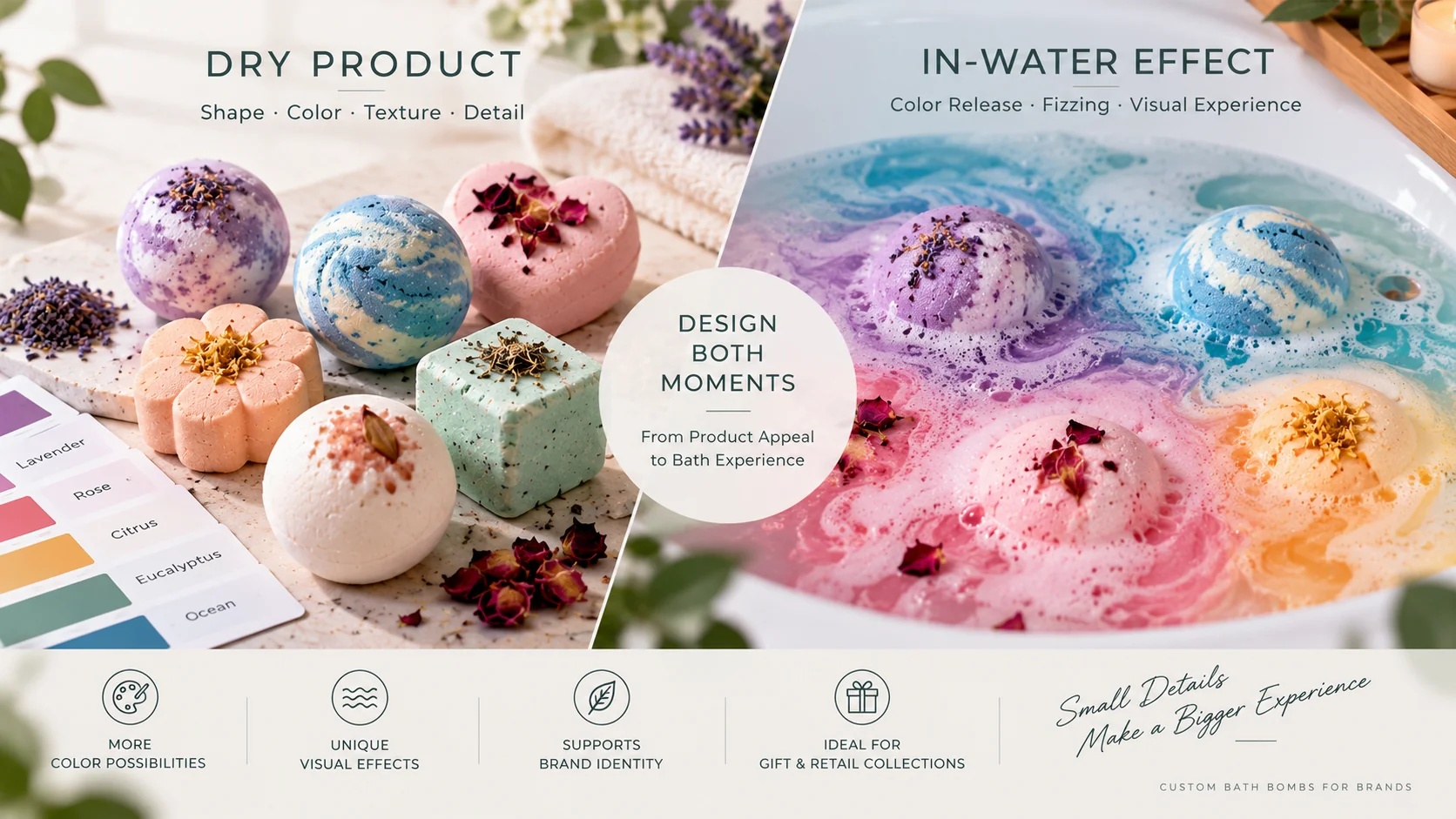
A pale surface color can still produce a noticeable bath-water effect, while a visually bold bath bomb may create a more subtle result once dissolved. Formula composition, pigment distribution and use conditions can all affect the final appearance.
For that reason, color approval should include both the finished dry sample and an actual use test.
Layered colors, marble effects and contrasting centers can add visual interest, but they may also introduce some variation between pieces. That may suit a more artisanal concept, while a tightly controlled brand identity may call for simpler color placement and clearer production standards.
Decorative botanicals or other surface elements should also be evaluated beyond photography. They need to remain suitable during packing, shipping and use.
Existing Mold or Custom Mold: Which Is Right for Your Brand?
An existing mold can be a practical starting point when the main differentiation comes from fragrance, formula, color or packaging rather than an exclusive silhouette.
Custom bath bomb molds make more sense when a particular shape, dimension, embossed detail or brand-specific feature is central to the product concept.
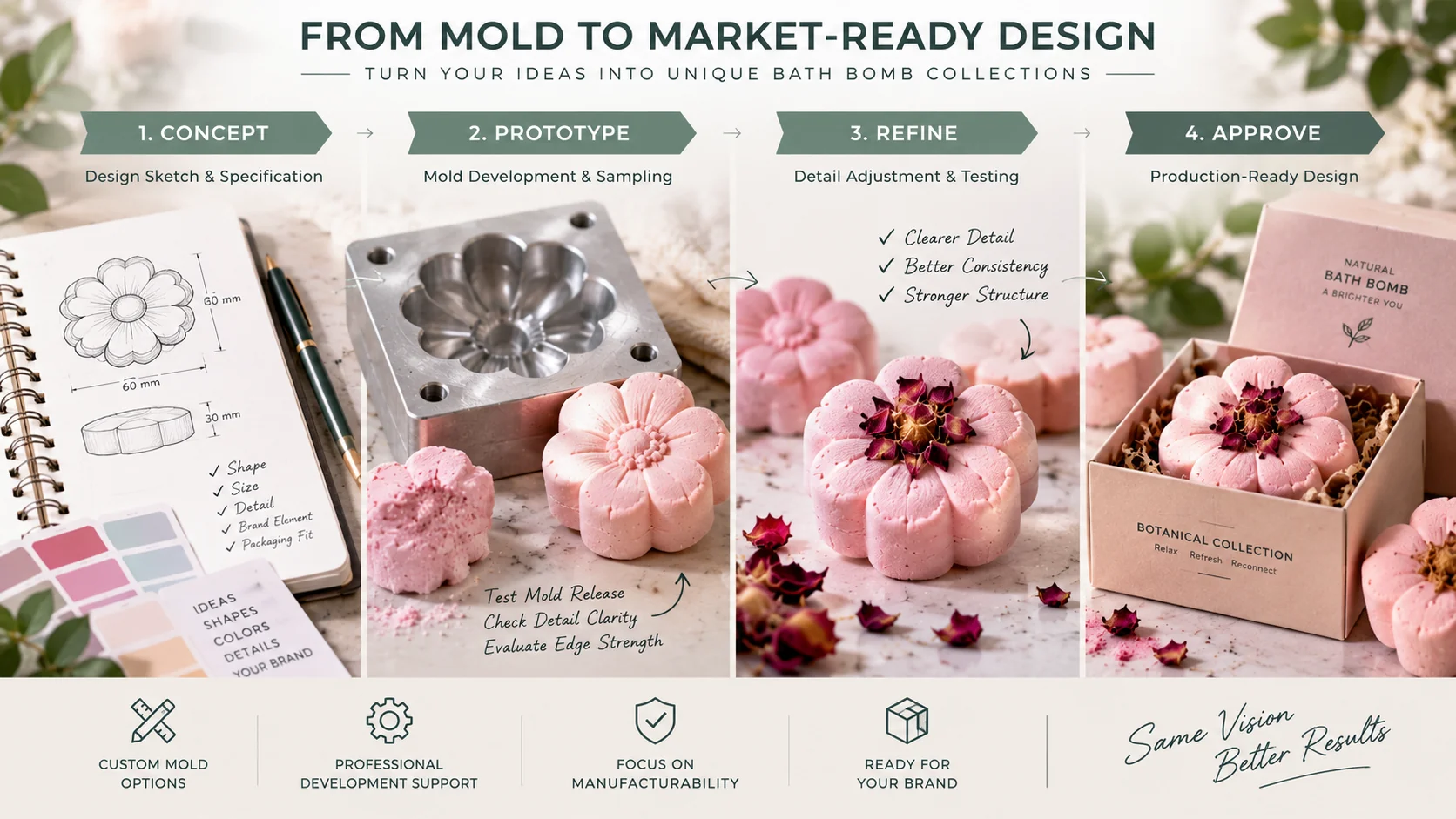
A useful custom mold brief normally includes reference artwork, approximate dimensions, target weight, key details that must remain visible and the intended packaging format. The manufacturer can then evaluate how well the design is likely to translate into a finished product.
The prototype is an important part of that decision.
It shows whether the bath bomb releases cleanly from the mold, whether small details remain visible and whether edges can withstand normal handling. If changes are required, it is better to make them at this stage than after packaging or fitted inserts have already been approved.
From Approved Sample to Consistent Production
A good prototype is only the beginning.
Commercial production requires the approved design to be reproduced with acceptable consistency across a much larger quantity. Shape, color, surface detail and dimensions all need to remain close enough to the approved standard that the collection still looks coherent.
Some decorative details may need slight adjustment during scale-up if they create unnecessary breakage or large variations between pieces.
This does not mean simplifying every custom design. It means deciding which visual elements are essential to the brand concept and which can be adjusted to improve production consistency.
A commercially successful bath bomb design is one that remains recognizable and attractive beyond the first perfect sample.
Design the Product and Packaging as One System
A bath bomb only delivers its intended visual experience if it reaches the customer in good condition.
Packaging requirements change with product shape, weight, surface detail and the number of pieces in a set. A simple sphere may fit several packaging formats, while a sculpted bath bomb with delicate edges may require more support.
For gift sets, inserts can help keep products separated and maintain the intended arrangement during transportation. Wraps, inserts and outer boxes should therefore be evaluated with actual samples rather than developed independently.
Packaging also influences how the design is presented. A window box can show the real product colors directly, while a closed carton relies more heavily on photography and graphic design.
The product and package should feel like one system rather than two separate development decisions.
What to Confirm Before Design Approval
Final approval should be based on the finished product, not only a drawing or digital rendering.
The actual sample should be reviewed for dimensions, shape definition, color, visual effects and packaging fit. If the product has an important in-water effect, that should also be evaluated before final approval.
For ecommerce products, it can be useful to photograph the actual sample at the size and angle likely to appear in the product listing. Some details that look obvious in person may be difficult to see in a small image. For collections, viewing all variants together also helps confirm whether customers can distinguish them easily.
Feedback should be specific. A request such as "make the lavender shade lighter while keeping the same water-color effect" gives the development team a clearer target than a general request to "improve the purple."
Bath Bomb Design Approval Checklist
| Review Area | What to Confirm |
|---|---|
| Shape & Size | Finished dimensions, weight and structural definition |
| Color | Dry appearance and in-water effect |
| Mold Detail | Legibility, edge strength and mold release |
| Visual Effect | Acceptable consistency between samples |
| Packaging Fit | Product protection and insert or carton fit |
A clear design brief does not need to solve every technical question in advance. It should explain the intended customer, product concept, preferred shape, approximate dimensions, fragrance and color direction, key visual effects and packaging concept clearly enough for the manufacturer to recommend practical options.
FAQ About Custom Bath Bomb Design
Q: 1. What bath bomb shape is best for a new private label brand?
A: A sphere or another simple, recognizable shape can be a practical starting point because differentiation can still come from fragrance, color, formula and packaging. The best choice depends on the target customer and product positioning.
Q: 2. Can I create a bath bomb in my brand's own shape?
A: Yes. A proprietary shape can be developed from artwork or reference images. Dimensions, mold details, structural strength and packaging fit should be reviewed before the design is approved for production.
Q: 3. Can one bath bomb contain multiple colors?
A: Yes. Two-tone, layered, marbled and contrasting-center designs can be explored during sampling. The final appearance depends on the formula and production method, so the effect should be approved using physical samples.
Q: 4. Will the bath water match the bath bomb's surface color?
A: Not necessarily. The dry product and its effect in water should be evaluated separately. If a particular water color is part of the product concept, it should be clearly included in the development brief.
Develop Custom Bath Bomb Designs with POLEVIEW
A successful custom bath bomb needs to look distinctive without becoming difficult to manufacture, package or scale.
POLEVIEW supports private label bath bomb development with customizable shapes, sizes, colors, visual effects and mold options. From early design references and sampling to mold evaluation and commercial production, we help brands turn creative concepts into practical finished products.
The goal is not simply to create an unusual shape. It is to develop a bath bomb design that supports the brand, performs consistently and remains recognizable when produced at commercial scale.