

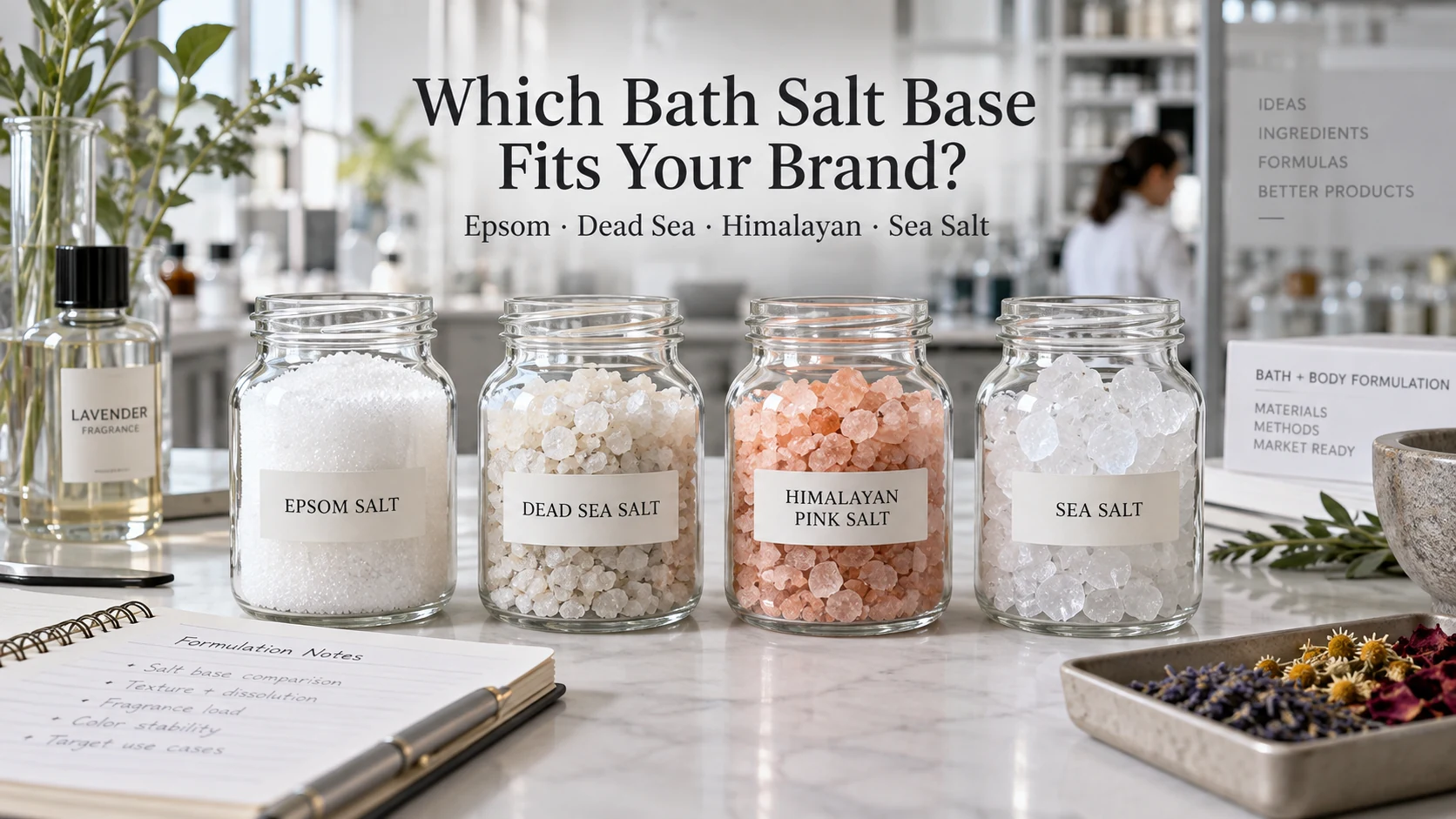
There is no single "best" salt for every private label bath product.
Epsom salt, Dead Sea salt, Himalayan pink salt and sea salt can all work well, but they create different visual impressions, product stories, formula considerations and cost structures.
For a brand, the right choice should be based on the product brief rather than on which mineral sounds the most premium.
A wellness-focused line may benefit from the clean, familiar appearance of Epsom salt. A premium spa collection may prefer the mineral story of Dead Sea salt. Himalayan salt can create stronger visual differentiation, while sea salt offers flexibility for natural and fragrance-led product concepts.
This guide compares the four common bases from a private label product-development perspective.
For a broader overview of formula, packaging, manufacturing and product planning, see our Private Label Bath Salts Guide.
Epsom vs Dead Sea vs Himalayan vs Sea Salt: Quick Comparison
| Salt Base | Visual & Product Character | Main Development Consideration | Typical Positioning |
|---|---|---|---|
| Epsom Salt | Clean white crystals, familiar wellness image | Grain size, fragrance distribution, moisture behaviour | Everyday wellness, spa, accessible retail |
| Dead Sea Salt | Mineral-rich, premium spa character | Grade, sourcing consistency, mineral profile | Premium spa and body care |
| Himalayan Salt | Naturally pink, strong shelf impact | Natural color and crystal variation | Gift, natural and lifestyle collections |
| Sea Salt | Classic crystalline appearance, multiple grain options | Particle size and formula consistency | Natural, spa and fragrance-led ranges |
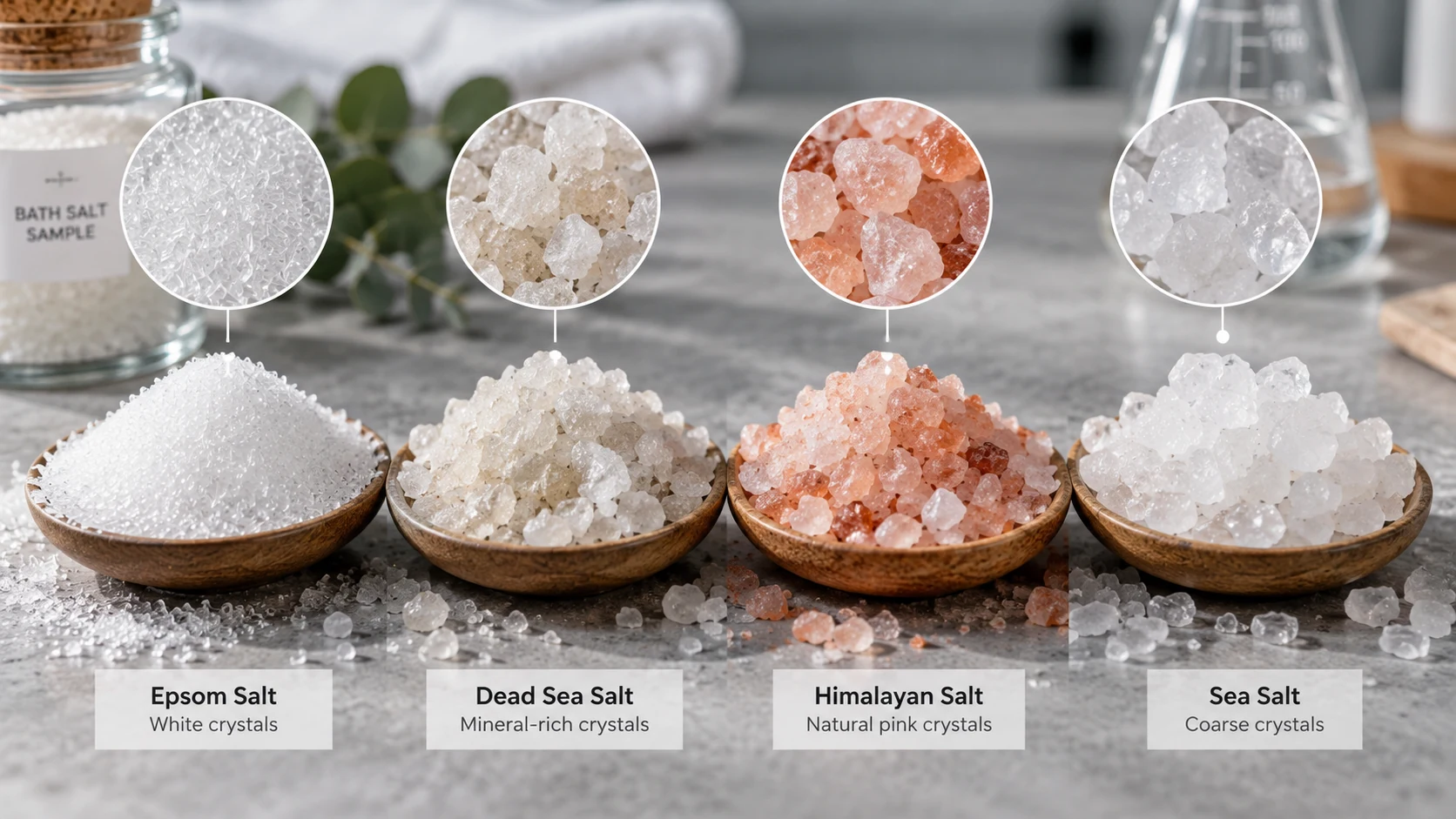
This table is a starting point rather than a universal rule.
The final choice still depends on fragrance, botanicals, packaging, target cost and the experience the brand wants to create.
Epsom Salt: A Flexible Base for Wellness-Focused Products
Epsom salt is magnesium sulfate and is one of the most familiar bath salt bases in the consumer market.
Its clean white appearance provides a neutral starting point for fragrance, color and botanical customization. This makes it useful for brands that want to build several SKUs from a consistent base.
From a manufacturing perspective, Epsom salt is also flexible because grain size can be selected according to the desired appearance and filling format.
A finer crystal may create a smoother visual result, while a larger grain can provide a more substantial mineral look.
Epsom salt is often a practical option for everyday wellness collections, fragrance-led bath ranges and brands that need a scalable base across several products.
However, it should still be evaluated for moisture behaviour, fragrance distribution and packaging compatibility.
For deeper formula considerations, see our Bath Salt Formula Guide.
Dead Sea Salt: Best Suited to Premium Mineral Positioning
Dead Sea salt is commonly selected when the brand wants the mineral origin itself to form part of the product story.
Compared with a simple white salt base, it can support a stronger premium spa or body-care positioning.
For B2B buyers, however, the decision should not be based on the name alone.
The manufacturer should confirm the grade, appearance, particle characteristics, sourcing documentation and consistency of the material being used.
Different commercial grades may also produce different visual and sensory results.
Dead Sea salt can therefore work particularly well for premium collections where mineral positioning justifies a more specialized ingredient story and packaging direction.
It can also be blended with another salt when the brand wants to balance product positioning, appearance and commercial cost.
Himalayan Pink Salt: Strongest When Visual Differentiation Matters
Himalayan salt is immediately recognizable because of its naturally pink crystal appearance.
That visual character can be valuable for gift sets, lifestyle products and natural-looking bath collections where the product itself remains visible through the packaging.
But natural color variation should be expected.
A private label specification should therefore define an acceptable visual range rather than assuming every production batch will contain crystals with exactly the same shade.
Grain size also matters.
Larger pink crystals can create a more dramatic presentation, while smaller particles may be easier to combine evenly with other salts or botanicals.
For brands where shelf appearance is an important part of the buying experience, Himalayan salt can provide differentiation without relying heavily on added color.
Sea Salt: A Versatile Base for Natural Bath Collections
Sea salt offers a relatively straightforward mineral story and can be used in a wide range of private label bath products.
Different crystal grades allow manufacturers to adjust the texture and visual appearance according to the product concept.
It can work particularly well for spa-inspired, natural and fragrance-focused collections.
Sea salt is also useful in blends because its relatively neutral visual character can support essential oils, fragrance, botanicals or other mineral salts without dominating the entire product identity.
As with other salt bases, buyers should define the required grade and particle size clearly so that appearance and filling behaviour remain consistent between production batches.
Should a Private Label Formula Use More Than One Salt?
Yes. A commercial bath salt does not need to rely on a single mineral base.
Blending salts can help a brand balance visual appearance, product story, texture and cost.
For example, an Epsom and sea salt blend may create a flexible base for a wellness-oriented product, while Himalayan salt can be added in a controlled amount to introduce more visual differentiation.
A premium mineral concept may combine Dead Sea salt with another base depending on the desired appearance and cost structure.
The important point is that a blend should have a clear reason to exist.
Adding more salt types does not automatically make the product more premium. Each component should contribute to the product specification rather than simply making the ingredient list longer.
How Should a Brand Choose the Right Salt Base?
A useful decision starts with the product positioning rather than with the raw material catalog.
| Brand Priority | Practical Starting Point |
|---|---|
| Clean, flexible wellness base | Epsom Salt |
| Premium mineral / spa story | Dead Sea Salt |
| Strong natural visual identity | Himalayan Salt |
| Flexible natural bath concept | Sea Salt |
| More differentiated formula | Custom Salt Blend |
This should not be treated as a strict rule.
A brand may choose a different base because of packaging, target cost, fragrance concept, supply requirements or regional market preferences.
The more useful question is:
Which salt gives the finished product the right combination of appearance, positioning, formula behaviour and commercial feasibility?
That question leads to a better private label specification than simply asking which salt is "best."
Salt Selection Also Affects Packaging
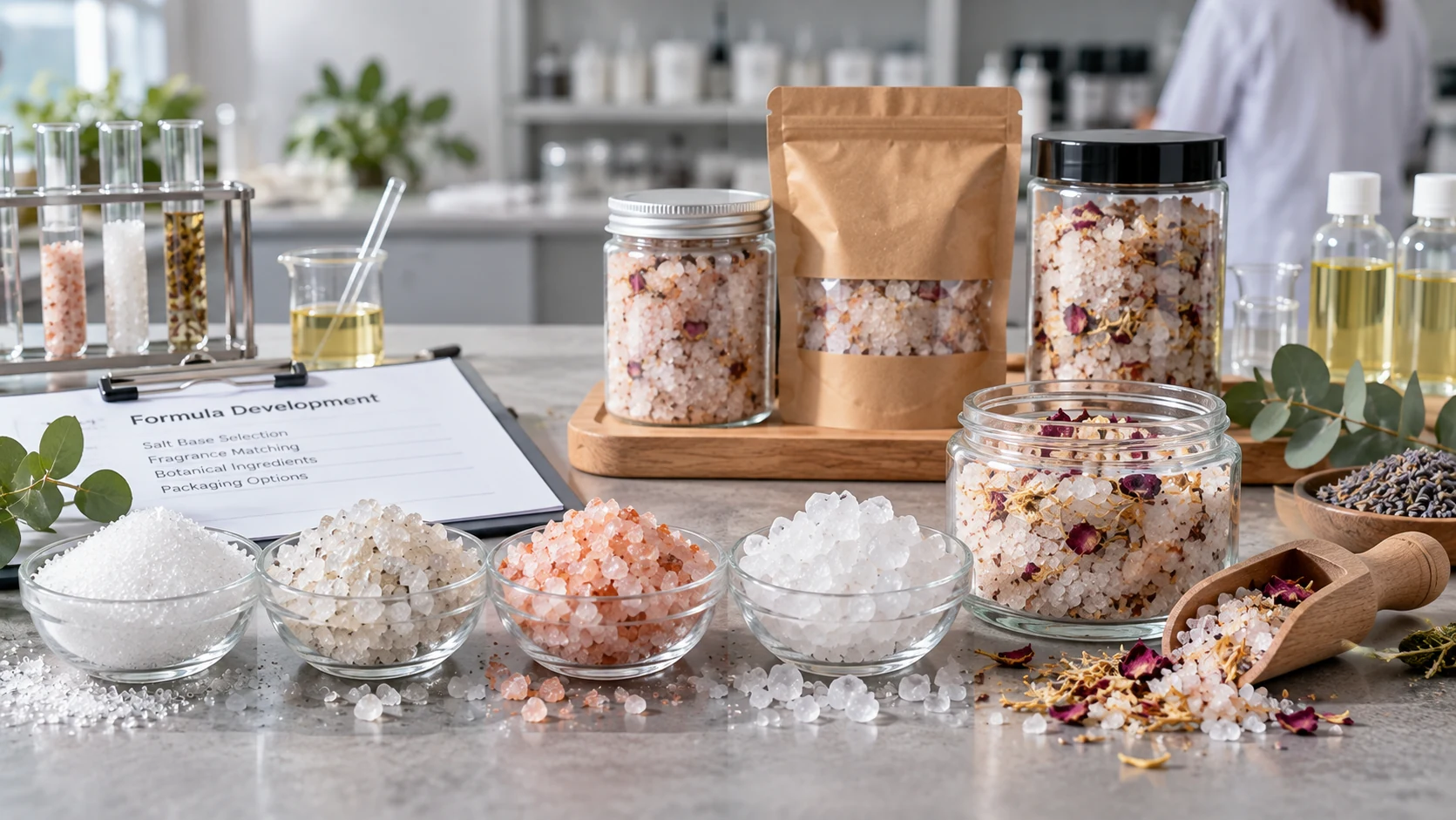
The salt base and packaging should be considered together.
A visually distinctive Himalayan salt may benefit from transparent packaging that allows consumers to see the natural crystals. A larger-format wellness product may prioritize package efficiency and moisture protection instead.
Mineral blends with botanicals or fragrance may also require additional attention to barrier performance and sealing.
For this reason, packaging should be confirmed with the final salt formula rather than selected only from a design mockup.
A complete packaging comparison will be covered in the supporting Bath Salt Packaging Guide.
Frequently Asked Questions
Q: 1. Which salt is best for private label bath salts?
A: There is no universal best option. Epsom salt offers a flexible wellness base, Dead Sea salt supports premium mineral positioning, Himalayan salt creates strong visual differentiation, and sea salt works well for natural and versatile product concepts.
Q: 2. Can Epsom, Dead Sea, Himalayan and sea salt be blended?
A: Yes. Salt blends are common in custom product development. The blend should be designed around a clear product goal such as texture, visual differentiation, positioning or target cost.
Q: 3. Which salt is best for premium bath products?
A: Dead Sea and Himalayan salts are often used in premium concepts because of their mineral or visual positioning. However, packaging, fragrance and overall product execution are equally important to premium positioning.
Q: 4. Does the salt base affect product cost?
A: Yes. Raw-material grade, source, particle size, order volume and supply conditions can all affect cost. The manufacturer should evaluate salt selection together with the complete product specification rather than judging cost from the mineral type alone.
Choose a Salt Base That Fits the Product - Not Just the Trend
Epsom, Dead Sea, Himalayan and sea salt can all support successful private label bath products.
The right choice depends on what the brand wants the finished product to communicate and how it needs to perform during manufacturing, packaging and retail.
For some projects, a single salt provides the clearest product identity. For others, a controlled mineral blend creates a better balance between appearance, positioning and commercial requirements.
Poleview supports custom and private label bath salt projects from salt-base selection and formula development through sampling, packaging and commercial production.
Brands ready to evaluate manufacturing options can explore our private label bath salts manufacturing services.