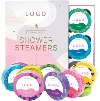

A few years ago, if you mentioned "shower steamers" to someone, you'd probably get a blank stare. Now? They're stacked on endcaps at Target, filling subscription boxes, and racking up millions of views in TikTok shower routine videos. The category has exploded - and it's showing no signs of slowing down.
Let's break down what's actually happening in this space, who's buying, what's driving the growth, and whether the momentum is sustainable or just another wellness fad with a short shelf life.

What Exactly Are Shower Steamers - And Why Does Everyone Suddenly Want Them?
If you've never tried one: shower steamers are compact, puck-shaped tablets you place on the floor of your shower (out of direct water stream, ideally). As they get splashed, they fizz and dissolve, releasing essential oils into the steam around you. Think of it as turning your regular morning shower into a quick aromatherapy session.
They're not bath bombs. That's a common point of confusion. Bath bombs dissolve in a tub of water, often with colors and skin-softening ingredients. Shower steamers are designed purely for scent and the steam experience - no tub required. And that distinction matters more than you'd think, because most people don't have the time (or honestly, the energy) for a full bath ritual on a Tuesday evening.
That's the core appeal. Shower steamers fit into the "micro-moment" wellness trend - a two-minute sensory upgrade that doesn't require you to rearrange your schedule. They meet people where they already are: standing in the shower, half-awake, wanting something that feels a little luxurious before the day starts.
From Niche Etsy Finds to Mainstream Retail Shelves
The trajectory here is textbook indie-to-mainstream. Five or six years ago, shower steamers were almost exclusively an artisan product - small-batch makers selling on Etsy and at craft fairs. The formulations were simple, the packaging was homemade, and the audience was niche.
Then social media got involved. "Shower routine" content became its own genre on TikTok and Instagram Reels, and shower steamers were photogenic enough (the fizzing, the steam, the aesthetic packaging) to earn consistent screen time. Demand spiked. Bigger retailers noticed.
By 2023-2024, you could find aromatherapy shower tablets at Ulta, Whole Foods, and multiple big-box chains. That retail validation shifted public perception - this wasn't just a quirky Etsy purchase anymore. It was a real product category with real shelf space. The bath and body product trends of the past few years have consistently pointed toward experiential, sensory-driven formats, and shower steamers landed right in that sweet spot.
Current Market Snapshot - How Big Is the Shower Steamers Industry Right Now?
Numbers help put things in perspective. The shower steamers category doesn't always get its own standalone market report (it's often bundled into broader "bath fizzy" or "aromatherapy product" categories), but the data we do have tells a clear story of acceleration.
Market Size and Recent Growth Figures
The global shower steamers market was valued at roughly $300–$400 million as of late 2025, depending on which research firm's methodology you follow. North America accounts for the largest share - somewhere around 40% - with Europe close behind.
Year-over-year growth has been running in the 8-12% range, which significantly outpaces the broader personal care industry forecast of around 4-5% annual growth. For context, that growth rate is comparable to what bath bombs experienced during their peak expansion years (roughly 2016-2019), before that category matured and plateaued.
Compared to adjacent categories like shower gels or body scrubs, the essential oil shower melts segment is still relatively small in absolute terms. But the growth rate tells you where momentum lives.
Who's Buying - Consumer Demographics and Behavior
Millennials and Gen Z dominate purchasing - no surprise there, given the social media discovery pipeline. But the demographic spread is wider than you might assume. The 25-44 age bracket is the core, but there's meaningful traction with consumers in their 50s and 60s who are discovering the products through gifting.
Speaking of gifting: it's a massive driver. Shower steamers are affordable, visually appealing, and easy to package as sets. They've become a go-to "thinking of you" gift, which creates seasonal spikes around holidays and Mother's Day, though year-round purchasing is growing as repeat buyers stock up for personal use.
One shift worth noting: the male consumer segment is growing faster than the overall category. Gender-neutral scent profiles (eucalyptus, mint, cedarwood) and less "feminine" packaging have opened the door. Stress relief and muscle relaxation are the purchase motivations that resonate most with male buyers.
Competitive Landscape at a Glance
The competitive field is crowded and fragmented. You've got indie artisan brands (still thriving on Etsy and DTC), mid-market brands that have scaled through Amazon and retail partnerships, and legacy personal care companies that have launched shower steamer lines to capture the trend.
Private-label products are everywhere - Amazon's shelves are flooded with white-label options at aggressive price points. Subscription boxes (both dedicated and as add-ins to larger wellness boxes) represent another growing channel. The low barrier to entry means new brands pop up constantly, which creates both opportunity and noise.
The Forces Driving Demand for Essential Oil Shower Melts
Trend pieces love to say "people are more stressed than ever" and leave it there. But the forces behind this category's growth are more structural and interesting than that.
The Wellness Economy Keeps Expanding
The global wellness economy crossed $6 trillion a couple of years ago and hasn't looked back. Within that massive number, there's a clear pattern: consumers are gravitating toward accessible, low-commitment wellness touchpoints. Not everyone can afford a spa membership or a meditation retreat. But a $2 shower steamer that makes your Wednesday morning feel slightly less grim? That's attainable.
Essential oil shower melts function as an entry point to aromatherapy for people who'd never walk into a dedicated aromatherapy shop. They lower the barrier. You don't need a diffuser, you don't need to learn about carrier oils - you just unwrap a tablet and step into the shower.
Ingredient Transparency and Clean Beauty Crossover
The clean beauty movement has reshaped consumer expectations across personal care, and shower steamers aren't exempt. Buyers now routinely check for plant-based formulations, paraben-free and sulfate-free ingredients, and cruelty-free certifications. Vegan formulations have become table stakes for any brand targeting the premium tier.
What's interesting is the willingness to pay up. Data from multiple consumer surveys shows that 60-70% of shower steamer buyers will pay a meaningful premium for products with clean ingredient lists and transparent sourcing. That pricing power is part of what makes the category attractive to new entrants.
Sustainability as a Purchase Driver
Packaging matters - a lot. Plastic-free packaging has moved from "nice to have" to "expected" among core shower steamer buyers. Recyclable cardboard, compostable wraps, and minimal packaging designs align with the values of the category's primary demographic.
There's also a format advantage that brands are increasingly leaning into: shower steamers are waterless and concentrated. Compare that to a 16 oz bottle of shower gel that's mostly water, shipped in a plastic bottle. The sustainability narrative almost writes itself, and smart brands are making it central to their storytelling.
Challenges the Industry Still Faces
It's not all upward curves and glowing reviews. The category has real growing pains.
Formulation and Performance Inconsistencies
Read through Amazon reviews for mid-tier shower steamers and you'll see the same complaints repeated: dissolves too quickly, barely any scent, crumbled into powder during shipping. The gap between a well-formulated steamer and a cheap knockoff is enormous - but consumers often can't tell the difference before purchasing.
Scaling artisan formulations to mass production without losing performance quality is genuinely hard. The R&D challenge involves balancing hardness (for shipping durability), dissolution rate (for scent release), and essential oil concentration (for actual aromatherapy benefit). Many brands haven't cracked this yet.
Market Saturation and Differentiation Pressure
Because the basic formulation is relatively simple (citric acid, baking soda, essential oils, binders), the barrier to entry is low. That's created a flood of nearly identical products competing primarily on price. Commodity-tier steamers are now available for under $1 per tablet, which compresses margins for everyone.
Building brand loyalty in this environment is tough. Many consumers treat shower steamers as interchangeable and default to whatever's cheapest or best-reviewed on Amazon. Brands that survive long-term will need genuine differentiation - whether through formulation innovation, scent expertise, or community building.
Regulatory Grey Areas
Here's something most consumers don't think about: the line between "cosmetic" and "drug" in regulatory terms. If a shower steamer claims to "relieve sinus congestion" or "reduce anxiety," it's potentially making drug claims that trigger FDA scrutiny. Most brands carefully word their marketing around "experience" rather than "treatment," but the boundaries remain murky.
International expansion adds another layer. EU cosmetic regulations, UK post-Brexit rules, and varying Asian market requirements all create compliance complexity for brands trying to scale globally.

Future Market Outlook - What's Next for Shower Steamers?
So where does this go from here? Based on current trajectories and the structural tailwinds we've covered, the outlook is genuinely strong - with some caveats.
Projected Growth Through 2030 and Beyond
Most credible market research forecasts project a CAGR between 7-10% for the aromatherapy shower tablets category through 2030. That would put the global market somewhere in the $550-$700 million range by decade's end.
Asia-Pacific is expected to show the fastest adoption rates, driven by rising disposable income, growing wellness awareness, and strong e-commerce infrastructure. Europe remains a steady growth market, particularly in the UK, Germany, and Scandinavia where bath and body product trends tend to skew toward natural and sustainable options.
Is there a ceiling? Probably. Shower steamers won't become as ubiquitous as shower gel - they're an enhancement, not a necessity. But within the "affordable daily luxury" positioning, there's significant runway left.
Innovation Trends to Watch
The next wave of product development is already visible. Functional formulations are pushing beyond basic aromatherapy - think CBD-infused tablets for muscle recovery, adaptogen-enhanced blends, and mood-specific collections designed around time of day.
On the tech side, some brands are experimenting with color-changing tablets that create a visual experience alongside the scent, and at least one startup is exploring app-paired systems that recommend scent profiles based on mood tracking data. Whether consumers actually want that level of complexity remains to be seen.
Channel expansion into hotels, spas, and hospitality is another significant opportunity. High-end hotel bathrooms already feature premium bath products - shower steamers are a natural extension that adds perceived luxury without major cost.
How Shifting Consumer Preferences Will Shape the Category
Gen Alpha is growing up in households where wellness practices are normalized. By the time they're making their own purchasing decisions, aromatherapy and self-care rituals won't be "trends" - they'll be default behavior. That bodes well for long-term category health.
Gender-neutral and minimalist branding will likely dominate the next generation of successful brands. The heavily "feminine" aesthetic that characterized early shower steamers is already giving way to cleaner, more universal design language.
Perhaps most interesting is the concept of integrated "shower wellness systems" - where steamers are one component alongside filtered showerheads, chromotherapy lighting, and curated playlists. It sounds excessive, but the pieces are all already available individually. Someone will bundle them convincingly.
Frequently Asked Questions
Q: Are Shower Steamers Just A Fad Or A Lasting Product Category?
A: Everything points to lasting. The category is backed by structural wellness trends (not just social media hype), has achieved mainstream retail distribution, and addresses a genuine consumer need - accessible self-care that fits into existing routines. Fads don't typically sustain 8-12% annual growth for multiple consecutive years while expanding into new demographics and retail channels.
Q: What's The Difference Between Shower Steamers And Bath Bombs?
A: Bath bombs dissolve in a bathtub full of water and often contain skin-conditioning ingredients, colors, and glitter. Shower steamers sit on the shower floor and are designed to release essential oil vapors into the steam - no bathtub required. They're typically harder (to resist direct water stream) and more concentrated in fragrance. Different use case, different formulation, different experience.
Q: Is The Shower Steamers Market A Good Space For New Brands To Enter?
A: Honest answer: it depends on your angle. The market has opportunity but it's increasingly saturated at the commodity level. New brands that succeed will need genuine differentiation - whether that's proprietary formulations, unique scent profiles, strong sustainability credentials, or a compelling brand story. Competing purely on price against established players and private-label products is a losing strategy.
Q: Which Essential Oil Scents Are Most Popular In Shower Steamers Right Now?
A: Eucalyptus and mint remain the top sellers overall - the "spa shower" association is powerful. Lavender dominates the relaxation/evening segment. Citrus blends (orange, grapefruit, lemon) perform well as energizing morning options. Emerging scents gaining traction include rosemary, bergamot, and forest blends (pine, cedarwood). Wellness product consumer preferences increasingly lean toward functional scent profiles tied to specific moods or times of day.
Q: How Are Sustainability Concerns Reshaping Shower Steamer Packaging?
A: Dramatically. Plastic packaging is now viewed negatively by core buyers. Leading brands have shifted to recyclable cardboard boxes, compostable shrink wrap alternatives, and minimal packaging designs. Some brands ship individual steamers completely unwrapped in molded paper trays. The waterless, concentrated format also gives brands a sustainability story around reduced shipping weight and eliminated water waste compared to liquid products. Expect packaging innovation to remain a key competitive differentiator.