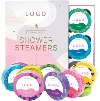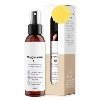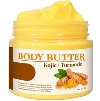

White label products are manufactured by a third party, not the company that sells it, or necessarily even markets it. The advantage is that a single company does not have to go through the entire process of creating and selling a product. One firm can concentrate on producing the product; another on marketing it; and another can focus on selling it, each according to its expertise and preference. The major benefits of white label branding are that it saves companies time, energy, and money in terms of production and marketing costs.
Another big advantage of private label brands is that if a supermarket has an exclusive deal with a manufacturer, then the average transportation expenses might be lower than usual and the company would benefit from distributional economies of scale. Because of lower transportation costs, the retailer could sell the product for less and still reap a bigger profit margin.
Private label brands have become increasingly popular, which suggests that consumers are becoming more sensitive to price and less loyal to their favorite traditional brands. In many countries, the growth of private label brands is hurting national brands' (the manufacturers') market share.

Types of Businesses That Use White Label Products
Retailers
Although technically white label products may appear in any industry or sector, large retailers have done quite well with them. Companies like Whole Foods and Walmart have benefited by selling their own branded products that have been created by other manufacturers.
Multinationals and Mass Merchandisers
In 1998, Tesco (TSCDY), a British multinational grocery and general merchandiser, began segmenting its customers and developing brands that cater to each group. In the United States, retailers were quick to follow Tesco's precedent.
White labeling in the U.S. has worked particularly well for big-box retailers like Target Corporation (TGT), with at least 10 different brands each catering to a specific consumer group and product line, and together bringing in at least $1 billion a year.
Electronics Companies
Private label branding is not limited to the supermarket segment. Major electronics manufacturers of top-tier mobile phones and computers often put their brand names on cheaper-priced white label products to expand their offerings.
White Label in the Form of Services
White label products don't always need to be tangible items. Service offerings also have adopted white labeling. Some banks, for example, use white label services like credit card processing when they do not have these services in house. Furthermore, businesses that have no banking operations often extend branded credit cards to their customers, which is also a form of white labeling. For example, L.L. Bean Inc. offers its consumers a branded credit card, though the card is actually provided by Barclays Bank (BCS). Macy's (M) also offers its customers a branded card, and theirs is provided by American Express (AXP).
Advantages and Disadvantages of White Label Products
The concept of white labeling comes with numerous considerations, both positive and negative.
Advantages
Expanded product lines. Firms can use white label brands to expand their offerings and target customers strategically; in turn, this could bolster their competitive advantage.
Large contracts. Third-party producers get huge contracts, which could come with guaranteed sales and revenue.
Discounted sales. Stores can boost revenue selling white label products at a discount relative to national brands.
Quality. White label brands can be just as good as national brands, as they often use the same producers; high quality creates satisfied customers.
Disadvantages
Copycatting. Using very similar packaging among brands is called copycatting, which can be illegal in some cases. Private label brands must differentiate themselves sufficiently so as not to mislead consumers.
Monopsony. A powerful retailer could push out smaller competitors, resulting in a market condition where there is only one buyer.
Barriers to entry. The growing dominance of white label brands could make it hard for new firms to enter the market, reducing overall competition.

WhatsApp: 8618948240310

Email: Minajiang@boymay.net

001 Xinmin Second Road, Xinle Industrial Park, Maan Town, Huicheng Area, Huizhou Guangdong 516057 China