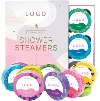

This guide covers everything - what these things actually are, how to use them without burning through one in half a minute, and how to store them so your last tablet works as well as your first.
What Are Shower Steamers (And Why They're Not Bath Bombs)
Let's clear this up because the confusion is everywhere. Shower steamers look like bath bombs. They're shaped the same, often sold next to each other, and people use them interchangeably. But they're fundamentally different products.
Bath bombs are meant to dissolve in a full tub of water. They typically contain skin-softening oils, colorants, sometimes glitter. Shower steamers? They're designed to sit on your shower floor and release scent through steam. They're aromatherapy delivery systems, not skin treatments.
Aromatherapy shower tablets rely on essential oils that get activated by hot water vapor and the enclosed humidity of your shower stall. You're breathing the benefit in, not soaking in it. Think of them as a spa-grade scent experience you can squeeze into a Tuesday morning shower.
How Do Essential Oil Shower Bombs Actually Work?
The chemistry is pretty straightforward. Most shower steamers are made from baking soda and citric acid - the same fizzing reaction you'd see in a bath bomb. When water hits the surface, these two ingredients react, creating carbon dioxide bubbles that help disperse the essential oils into the surrounding steam.
Here's why your shower makes this work so well: it's an enclosed, humid space. The steam acts as a carrier, lifting those essential oil molecules into the air where you inhale them. A candle sitting on your bathroom counter can't compete with that kind of direct delivery.
Different blends serve different purposes. Eucalyptus and peppermint are popular for opening up congested sinuses. Lavender and chamomile help you wind down before bed. Citrus blends like orange and lemongrass tend to energize. The steamer is just the vehicle - the essential oil blend is doing the real work.

How To Use Shower Steamers - Step by Step
Most of the complaints I see about shower steamers come down to one thing: people don't know how to use them. It's not intuitive, and the packaging rarely helps. So here's the actual process, broken down.
Step 1 - Find the Right Spot (Shower Steamer Placement Matters)
Shower steamer placement is the single biggest factor in how well it works. You want it on the shower floor, near the drain area, but positioned where water splashes onto it indirectly - not where the main stream hits directly.
Think of it this way: the steamer needs occasional splashes to activate, but a direct hit from your showerhead will dissolve it in seconds. You want the equivalent of light rain, not a fire hose.
If you have a rainfall showerhead that covers most of the floor, you'll need to get creative. A small soap dish placed on a ledge or the corner of the tub works well. Some people use a washcloth as a little platform just outside the main water zone. The goal is controlled water contact.
Where you place it also affects scent strength. Closer to where you're standing means stronger aroma. Tucked in a far corner means subtler. Experiment to find what you prefer.
Step 2 - Get Your Water Temperature Right
This part trips people up, especially if you're a lukewarm shower person. Dissolving shower melts need heat to work properly. Hotter water generates more steam, and more steam means more essential oil gets released into the air.
You don't need scalding water. But that barely-warm shower you take in July? It won't produce enough steam to carry the scent effectively. Aim for a comfortable hot - the kind where your bathroom mirror fogs up within a couple minutes.
A small trick that makes a noticeable difference: turn on the shower and close the bathroom door a minute or two before you step in. Let the room fill with steam first. When you unwrap the steamer and place it, it's already got a humid environment to work with.
Step 3 - Control the Dissolve Rate
The number one frustration people have is their steamer disappearing too quickly. Usually it's a placement issue (see step one), but there are other ways to control the pace.
Less water contact means a slower release. If it's dissolving too fast, move it further from the splash zone. If you're barely getting any scent, nudge it a bit closer or flick some water on it periodically.
Here's something most brands won't tell you: larger steamers can be broken in half. Use one piece per shower and get two sessions out of a single tablet. This works especially well with dense, well-compressed steamers. Softer, crumbly ones tend to fall apart unevenly, so keep those intact.
A good steamer should last roughly 5–10 minutes with proper placement. If yours is gone in under a minute, it's getting too much direct water. Adjust and try again.
What NOT To Do With Shower Steamers
I've seen people try all kinds of things. Let me save you some trial and error.
Don't hold it in your hand under the stream. It'll fizz out immediately, you'll waste the whole thing, and you might irritate your skin - these aren't formulated for prolonged skin contact the way bath products are.
Don't toss it in a bathtub full of water thinking it'll work like a bath bomb. It won't color your water, won't moisturize your skin, and the scent release will be minimal because there's no enclosed steam environment. It's just not what it's designed for.
If your steamer contains dried flower petals, herbs, or any decorative pieces, don't place it directly over the drain. Those bits can accumulate and cause clogs over time. Put it off to the side and clean up any residue after your shower.
And one more - don't store them unwrapped on your shower shelf "for convenience." They'll absorb bathroom humidity and be half-spent before you ever use them.
How To Store Shower Steamers So They Actually Last
You buy a six-pack. The first one is incredible - strong scent, satisfying fizz, the whole experience. By the time you reach number four or five, it barely does anything. Just a sad little tablet that crumbles in your hand. Sound familiar?
This isn't the product failing. It's a storage problem.
Why Shower Steamers Go Flat (The Humidity Problem)
Remember that citric acid and baking soda reaction? It starts happening the moment moisture touches the steamer. Any moisture. Including the ambient humidity in your bathroom air.
When a steamer absorbs humidity over days or weeks, the fizzing reaction happens gradually - invisibly. By the time you unwrap it, a chunk of that reactive potential is already gone. The essential oils have been slowly evaporating too, which is why old steamers smell weaker.
Here's the irony: the bathroom is the absolute worst place to store them. It's the most humid room in your house. Every time you shower, you're basically slow-cooking your remaining steamers with moisture.
Best Humidity-Proof Storage Methods
The fix is simple once you understand the problem. Keep them sealed and keep them dry.
Airtight containers work well - glass jars with rubber-sealed lids, Tupperware-style containers, even mason jars. If they came individually wrapped in plastic, leave that wrapping intact until you're ready to use one.
Ziplock bags with the air squeezed out are a cheap, effective option. Toss in a silica gel packet if you have one (those little "DO NOT EAT" sachets that come in shoe boxes and electronics packaging). They absorb ambient moisture and extend shelf life noticeably.
Store the whole setup outside the bathroom. A bedroom drawer, linen closet, or kitchen pantry - anywhere cool and dry. It feels counterintuitive to keep a shower product away from the shower, but it makes a real difference.
For homemade versions, some people store them in the fridge. The cold, dry environment slows down both the chemical degradation and essential oil evaporation. Worth trying if you've made a large batch.
How Long Do Shower Steamers Last in Storage?
With proper humidity-proof storage - airtight, cool, dry environment - most steamers hold up well for six to twelve months. The scent will gradually fade over that time, but they'll still function.
Poorly stored steamers (open container, bathroom shelf, no wrapping) can lose noticeable potency in two to four weeks. By six weeks, you'll probably find them crumbly and almost scentless.
Commercial steamers with factory shrink wrap tend to have a longer shelf life than homemade ones, simply because that tight seal does a better job keeping moisture out. If you're buying in bulk, look for individually sealed tablets rather than loose ones in a shared bag.

Getting More Out of Your Shower Steamers - Tips Most People Miss
Pair With Breathing Techniques
This sounds more involved than it is. When you've got a eucalyptus or peppermint steamer going, take a few slow, deep breaths through your nose. Hold for a second, exhale through your mouth. That's it.
You're pulling more of the essential oil vapor into your airways, which is especially useful if you're dealing with congestion or sinus pressure. It's the same principle behind vapor inhalers and steam bowls - you're just doing it in a more convenient setting.
For lavender or calming blends, slow breathing helps activate your parasympathetic nervous system. Combine that with the warm water and enclosed steam, and your evening shower becomes a genuine wind-down routine rather than just a hygiene task.
Layering Scents With Your Other Products
Something to consider: if you're using a strongly scented body wash, shampoo, and conditioner alongside a shower steamer, you've got four competing fragrances in a small space. The result is usually muddy - nothing stands out.
If you really want to appreciate the steamer's scent, try using unscented or mildly scented products during that shower. Alternatively, choose products with complementary notes. A lavender steamer pairs fine with a vanilla body wash. A eucalyptus steamer alongside minty shampoo works. Citrus steamer plus coconut conditioner? Also good.
It's not a strict rule. Just something that makes a difference once you notice it.
DIY vs. Store-Bought - Quick Comparison
Homemade shower steamers give you full control. You pick the essential oils, adjust the scent strength, avoid any ingredients you're sensitive to. The trade-off: they often dissolve faster because home recipes rarely achieve the same compression as commercial manufacturing. They also need more careful storage since they're typically not vacuum-sealed.
Store-bought options are more consistent. Better sealed, denser tablets, predictable dissolve time. You're paying for convenience and shelf stability.
Neither option is inherently better. If you enjoy making things and want to customize, DIY is rewarding. If you just want something reliable that you can grab and use, commercial steamers are the easier choice.
FAQ - Shower Steamers Questions Answered
Q: Can You Use Shower Steamers In A Bath?
A: Technically, nothing stops you. But it's a waste of the product. They're formulated to release scent through steam, not to dissolve in a large volume of water. You won't get skin-softening benefits, colored water, or much fragrance. If you want aromatherapy in the tub, bath bombs or bath oils are designed for that purpose.
Q: Are Shower Steamers Safe For Kids Or Pets?
A: For older kids, generally yes - the steamer sits on the floor and doesn't contact skin in a meaningful way. However, strong mentholated or eucalyptus steamers can be too intense for small children. Use milder scents like lavender or citrus for younger ones, and keep the bathroom ventilated.
Q: How Often Should You Use Shower Steamers?
A: As often as you want. There's no limit or health concern with daily use. Most people use them two to three times a week, treating it as a small ritual rather than an everyday thing. But if you want one every morning, go for it. It's your shower.
Q: Do Shower Steamers Expire?
A: They won't become harmful or dangerous over time. What happens is they lose potency - the fizzing reaction weakens, the scent fades, and eventually you're left with a crumbly tablet that barely does anything. If it's falling apart in your hands before water even touches it, it's past its useful life. Not harmful, just pointless.
Q: Can Shower Steamers Help With Congestion Or Headaches?
A: Yes, with a caveat. Eucalyptus and peppermint varieties are genuinely helpful for sinus relief. The combination of steam and menthol-forward essential oils opens airways and eases pressure - it's the same mechanism as a bowl of hot water with Vicks, just more convenient.