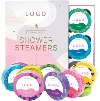

So there you are - eyeing that eucalyptus shower steamer on your bathroom shelf, the tub is filling up with hot water, and the thought crosses your mind: why not just drop it in? It fizzes. It smells amazing. It looks like a bath bomb's cooler cousin. What's the worst that could happen?
Honestly, I had this exact moment a few months back. I was out of bath bombs, had a stash of shower steamers, and figured they were close enough. Spoiler: the experience taught me a few things worth sharing. The answer isn't a hard no - but it's definitely not the simple yes you might be hoping for.
What Exactly Are Shower Steamers (And How Do They Work)?
Before we get into whether tossing one in your bath is a good idea, it helps to understand what these things actually are. Because here's the thing - a lot of people treat shower steamers and bath bombs as interchangeable. They're not.
The Basic Anatomy of a Shower Steamer
Most shower steamers share a pretty standard recipe: baking soda, citric acid, and essential oils. Sometimes cornstarch as a binder. The citric acid and baking soda react with water to create that satisfying fizz, which releases aromatic vapor into the surrounding steam.
The key word there is vapor. These are engineered to sit on your shower floor, catch some water spray, and slowly fizz out while you stand above them breathing in the scent. They're not meant to dissolve against your skin for twenty minutes.
You'll also notice most formulas skip the stuff that makes bath products feel luxurious - no coconut oil, no shea butter, no colorants, no skin-softening agents. That's intentional. Those ingredients would make them slippery on the shower floor and clog your drain. The design is purely about aromatherapy through inhalation.
Shower Steamers vs. Bath Bombs - The Difference People Miss
They look similar. They fizz similarly. But the formulation philosophy is completely different.
Bath bombs are made for prolonged skin contact. The essential oil concentrations are deliberately kept low - typically diluted with carrier oils - because you're soaking in them. They include moisturizers, sometimes milk powders, skin-safe colorants. The whole point is the soak.
Shower steamers? They're formulated for your nose, not your skin. The essential oil load is significantly higher because the product only needs to scent the air, not be gentle enough for a 30-minute soak. Menthol and eucalyptus concentrations that feel refreshing as inhaled vapor can feel pretty aggressive when your whole body is marinating in them.
This is the distinction that matters when people ask about bath bombs vs shower steamers - they share ingredients the way a candle and a hand lotion both contain fragrance. Same general category, very different intended use.

Can You Actually Use Shower Steamers in the Bath?
Alright, the question you came here for. Straight answer, then nuance.
The Short Answer - Technically Yes, But With Caveats
Will a shower steamer dissolve in your bathwater? Absolutely. Will it fizz and release scent? Yep. Will it damage your tub or destroy your plumbing? Almost certainly not.
But "it won't break anything" is a low bar. The real question is whether it'll give you a good experience. And that's where things get complicated.
Why It's Not the Same Experience
Here's what surprised me the first time I tried it: the scent was weaker, not stronger. That sounds counterintuitive - you'd think dissolving the whole thing in water you're sitting in would be more intense than sniffing it from your shower floor. But no.
In a shower, steam carries concentrated aromatic compounds directly to your face in an enclosed space. In a bathtub full of water, those same essential oils get diluted across gallons and gallons of liquid. The aromatherapy effect genuinely weakens. You'll get a pleasant whiff, not the sinus-clearing hit you're used to.
Meanwhile, the stuff that does transfer - the raw essential oils making contact with your skin - that's the part you might not want. Peppermint and eucalyptus in particular can cause tingling, redness, or dryness when your skin soaks in them undiluted for extended periods. And without any moisturizing agents in the formula, your bath just feels like… slightly scented water. No silkiness. No skin benefits. Just minty.
When Dissolving Shower Steamers in Water Might Work Fine
I don't want to be all doom and gloom here. There are situations where using shower melts for bathtub use is perfectly okay:
If your steamer is a gentle formula - think lavender, chamomile, or vanilla - without heavy menthol or camphor, the skin irritation risk drops considerably. If you're not someone who reacts to essential oils on skin, you'll probably be fine. And if you go in with realistic expectations - a mild scent in the water rather than a full spa experience - you won't be disappointed.
Some people also like dissolving shower steamers in water as a foot soak, which works better because you're using less water and keeping the concentration higher in a smaller volume. That's actually a pretty clever middle ground.
What Could Go Wrong? Real Concerns Worth Knowing
Most articles on this topic just say "sure, go for it!" and move on. But I think there are a few things worth flagging, especially if you're considering making this a regular habit.
Skin Irritation From Concentrated Essential Oils
Dermatologists generally recommend essential oils be diluted to 1-3% concentration for safe skin application. Shower steamers don't follow those guidelines because they were never meant for skin contact. When you soak in them for 20-30 minutes, you're essentially doing an undiluted essential oil bath.
For most adults with normal skin, one time probably won't cause problems. But repeated exposure - especially to peppermint, eucalyptus, cinnamon, or tea tree - can sensitize your skin over time. If you notice redness, itching, or unusual dryness after your bath, the steamer is likely the culprit.
The Fizz Factor - It Disappears Too Fast
Shower steamers are compressed differently than bath bombs. They're designed to activate slowly under intermittent water spray - a splash here, a trickle there. Drop one in a full tub and it often dissolves completely in under two minutes.
Compare that to a decent bath bomb, which might fizz and spin for five to ten minutes, releasing color and scent gradually. With a shower steamer, you get a brief burst and then… nothing. The show's over before you've even settled in.
Wasted Product, Wasted Money
This one's purely practical. A shower steamer's entire value proposition is its vapor output - the aromatic compounds carried by steam to your respiratory system. When you dissolve it in bath water, you're paying for aromatherapy that mostly disperses into the water rather than reaching your nose effectively.
Good shower steamers aren't cheap either. At $2-4 per tablet, using two or three to scent a bath adequately means you're spending more than a single bath bomb that's actually designed for the job. The economics just don't make sense as a regular practice.
A Better Approach - How to Get a Bath-Like Aromatherapy Experience
Okay, so you want the aromatherapy experience during a bath without wasting your shower steamers. Here are some approaches that actually work well.
Place the Steamer Near the Faucet Stream (Not Submerged)
This is my favorite trick. Set the steamer on the tub ledge right where the faucet water splashes. The hot water running over it activates the fizz and creates localized steam, mimicking what happens in your shower. You get the scent diffusing upward into the warm air above your bath without submerging the whole thing.
You'll use it more slowly this way too. One steamer can last through most of a bath if it's only getting intermittent water contact rather than being fully submerged.
Pair a Shower Steamer With a Plain Bath Soak
Use Epsom salts or a colloidal oatmeal soak for the actual bath - something that gives your skin the moisturizing, muscle-relaxing benefits you want. Then place the shower steamer on the edge of the tub where occasional splashes activate it. Best of both worlds.
Some people also set their steamer in a small dish with a bit of water at the back of the tub. It fizzes slowly, scents the air, and never touches their skin. Simple, effective, and you don't burn through your product supply.
Just Use Aromatherapy Bath Products Instead
If what you really want is a scented bath, aromatherapy shower tablets aren't your best bet - bath-specific options exist for a reason. Bath oils, scented Epsom salts, or actual aromatherapy bath soaks give you the fragrance and the skin benefits in formulas tested for prolonged soaking.
Reserve your shower steamers for showers where they can do what they're designed to do. Let bath products handle bath time. Each does its job better in its intended environment.

FAQ - Shower Steamers and Bathing Questions Answered
Q: Will A Shower Steamer Stain My Bathtub?
A: Unlikely. Most shower steamers don't contain dyes or colorants since there's no visual appeal needed on a shower floor. That said, always check the ingredients - a few brands add color for shelf appeal. If yours contains FD&C dyes or mica, test it in a small amount of water first before committing to a full bath.
Q: Can Shower Steamers Clog My Drain If Used In The Bath?
A: No. The same dissolution mechanism that works in your shower applies in a bathtub. Baking soda and citric acid are fully water-soluble. If anything, the citric acid reaction can actually help break down minor buildup. Your drain is safe.
Q: Are Shower Steamers Safe For Kids' Baths?
A: Generally not recommended. Children have thinner, more sensitive skin than adults, and the higher essential oil concentrations in shower steamers - particularly menthol and eucalyptus - can cause irritation or even breathing discomfort for young kids during prolonged soaking. Stick to products specifically formulated for children's bath time.
Q: How Many Shower Steamers Would I Need To Scent A Full Bath?
A: For a noticeable scent throughout a standard bathtub, you'd likely need two to three steamers. They dissolve quickly and the fragrance disperses across a large water volume. At that point, you're spending $4-12 on something a single $3-5 bath bomb handles better. The math doesn't favor it.
Q: Can I Break A Shower Steamer In Half To Use In The Bath?
A: Yes, and this is actually one of the smarter approaches if you're set on trying it. Breaking one in half reduces the essential oil concentration hitting the water, making it gentler on skin. The scent will be mild - barely there in a full tub - but it's a lower-risk way to experiment. Use the other half in your next shower where it'll perform as intended.