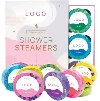

If you've been curious about making your own aromatherapy shower tablets but figured it required some crafting gene you weren't born with - relax. You need a bowl, a few ingredients, and about 30 minutes.
What Are Shower Steamers, and Why Are They Everywhere Right Now?
Think of shower steamers as bath bombs' low-maintenance cousin. They sit on your shower floor, react with water and steam, and release essential oil vapor into the air around you. No bathtub required. No twenty-minute soak. Just step in, let the steam do its thing, and breathe.
They've blown up for pretty obvious reasons. Not everyone has a tub. Not everyone has time for a bath. But most people shower daily, and dropping a fizzy little tablet near the drain turns that routine into something that actually feels good. It's aromatherapy without the candles, the diffuser, or the commitment.

Ingredients You Actually Need
The ingredient list is short. Nothing here requires a specialty shop or a chemistry degree. Most of this is already in your kitchen or a quick online order away.
The Base - Baking Soda and Citric Acid
This is the citric acid baking soda recipe at its core. When these two meet water, they react and fizz. That fizzing action is what disperses the essential oils into steam so you can actually smell them.
The ratio that works best as a starting point: 2 parts baking soda to 1 part citric acid. So if you use one cup of baking soda, use half a cup of citric acid. Simple.
Citric acid sounds exotic but it's not. You can find it in the canning aisle of most grocery stores, at brewing supply shops, or in bulk bags online for about $10–$15 per pound. That pound will make dozens of steamers.
Essential Oils - Picking the Right Ones for Steam
Not all scents perform equally when hit with hot steam. For beginners, I'd stick with eucalyptus, peppermint, lavender, or sweet orange. These are bold enough to cut through shower humidity and they vaporize well at bathroom temperatures.
One thing worth knowing: fragrance oils and essential oils aren't the same. Fragrance oils are synthetic, and some of them don't hold up to heat the way pure essential oils do. For essential oil shower melts that actually deliver scent, go with the real stuff. It costs a bit more upfront but performs noticeably better.
Dosage matters here. More drops doesn't equal more aroma. It equals potential skin irritation and an overpowering blast that gives you a headache. Around 15–25 drops total per batch of six steamers is a solid range.
Binding Agents and Extras
You need something to hold the mixture together without triggering the fizz reaction early. Water is the enemy here - it'll activate your citric acid before you want it to. Instead, use witch hazel or rubbing alcohol as a binder. A spray bottle works best so you can add it gradually.
Optional additions: cornstarch slows down the fizzing so your steamer lasts longer in use. Kaolin clay adds firmness and helps the tablet hold its shape. Neither is required, but both are nice once you're past your first couple batches.
For color, mica powder is your friend. Food coloring technically works but it can stain grout and shower floors. Mica disperses without leaving marks. As for dried botanicals - lavender buds, rose petals - they look gorgeous in the mold. But they clog drains. I learned this the annoying way. Skip them unless you have a drain catcher.
Step-by-Step Recipe - Your First Batch in 30 Minutes
Basic Shower Steamer Recipe (Makes 6–8)
Ingredients:
1 cup baking soda
½ cup citric acid
2 tablespoons cornstarch (optional, for slower fizz)
20 drops essential oil of your choice
Witch hazel in a spray bottle
Silicone mold
Step 1: Whisk the baking soda, citric acid, and cornstarch together in a bowl until fully combined. Break up any lumps. Dry clumps mean uneven fizzing later.
Step 2: Drizzle in your essential oils directly onto the dry mix and stir immediately. If you wait, the oils pool and you get uneven scent distribution. I made this mistake my first time - half the batch smelled great, the other half smelled like nothing.
Step 3: Start spritzing witch hazel into the mix, one or two pumps at a time. Stir after each spritz. You're looking for a texture that holds together when squeezed in your fist - like wet sand at the beach. If it crumbles apart, add another spray. If it starts fizzing, you went too far too fast.
Step 4: Pack the mixture firmly into silicone molds. Really press it in. Don't be gentle. The tighter you pack, the less likely your steamers crumble when unmolded.
Step 5: Leave them alone for 24 to 48 hours in a dry spot. Don't touch them. Don't check on them. I know it's tempting. Just wait.
The Menthol Blast Recipe (For Congestion and Sinus Relief)
When cold season hits, these homemade shower fizzies become a genuine lifesaver. The blend: 10 drops eucalyptus, 8 drops peppermint, 5 drops rosemary. This is slightly more essential oil than the basic recipe, and that's intentional - you want that nasal punch when you're stuffed up.
Follow the same base recipe above. The menthol vapors released by steam open airways surprisingly well. I keep a stash of these in a jar from October through March. They won't cure a cold, obviously. But they make the worst mornings slightly more bearable.
The Wind-Down Recipe (Nighttime Relaxation)
For evenings: 10 drops lavender, 6 drops chamomile, 4 drops cedarwood. This one's less about the fizz and more about a slow, steady scent release. I actually reduce the citric acid slightly here - use a scant half cup instead of a full half - so it dissolves slower and hangs around longer.
I keep two of these on my shower shelf for weeknights. The cedarwood grounds the lavender so it doesn't smell like a grandmother's drawer sachet. It smells like actually winding down.

Troubleshooting - When Your Steamers Crumble, Expand, or Do Nothing
They Fell Apart Immediately
This is the most common first-timer issue. It means you either didn't add enough witch hazel or you didn't pack the molds firmly enough. Fix: add a couple more spritzes next time. Press harder into the mold - really use your thumbs. And give them a full 48 hours of cure time before attempting to pop them out.
They Expanded Like a Muffin in the Mold
This one's frustrating. What happened is moisture activated the citric acid prematurely and the fizzing reaction started inside the mold. Usually it means you added too much liquid at once, or your workspace is humid. Fix: work faster once you start adding witch hazel, spray less per round, and avoid making these on a rainy day or near a running dishwasher. Sounds silly. Matters more than you'd think.
They Don't Fizz or Smell in the Shower
Placement is everything. If you put the steamer directly under the shower stream, it dissolves in sixty seconds flat and the scent washes down the drain before it reaches your nose. Place it on the shower floor near the water, not under it. You want splashes hitting it, not a direct pour.
If the scent is still weak, bump your essential oil by 5–10 drops in the next batch. Some oils (like lavender) are subtler in steam than others (like peppermint).
Pro Tips That Separate Good Steamers From Great Ones
Patience with cure time makes the biggest difference. 48 hours minimum. I've tried unmolding at 12 hours and regretted it every time.
Storage matters. Keep finished steamers in an airtight container or individually shrink-wrap them. Exposed to air, they lose scent within a couple weeks. Sealed properly, they'll hold 3–6 months.
Use silicone molds, not metal or rigid plastic. The flexibility makes popping out steamers infinitely easier without cracking them. Dollar stores often carry silicone ice cube trays that work perfectly.
Here's a trick I picked up after a few batches: once your steamer is cured and you're about to wrap it, add 2–3 drops of essential oil directly on top. It gives a burst of scent right when you unwrap it and boosts the initial steam release.
These also make genuinely good gifts. At around $0.50 per steamer, you can fill a small jar with four or five, tie a ribbon on it, and people react like you spent real money. I've given these for birthdays, holidays, teacher gifts. They always land well.
Safety Notes You Shouldn't Skip
Essential oils are concentrated plant compounds. For skin-adjacent use like this, keep total essential oil below 25 drops per batch. More isn't safer just because you're not soaking in it - the steam still carries those compounds onto wet skin.
Oils make shower floors slippery. If your steamer has a high oil content, be aware of your footing. A non-slip bath mat helps.
Keep finished steamers away from kids and pets. They look like candy or treats. They are absolutely not edible. Citric acid won't cause serious harm if tasted, but it's unpleasant and unnecessary.
If you're trying a new essential oil you haven't used before, do a patch test on your inner arm first. Some people react to certain oils - tea tree and cinnamon are common culprits.
Store citric acid in a sealed container away from moisture. And keep it away from your eyes - it stings.
Frequently Asked Questions
Q: How Long Do Homemade Shower Steamers Last In Storage?
A: Wrapped airtight, they'll stay effective for 3 to 6 months. The fizz holds up well over time, but the scent gradually fades. For strongest aroma, use them within the first two months.
Q: Can I Use Fragrance Oils Instead Of Essential Oils?
A: You can, but results vary. Essential oils vaporize more reliably in steam because they're volatile compounds by nature. Some fragrance oils perform fine, others barely release scent in heat. If you go the fragrance oil route, test a single steamer first before committing a whole batch.
Q: Do Shower Steamers Work In A Bath Too?
A: Technically yes - they'll fizz and release scent in bathwater. But they're not formulated with moisturizing oils or skin-safe additives the way bath bombs are. They won't hurt you in a bath, but they won't pamper your skin either. Use a bath bomb for soaking.
Q: Why Do My Shower Steamers Smell Strong In The Bag But Weak In Use?
A: Enclosed packaging concentrates the scent so it hits you when opened. In an open shower with steam dispersing everywhere, that same scent spreads thin quickly. To boost in-shower aroma, place the steamer closer to you (not near the drain), and try adding a few extra drops of oil to the steamer's surface before use.
Q: Are Shower Steamers Safe For Septic Systems?
A: Generally yes. At this small size, baking soda and citric acid dissolve completely and won't harm septic systems. The concern would be large amounts of undissolved kaolin clay or dried botanicals. Keep those minimal or skip them entirely if you're on septic.
Q: Can I Make Shower Steamers Without Citric Acid?
A: You can, but you lose the fizz. Cream of tartar combined with baking soda creates a milder reaction - gentler fizz, less dramatic. Another option is skipping the fizz entirely and making Epsom salt-based tablets that simply dissolve and release scent. They work, but the experience is quieter. The fizz is honestly half the fun, so I'd try sourcing citric acid before settling for alternatives.