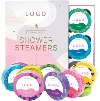

Picture this. You've just unmolded a batch of bath bombs that look like they belong in a boutique window. The swirls are perfect, the scent fills the room, and you're already imagining the five-star reviews rolling in. So you print a cute label with your logo, stick it on, and list them for sale.
And that's exactly where a lot of makers run into trouble.
The reality is that a pretty sticker with your brand name doesn't cut it. Improper labeling can get your listings pulled from Etsy overnight, trigger fines from the FDA, or - maybe worst of all - erode the trust you've worked so hard to build with customers. I've seen sellers lose entire shops over something as fixable as a missing ingredient list.
This guide walks through every element your bath bomb label actually needs, how to lay it out on a round product without losing your mind, and the mistakes that trip up even experienced makers. No dense legal jargon. Just clear, practical steps you can apply to your next batch.

What Counts as a "Bath Bomb" in the Eyes of Regulators?
Cosmetic vs. Drug - Why This Distinction Matters for Your Label
Under FDA rules, your bath bomb's classification depends entirely on what you say it does. If your product cleanses the skin, makes bath time smell nice, or adds color to the water, it's a cosmetic. Straightforward enough.
But the moment you claim it "relieves sore muscles," "treats eczema," or "reduces anxiety," you've crossed into drug territory. That's not a marketing nuance - it fundamentally changes what your label must include, and it triggers registration requirements most small businesses aren't prepared for.
The FTC adds another layer here. Even if your label is technically clean, your product listings, social media posts, and website copy all count as marketing claims. Saying "therapeutic" in an Instagram caption about your bath bomb can technically create a compliance issue. Keep your claims cosmetic - words like "moisturizing," "softening," and "refreshing" are generally safe ground.
Does Selling on Etsy or at Farmers Markets Exempt You?
Short answer: absolutely not. Bath product compliance applies whether you're selling from a warehouse, a craft fair booth, or your kitchen table. The FDA doesn't carve out exemptions based on business size or sales channel.
Plenty of small sellers operate with non-compliant labels for months or even years without consequence. But "getting away with it" isn't a strategy. One customer complaint, one marketplace audit, or one competitor report can bring everything crashing down. The rules are the same for everyone, and honestly, following them isn't that hard once you know what's needed.
The Anatomy of a Proper Bath Bomb Label
Principal Display Panel (The Front)
This is the part of your label customers see first - the front face of whatever packaging holds your bath bomb. It needs two things at minimum:
Product identity: What is this thing? "Bath Bomb," "Fizzy Bath Soak," or something similar. Your creative product name alone isn't sufficient - there needs to be a clear descriptor.
Net weight: Listed in both metric and imperial. For example: "Net Wt. 4.5 oz (128g)." This must be weight, not volume, since bath bombs are solid products.
One practical tip: decorative script fonts look gorgeous, but if a customer can't actually read your product name without squinting, the label isn't doing its job. Legibility comes first.
Information Panel (The Back or Side)
This panel carries the bulk of your required information. Think of it as the workhorse of your label:
Full cosmetic ingredient list in INCI format, listed in descending order by predominance (more on this below)
Business name and physical address - a P.O. box works, but a social media handle does not
Directions for use - not technically mandatory for most bath bombs, but strongly recommended
Warnings or cautionary statements where applicable
How to List Colorants, Fragrances, and Botanicals Correctly
The cosmetic ingredient list is where most makers stumble, so let's break down the tricky parts.
Fragrances and flavors get a pass - you can simply write "Fragrance" or "Parfum" as a single line item rather than listing every component of your scent blend. This is one of the few areas where the rules actually simplify things.
Colorants need their specific identification. Use CI numbers (like CI 77491) or their FDA-approved common names (like Red 40 Lake). You can't just write "red dye" or reference the brand name of your mica.
Botanicals get listed by their INCI (Latin) name with the common name in parentheses. So dried lavender buds become "Lavandula Angustifolia (Lavender) Flower."
Here's what a typical lavender bath bomb ingredient list might look like:
Ingredients: Sodium Bicarbonate, Citric Acid, Zea Mays (Corn) Starch, Prunus Amygdalus Dulcis (Sweet Almond) Oil, Polysorbate 80, Fragrance, Lavandula Angustifolia (Lavender) Flower, CI 77007.
Handmade Soap Labels vs. Bath Bomb Labels - Don't Confuse Them
The Soap Exemption That Doesn't Apply to Bath Bombs
If you also make handmade soap, you might have heard about the FDA's soap exemption. It's real, but it's incredibly narrow. A product only qualifies if it's composed mainly of alkali salts of fatty acids (traditional saponification) AND is labeled and marketed solely as "soap" with no cosmetic or drug claims.
Bath bombs never qualify for this exemption. They don't undergo saponification. They're always classified as cosmetics, period.
The common pitfall I see: makers who started with soap copy their handmade soap labels format over to bath bombs and skip the full INCI ingredient list or omit their business address. What's technically acceptable for true soap isn't acceptable for anything else in your product line.
Designing Your Label - Practical Layout Tips
Choosing the Right Label Size for Round Products
Here's the physical challenge nobody warns you about: bath bombs are spheres. Spheres don't have flat surfaces. Trying to slap a traditional rectangular label directly onto a naked bath bomb is an exercise in frustration.
Most makers solve this through their bath bomb packaging choices:
Shrink wrap sleeves - conform to the shape and give you printable surface area all the way around
Wraparound belly bands - a strip of cardstock or label material around the middle
Boxes or bags - provide flat surfaces that make product labeling requirements much easier to meet
Hang tags - can supplement (but not replace) on-product labeling for small items
Whichever route you pick, make sure all required information is on or attached to the product itself, not just the shipping box.
Font Size and Readability Requirements
The FDA sets minimum type size requirements. Most label text must be at least 1/16 of an inch tall. The net quantity statement has its own sizing rules tied to the area of your principal display panel - generally it needs to be more prominent than other text.
Beyond the minimums, think about contrast. White text on a pale yellow background might match your brand aesthetic, but if customers can't read it under store lighting, you've defeated the purpose. Dark text on light backgrounds, or vice versa, is always the safer choice.
Waterproof and Smudge-Proof Materials
Bath bombs contain oils and butters that can transfer onto labels. And let's be honest - these products live near water. Your labels need to survive both.
Vinyl or BOPP (biaxially oriented polypropylene) labels handle moisture well. If you're printing at home, laser printing holds up better than inkjet against smudging. A matte or gloss laminate overlay adds another layer of protection for pennies per label.
This might seem like a minor detail, but a smeared, unreadable label looks unprofessional and technically fails compliance if the required information becomes illegible.

Extra Label Elements That Build Trust
Batch Numbers and Shelf Life
Neither batch codes nor expiration dates are legally required for most cosmetics in the U.S. But they're smart business. If a customer ever reports a reaction, a batch number lets you trace exactly which production run was involved and pull other units if needed.
A simple batch system works fine: date of manufacture plus a sequence number. Something like "240603-A" (first batch made June 3, 2024) gives you everything you need for traceability.
For shelf life, you can include a "best by" date or use the PAO (Period After Opening) symbol - that small jar icon with a number like "12M" inside, meaning "use within 12 months of opening." Most bath bombs hold up well for 6-12 months when stored properly.
Allergen Callouts and Safety Warnings
This isn't required by cosmetic labeling law in the same way food allergen labeling is. But it's become an expectation among informed consumers, and it protects you legally if someone has a reaction to a known allergen in your formula.
Common callouts for bath bombs include:
Tree nut oils (sweet almond, coconut in some classifications)
Wheat-derived ingredients for gluten-sensitive customers
Essential oils not recommended for pregnant women, children under 6, or people with epilepsy
"For external use only"
"Discontinue use if irritation occurs"
These few lines cost you nothing and can save you a lot of headaches.
Certifications and Claims (Vegan, Cruelty-Free, Organic)
Slapping "organic" or "cruelty-free" on your label feels like a marketing win, but only use claims you can actually back up. "Vegan" means no animal-derived ingredients at all - double-check that your micas and colorants qualify. "Organic" has specific USDA certification requirements if you want to use the official seal.
Third-party certifications (Leaping Bunny, COSMOS Organic) carry more weight with consumers than self-declared claims. But if certification isn't in your budget yet, you can still make truthful statements like "made without animal testing" as long as that's verifiable across your entire supply chain.
Common Labeling Mistakes That Could Get You in Trouble
After walking through the requirements, here are the errors I see most frequently - sometimes from sellers who've been in business for years:
Using brand or trade names instead of INCI: "Shea Moisture Oil Blend" isn't an ingredient. "Butyrospermum Parkii (Shea) Butter" is.
Missing or incorrect net weight: Using fluid ounces for a solid product, or omitting the metric equivalent.
Making therapeutic claims: Even subtle ones like "calming" can be interpreted as drug claims depending on context.
No physical business address: An Instagram handle or email address doesn't satisfy this requirement.
Outdated ingredient lists: You reformulated six months ago but never reprinted your labels. Now your listed ingredients don't match what's actually in the product.
Each of these is fixable in an afternoon. None of them are worth the risk of leaving as-is.
Wrapping It Up - Your Label Is Part of Your Product
It's tempting to treat labeling as the boring last step between making something beautiful and getting it into customers' hands. But your label isn't just a regulatory checkbox. It's a trust signal. It tells buyers you take your craft seriously enough to do it right - not just the fun parts, but the responsible parts too.
Use this guide as a checklist next time you're packaging a batch. Print it out, tape it to your workspace wall, whatever works. Getting your labels right from the start is infinitely easier than fixing them after a compliance notice lands in your inbox.
And if you found this helpful, pass it along to a fellow maker. We all benefit when the handmade community raises its standards together.
FAQ
Q: Do I Need FDA Approval Before Selling Bath Bombs?
A: No. The FDA does not pre-approve cosmetic products or their labels before they go to market. However, you are still fully responsible for ensuring your product is safe, properly labeled, and compliant with all regulations. The FDA can take action against non-compliant products at any time after they're sold.
Q: Can I Handwrite My Labels If I Only Sell A Few?
A: Technically, yes - there's no rule requiring printed labels. But handwritten labels must still include every required element (ingredients in INCI format, net weight, business address) and must be legible. From a practical standpoint, handwritten labels rarely look professional enough to build customer confidence, and they're hard to keep consistent across units.
Q: What Happens If My Label Doesn't Have An Ingredient List?
A: Your product is considered misbranded under the Federal Food, Drug, and Cosmetic Act. Consequences can range from a warning letter to product seizure to injunctions. Online marketplaces may also remove your listings if another seller or customer reports the issue. It's one of the most common compliance failures and one of the easiest to fix.
Q: Are Product Labeling Requirements Different Outside The U.S.?
A: Yes, significantly. The EU requires a responsible person within the EU, a cosmetic product safety report, notification through the CPNP portal, and PAO symbols. Canada requires bilingual labeling (English and French). Australia has its own ingredient disclosure rules through NICNAS. If you're selling internationally, research each market's specific requirements - U.S. compliance alone won't cover you.
Q: How Often Should I Review And Update My Labels?
A: Review your labels every time you change a formula, switch a supplier (ingredients may differ slightly), update your business address, or add a new product claim. Beyond that, a general annual audit is good practice. Regulations evolve, INCI naming conventions occasionally update, and it's easy to let small changes slip through the cracks over time.