
You've probably seen them sitting pretty on bathroom counters, nightstands, and office desks - those little bottles with sticks poking out, quietly making everything smell incredible. But have you ever actually wondered how they work? There's no plug, no flame, no battery. Just sticks in a bottle. And somehow, your whole room smells like lavender or sandalwood for weeks on end.
Let me break down what's really going on inside that unassuming little vessel. It's more interesting than you'd think.
What Exactly Is a Reed Diffuser?
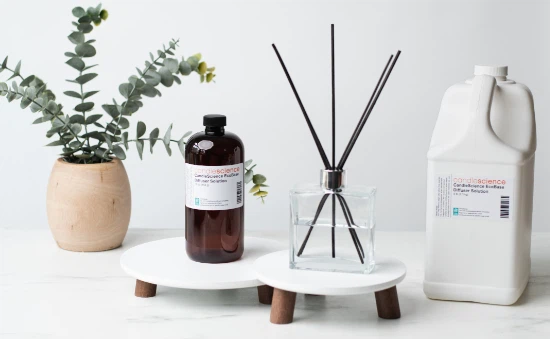
A reed diffuser is about as simple as home fragrance gets. A container filled with scented oil, paired with porous sticks that absorb the oil and release its scent into the air. No heat, no electricity, no maintenance beyond the occasional stick-flip. That's the whole deal.
People love them because they're genuinely hands-off. Set one up, walk away, and your room smells good for the next couple of months. No remembering to blow out a candle. No refilling a water tank. For anyone who wants consistent fragrance without thinking about it, reed diffusers just make sense.
But the "how" is where it gets interesting. So let's get into it.
Basic Components of a Reed Diffuser
Every reed diffuser has three parts working together:
The vessel - usually glass or ceramic. Its job is to hold the oil and control the rate of evaporation through its opening size. A wider neck lets more air in; a narrower one slows things down.
The oil blend - this isn't pure perfume. It's fragrance oil (or sometimes essential oil) mixed with a lightweight carrier that's thin enough to travel up the sticks. Think of the carrier as the vehicle moving scent from bottle to air.
The reeds - typically rattan sticks, though you'll also see fiber or polyester versions. These are the delivery system. Their internal structure is what makes the whole thing possible.
The Science of Capillary Action - How Fragrance Travels Up the Sticks
Here's the core of how reed diffusers actually function. It comes down to one concept: capillary action.
You've seen capillary action a hundred times without knowing the name. Dip the corner of a paper towel into a puddle of spilled coffee, and watch the liquid creep upward into the dry part of the towel. That's capillary action - liquid moving through narrow spaces against gravity, pulled along by the attraction between the liquid molecules and the material they're traveling through.
Rattan sticks are full of tiny, microscopic channels running their entire length. When you insert them into fragrance oil, the oil gets pulled into these channels and slowly climbs upward. It's not fast - we're talking millimeters per hour - but it's constant. Once that oil reaches the exposed portion of the stick above the bottle, it meets open air.
That's when evaporation takes over. The fragrance molecules leave the surface of the stick and drift into your room.
Why Rattan Sticks Specifically?
Not all sticks are created equal. Rattan has become the standard for reed diffusers because of its internal structure - those channels I mentioned run continuously from one end to the other. No interruptions, no blockages. It's like a bundle of tiny straws.
Bamboo, which looks similar on the outside, is actually a poor choice. Bamboo has nodes - those little rings you see along the stalk - that act like walls inside the channels. Oil hits a node and stops. So bamboo sticks in a diffuser would barely work at all.
You'll also find fiber reeds (sometimes called polyester reeds) on the market. These are synthetic sticks designed to mimic rattan's capillary action. They tend to wick oil a bit faster and more evenly, and they don't clog as quickly. The tradeoff? They look less natural. For scent performance though, fiber reeds are genuinely solid.
Reed Diffuser Oil Evaporation - What's Actually Happening at the Tip
Once oil reaches the exposed end of the stick, the volatile compounds in the fragrance begin to evaporate. "Volatile" just means they transition easily from liquid to gas at room temperature. The lighter, smaller molecules escape first - these are your top notes, things like citrus or fresh herbs. Heavier molecules (base notes like vanilla, musk, or cedarwood) evaporate more slowly.
This is actually why your reed diffuser smells slightly different in week six compared to week one. The top notes burn off faster, leaving the deeper, richer base notes to dominate over time. It's not your imagination.
The evaporation rate depends on a few things: room temperature (warmer = faster), airflow around the sticks, and the molecular weight of the fragrance compounds themselves. A diffuser next to a sunny window will go through oil noticeably quicker than one in a cool hallway.
The Fragrance Diffusion Process From Bottle to Room
Let me walk through the full fragrance diffusion process from start to finish.
Oil gets drawn up through the rattan sticks via capillary action. It reaches the exposed tips. Volatile fragrance molecules evaporate off the stick surface. Natural air currents in your room - people walking past, doors opening, HVAC systems running - carry those scent molecules outward. Over minutes and hours, they spread throughout the space.
This is passive diffusion. No fan pushing air across the sticks. No heat accelerating evaporation. It's gentle, gradual, and consistent. Compared to a candle (which uses heat to throw scent aggressively but only while lit) or a plug-in (which cycles on and off), a reed diffuser delivers a steady, low-level fragrance around the clock.
The tradeoff? It's subtler. You won't get hit with scent the second you walk in the front door the way you might with a strong candle. But for bathrooms, bedrooms, and smaller living spaces, that subtlety is actually the point.
Factors That Affect How Strong Your Reed Diffuser Smells
Several variables determine your diffuser's scent throw:
Number of reeds: More sticks means more surface area for evaporation, which means stronger scent - but also faster oil consumption. Start with 4-5 sticks and add more if you want it stronger.
Room size: A standard 100ml diffuser works well in a bathroom or small bedroom. For a living room or open-plan kitchen, you might need a larger volume or multiple diffusers placed strategically.
Placement: Near doorways or walkways where people create air movement is ideal. A diffuser tucked in a dead corner with no foot traffic won't circulate nearly as well.
Temperature and humidity: Warmer rooms speed up evaporation. Humid environments can slightly slow it down since the air is already saturated with moisture.
Essential Oil vs. Fragrance Oil in Reed Sticks - Does It Matter?
Most commercial reed diffusers don't use pure essential oils. They use synthetic fragrance oils blended with a lightweight carrier - often dipropylene glycol (DPG) or a refined mineral oil. These carriers are chosen because they're thin, odorless, and wick easily through rattan.
Can you use essential oils in reed sticks? Yes, but with caveats. Many essential oils are thicker than synthetic fragrance oils, so they travel up the reeds more slowly. Some (like vetiver or patchouli) are quite viscous and may barely wick at all without significant dilution. If you go the essential oil route, you'll want a thin carrier like sweet almond oil or fractionated coconut oil to keep things flowing.
Scent throw also tends to be milder with essential oils, since they're less concentrated than synthetic fragrance oils designed specifically for diffusion.

How to Use Reed Diffusers for the Best Results
Getting the most out of your reed diffuser doesn't require much effort. A few habits make a real difference, though.
Flip your sticks every 3-5 days. The saturated ends that were submerged are now on top, giving you a fresh burst of scent. The dry ends go into the oil and begin wicking again. Simple, effective.
Keep it out of direct sunlight. UV light breaks down fragrance compounds, and heat accelerates evaporation beyond what's ideal. A shaded spot at room temperature is perfect.
Stay away from heat vents and open windows. Constant strong airflow will evaporate your oil way too fast. You want gentle ambient air movement, not a breeze blowing directly across the sticks.
Start with fewer sticks in small spaces. A tiny bathroom with 8 reeds going full blast can get overwhelming quickly. You can always add more, but you can't un-scent a room.
When to Replace Your Reeds and Oil
Reed sticks don't last forever. Over 2-3 months, they accumulate dust, the channels get clogged with dried oil residue, and their wicking ability drops off. If your sticks look saturated and dark but the room doesn't smell like anything anymore, it's time for fresh reeds.
For the oil itself, most diffusers last 1-3 months depending on volume and how many sticks you're using. When the oil level drops below where the reeds can reach it, or when it's thickened and darkened noticeably, replace it. Many brands sell refill bottles - saves money and waste compared to buying a whole new set.
Common Mistakes That Kill Your Diffuser's Performance
I see these over and over:
High shelf placement. Scent molecules are heavier than air - they drift downward and outward. Place your diffuser on a tall bookshelf and the fragrance floats up to the ceiling where nobody's nose is. Waist height or table height is the sweet spot.
Too many sticks, too fast. Loading up all 10-12 reeds from day one means you'll burn through your oil in two weeks and wonder why it was so expensive for such a short lifespan. Start moderate.
Narrow-necked vessels. Some decorative bottles look gorgeous but have openings so tight that airflow around the sticks gets choked off. The sticks need breathing room at the neck to let evaporation happen freely.
Reed Diffusers vs. Other Home Fragrance Options
How do reed diffusers stack up against the competition? Here's an honest look:
Vs. candles: Candles throw scent harder and create ambiance with their flame. But they require supervision, produce soot, and only scent the room while lit. Reed diffusers work 24/7 with zero fire risk.
Vs. electric/ultrasonic diffusers: Electric models let you control intensity and turn them on/off. Reed diffusers can't be turned off - you'd have to remove the sticks. But electric diffusers need water refills, cleaning, and a power outlet.
Vs. plug-in air fresheners: Plug-ins are cheap and strong, but they often use synthetic chemicals that some people find irritating. They also need electricity and tend to look... well, not great. Reed diffusers double as decor.
The honest downsides of reed diffusers? They're weaker in large open rooms, you can't quickly intensify or stop the scent, and replacement oil isn't cheap. For small to medium rooms where you want consistent, low-effort fragrance with aesthetic appeal, they're hard to beat.
FAQ
Q: How Long Do Reed Diffusers Last?
A: Most reed diffusers last between 1 and 3 months. Exact duration depends on oil volume (100ml vs. 200ml), how many sticks you use, room temperature, and airflow. A 100ml diffuser with 5-6 reeds in a temperature-controlled room typically hits around 8-10 weeks.
Q: Are Reed Diffusers Safe Around Pets And Children?
A: They're safer than candles since there's no open flame. The oil itself can be toxic if ingested, though - for kids and pets alike. Cats are particularly sensitive to certain essential oils (tea tree, eucalyptus, citrus). Keep diffusers on stable surfaces out of reach, and always check ingredient lists if you have animals. Some brands now offer pet-safe formulations specifically designed to avoid harmful compounds.
Q: Can I Make My Own Reed Diffuser At Home?
A: Absolutely. You need a narrow-necked container, a lightweight carrier oil (fractionated coconut oil works well), fragrance or essential oil at roughly 20-30% of total volume, and rattan reed sticks. Mix your oils in the vessel, insert the sticks, and let capillary action do its thing. Flip after a few hours for initial saturation. Straightforward DIY project that costs a fraction of store-bought options.
Q: Why Did My Reed Diffuser Stop Smelling?
A: Three common culprits. First, your reeds might be clogged - try flipping them or replacing them entirely. Second, you could be experiencing olfactory adaptation (nose blindness), where your brain tunes out constant smells. Leave the room for 30 minutes and come back; if you can smell it then, it's your nose, not the diffuser. Third, the oil may simply be running low or depleted of its more volatile fragrance compounds.
Q: Do Reed Diffusers Work In Large Rooms?
A: They have limitations in open-plan spaces. A single standard diffuser (100-200ml) is designed for rooms up to about 150-200 square feet. For larger areas, place multiple diffusers at different points rather than one oversized unit. Near doorways and transition zones tends to work best - people moving through these areas help circulate the scent naturally.