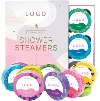

 You Deserve Better Than a Basic Shower
Picture this. You walk through the door after a day that felt about three days long. Your shoulders are up near your ears, your brain is still buzzing with to-do lists, and the idea of drawing a full bath sounds like yet another chore. You just want to stand under hot water and feel human again.
That's exactly where shower steamers come in. These little pucks sit on your shower floor and dissolve in the steam, releasing essential oils that turn a five-minute rinse into something that actually feels restorative. And when you make them yourself with epsom salt? They work noticeably better than the ones you'd grab off a shelf at Target.
What Are Shower Steamers
The Basic Concept
Think of these as aromatherapy shower melts designed specifically for people who don't take baths. They look similar to bath bombs, but they're not meant to be submerged in water. Instead, you place one on the shower floor where it catches a bit of splash. The heat and humidity activate a slow fizz, which sends essential oil vapors up into the steam around you.
Your nose does the heavy lifting here. As steam carries those volatile aromatic compounds, you inhale them naturally. It's a simpler delivery method than soaking in a tub, but it's surprisingly effective when the formula is right.
Why Epsom Salt Changes the Game
Most basic recipes skip epsom salt entirely, and I think that's a mistake. Epsom salt - which is really magnesium sulfate - adds a few practical benefits. First, there's the therapeutic angle: magnesium is known for helping muscles relax, and while the research on transdermal absorption is still debated, the mineral does interact with warm water in ways that feel genuinely soothing.
But the real reason I include it? Texture and timing. Epsom salt gives homemade shower bombs more structural integrity. They hold together better in the mold, and they dissolve slower once you're actually using them. Without it, you get a steamer that crumbles in storage or fizzes away in under a minute. With it, you get a solid puck that releases scent gradually over a full shower.
Ingredients You'll Need
The Core Lineup
Baking soda (1 cup) - one half of the fizzing reaction. It also helps neutralize odors and softens the overall mix.
Citric acid (½ cup) - the other half. When it meets moisture, it reacts with the baking soda to create that satisfying effervescence.
Epsom salt (½ cup) - structural support plus therapeutic benefit. Grind it finer in a blender if you want a smoother finish.
Cornstarch (½ cup) - acts as a binder that helps everything hold its shape. It also slightly slows the fizz.
Essential oils (25-30 drops) - the whole reason you're doing this. Choose based on what you want to feel.
Witch hazel in a spray bottle - your moisture source. Water works too, but witch hazel is less likely to trigger premature fizzing.
Optional Add-Ins for Extra Flair
Dried lavender buds or rose petals - pressed into the top for visual appeal and a mild scent boost.
Menthol crystals - if you want intense menthol shower discs that blast open your sinuses. A little goes a long way; start with ¼ teaspoon per batch.
Mica powder or spirulina - for color. Purely aesthetic. Won't affect how they work.
A tiny amount of coconut oil - skin-softening, but use sparingly. Too much makes your shower floor dangerously slick.
Step-by-Step Recipe for Epsom Salt Shower Steamers
The Ratio That Actually Works
After testing probably a dozen variations, here's what consistently produces solid, fragrant steamers that fizz for 5-8 minutes:
1 cup baking soda
½ cup citric acid
½ cup epsom salt
½ cup cornstarch
25-30 drops essential oil
Witch hazel as needed (usually 15-20 sprays)
This makes roughly 8-12 steamers depending on mold size. The balance matters more than you'd think. Too much citric acid and they become fragile and crumbly. Too little and you lose the fizz entirely. This 2:1 ratio of baking soda to citric acid is the sweet spot.
Mixing Method (Order Matters)
Step 1: Whisk all dry ingredients together in a large bowl. Break up any clumps in the baking soda or cornstarch - lumps mean weak spots in your finished steamer.
Step 2: Drip your essential oils directly into the dry mix and stir immediately. Work fast here. The oils can start reacting with the citric acid if they sit in one spot too long.
Step 3: This is the critical part. Hold your witch hazel spray bottle about 8 inches away and spritz once or twice, then stir. Repeat. You're looking for a consistency like damp sand - it should hold together when you squeeze a handful, but not feel wet. For most batches, 15-20 sprays total gets you there.
Step 4: Press the mixture firmly into silicone molds. Really pack it in. Use the back of a spoon or your thumb. The harder you press, the more durable the final product.
Step 5: Leave them alone for 24-48 hours in a cool, dry room. Not the bathroom. Somewhere with low humidity where they can harden completely.
Common Mistakes That Ruin a Batch
Overspraying. If you dump too much liquid at once, the fizzing reaction kicks off right in your bowl. You'll see it bubbling and expanding - and at that point, that portion of your batch is spent. Always go one spray at a time.
Using fragrance oils instead of pure essential oils. Fragrance oils smell nice, sure, but they're synthetic and don't offer any real aromatherapy benefit. If you're going through the effort of making essential oil shower tablets, use the real thing.
Demolding too early. I know it's tempting to pop them out after a few hours. Don't. They'll crack or crumble. Give them the full 24 hours minimum.
Storing them in the bathroom. Humidity is their enemy. The moisture in your bathroom will slowly activate them before you ever step into the shower. Keep them somewhere dry.
Best Essential Oil Blends for Different Moods
Morning Energy Boost
10 drops peppermint + 10 drops eucalyptus + 8 drops rosemary. This combination hits like a cold splash of water to the brain. The menthol in peppermint wakes up your senses, eucalyptus opens your airways, and rosemary adds an herbal sharpness that genuinely helps with mental clarity. Better than a second cup of coffee? Maybe not. But close.
Evening Wind-Down
12 drops lavender + 10 drops cedarwood + 6 drops chamomile. This is my go-to for evening showers. Lavender is the obvious choice for relaxation, but cedarwood grounds it with a warm, woody note that signals your brain to slow down. Works well as part of a sleep hygiene routine - shower, steamer, dim lights, done.
Sinus Relief & Cold Season
12 drops eucalyptus + 8 drops tea tree + ¼ tsp menthol crystals. If you've ever used Vicks VapoRub, this is the DIY shower version. These aromatherapy shower melts create a vapor cloud that helps loosen congestion. They're not medicine, but during cold season they make breathing feel noticeably easier.
Stress Melter
10 drops bergamot + 10 drops ylang ylang + 8 drops frankincense. Bergamot is citrusy but calming, ylang ylang is floral without being overwhelming, and frankincense has this resinous depth that seems to quiet mental chatter. Scent has a direct line to your limbic system - the part of your brain that processes emotions - so the right combination can shift your state faster than you'd expect.
How to Use Them
Place one steamer on the shower floor near the drain, but not directly under the stream of water. You want it to get splashed occasionally, not pummeled. If water hits it full force, it dissolves in a minute and you barely smell anything.
Turn the water hot enough to generate real steam. You don't need to scald yourself - just warm enough that the bathroom starts to fog up. That steam is what carries the essential oils to you.
If you want more control over the dissolve rate, set the steamer on a small dish or soap holder near your feet. This keeps it out of the direct water path but still in the splash zone. One steamer per shower is plenty. These are concentrated - two at once can actually be overpowering in an enclosed space.

Storage & Shelf Life
Keeping Them Fresh
Airtight is the key word. I store mine in a glass jar with a tight lid, or individually wrapped in plastic wrap. Keep them in a bedroom closet or kitchen cabinet - anywhere that isn't your humid bathroom.
Stored properly, they'll last 3-6 months. The fizz stays intact for a long time, but the essential oil scent does fade gradually. If you make a big batch, use the older ones first.
Gifting Ideas
These make genuinely thoughtful gifts, and most people have never tried them before. Package a few in a mason jar with a ribbon, tuck them into organza bags, or line a small tin with tissue paper. Always include a little note explaining what they are and how to use them - it's not intuitive if you've never seen one.
A homemade epsom salt bath fizzy set or shower steamer collection costs you maybe three dollars in materials for a batch that looks like a boutique product. Solid holiday gift for people who are hard to shop for.
Safety Notes You Shouldn't Skip
Essential oil concentration. These are potent in a small enclosed space. Eucalyptus and peppermint especially can sting your eyes or irritate mucous membranes if you go overboard. Stick to the 25-30 drop range per batch.
Pregnancy and pets. Some essential oils aren't safe during pregnancy - tea tree, rosemary, and wintergreen are commonly flagged. Cats are particularly sensitive to many essential oils. If you have pets, research each oil before using it, and keep bathroom ventilation in mind.
Slippery floors. Any oil residue plus water equals a fall risk. Use a shower mat, especially if you're adding coconut oil to your recipe.
Sensitive skin. The citric acid in these can irritate some people, especially if a piece of steamer contacts skin directly. Do a patch test on your forearm if you're prone to reactions.
FAQ
Q: Can I Use Shower Steamers In A Bath Instead?
A: You can, but they're not really designed for it. The epsom salt content is much lower than a proper bath soak, and the essential oil concentration is meant for inhalation, not full-body skin contact in warm water. They won't hurt anything - they'll just be underwhelming compared to a proper bath bomb.
Q: Why Did My Shower Steamers Fall Apart?
A: Usually it's one of two things: not enough binding moisture during the mixing stage, or too high a ratio of citric acid. If they're crumbling when you try to demold them, add a few more sprays of witch hazel next time. If they fall apart after drying, reduce your citric acid slightly and make sure you're really packing the molds tight.
Q: Do Shower Steamers Actually Provide Aromatherapy Benefits?
A: Here's my honest take: yes, but keep expectations reasonable. The steam does carry volatile aromatic compounds into your airways, and certain oils do have documented effects on mood and alertness. It's real, but mild. Think of it as a pleasant sensory experience that supports relaxation - not a medical treatment.
Q: Can I Use Food Coloring Instead Of Mica Powder?
A: Technically yes, but I'd strongly recommend against it. Food coloring can stain grout, shower floors, and even your feet. Mica powder or natural colorants like spirulina or turmeric are better options. Or just skip color entirely - the steamers work exactly the same without it.
Q: How Many Drops Of Essential Oil Is Safe Per Steamer?
A: For a standard 2-ounce mold, 3-5 drops per individual steamer is the safe zone (which works out to about 25-30 drops for a full batch). More isn't better. An enclosed shower concentrates the aroma quickly, and too much oil can irritate your skin or become overwhelming to breathe.
Q: Are These Safe For Kids?
A: With modifications, yes. Use kid-safe oils like lavender or sweet orange at half the normal strength. Avoid menthol, eucalyptus, and peppermint for children under ten - these oils contain compounds that can cause breathing issues in young kids. Always supervise and make sure the steamer is placed where little hands won't grab it.