

In today's discerning market, consumers are scrutinizing personal care labels with unprecedented care. The days when a customer might choose a soap based solely on its scent or price are fading; instead, they are now meticulously examining the packaging, posing critical questions that delve deeper into the product's essence. They want to know: What specific oils are incorporated into the formulation? Does the formula contain any unnecessary synthetic additives? Is the fragrance level appropriately balanced for daily use? Is the product genuinely derived from plant-based sources? And crucially, can the brand transparently explain the entire manufacturing process of the soap?
This profound shift in consumer behavior is not merely a trend; it's a fundamental change creating significant opportunities for astute private label brands. A thoughtfully developed natural handmade bar soap can elegantly merge the practicality of everyday cleansing with appealing aesthetics, ingredient transparency, and a compelling brand narrative, all within a relatively straightforward product format.
However, the journey to launching a successful handmade soap line demands more than simply selecting a trendy botanical extract and stamping the word "natural" on the box. Brands must engage in a meticulous consideration of the formulation's intricate structure, the veracity of ingredient claims, the consistency of manufacturing processes, the nuanced selection of fragrances, the impact of packaging, adherence to complex regulatory requirements, and ultimately, the product's commercial scalability.
For buyers collaborating with a private label handmade soap manufacturer, the most pivotal inquiry extends beyond whether a formula merely sounds natural. The true challenge lies in ensuring the product delivers an exceptional consumer experience while simultaneously upholding stability, repeatability, regulatory compliance, and commercial viability.
This comprehensive guide aims to equip private label brands with the essential knowledge required before embarking on the development of a natural handmade soap collection, whether destined for retail shelves, e-commerce platforms, gifting, hospitality sectors, or wholesale distribution.
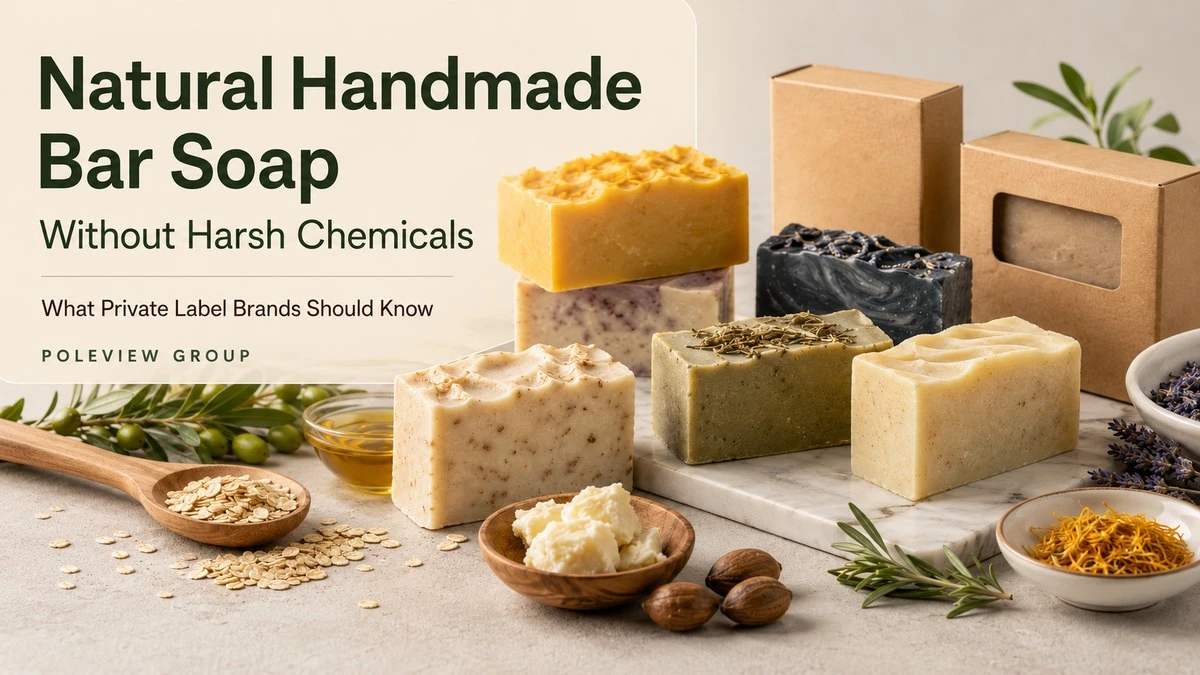
Why Natural Handmade Bar Soap Is Attracting Private Label Brands
While the concept of natural-positioned soap is not entirely novel, the criteria consumers employ for its evaluation have undergone a dramatic evolution. Modern buyers seek more than just basic cleansing; they actively pursue products featuring recognizable plant oils, concise ingredient lists, inviting textures, environmentally conscious low-plastic packaging, and a clear, unambiguous explanation of the formula's composition. This demand for transparency and authenticity is reshaping the personal care landscape.
Industry research consistently highlights sustained commercial interest in organic and natural-positioned soap. For instance, market estimates projected the global organic soap sector to reach approximately USD 2.54 billion in 2025, with an anticipated surge to nearly USD 4.97 billion by 2034. Further analysis indicates that bar soap remained the dominant product format within the organic soap category in 2025. These figures, while not guaranteeing individual success, powerfully underscore why retailers, Amazon sellers, beauty brands, and distributors are strategically integrating private label natural soap into their diverse product portfolios. For brands that want to build a cleaner, plant-based soap line, working with custom natural soap manufacturer can help evaluate suitable oils, botanical ingredients, fragrances, packaging formats, and scalable production options.
Handmade soap presents several compelling practical advantages for brands, making it an attractive proposition:
|
Business Advantage |
Value for Private Label Brands |
|
Familiar Product Format |
Consumers intuitively understand how to use bar soap, minimizing educational barriers. |
|
Flexible Brand Positioning |
Its versatility allows for seamless integration into natural, botanical, premium, gift, and lifestyle brand narratives. |
|
Broad Customization Options |
Extensive possibilities exist for tailoring oils, colors, fragrances, shapes, weights, and packaging to meet specific brand visions. |
|
Relatively Compact Packaging |
Offers logistical benefits, being easier and more cost-effective to store and ship compared to many liquid personal care products. |
|
Strong Visual Appeal |
Intricate swirls, distinct layers, embedded botanicals, and embossed logos significantly enhance product presentation and perceived value. |
|
B2B Channel Flexibility |
Highly adaptable for various business-to-business models, including wholesale, retail, spas, hotels, subscription boxes, and online sales. |
The true opportunity here transcends merely selling another bar of soap; it lies in crafting a distinctive cleansing product that consistently communicates the brand's core values and ethos with every single use.
What Does "Soap Without Harsh Chemicals" Really Mean?
The phrase "soap without harsh chemicals" is a pervasive marketing term, yet its interpretation demands meticulous precision. It's a scientific reality that every component within a cosmetic formula-including water, plant oils, and naturally derived fragrance elements-is fundamentally a chemical. Consequently, asserting a product is "chemical-free" is scientifically inaccurate and can inadvertently expose brands to unnecessary compliance risks and consumer skepticism. Before using broad clean-label wording, brands should first understand what soap is made of and make sure every claim is supported by the real formula and documentation.
A more responsible and, indeed, more credible approach involves explicitly defining what a brand signifies by "without harsh chemicals." Depending on the specific formulation and target market, this declaration typically refers to soaps developed without a carefully selected list of ingredients. This might include aggressive synthetic detergents, superfluous artificial colorants, excessively high fragrance loads, mineral oil, certain contentious preservatives, parabens, phthalates, animal-derived ingredients, or any components restricted by the regulations of the intended destination market.
Brands must vigilantly avoid the common pitfall of indiscriminately labeling all synthetic ingredients as inherently detrimental or assuming all natural ingredients are automatically benign. It's crucial to remember that natural essential oils, fragrances, and botanical extracts, if used at inappropriate concentrations, can still provoke irritation or allergic reactions.
The overarching objective for a clean-label handmade soap should never be to leverage fear-based marketing tactics. Instead, it should be anchored in unwavering formulation transparency. A more robust and legally defensible product claim might be:
"Crafted with plant oils and meticulously selected cleansing ingredients, deliberately excluding unnecessary harsh additives."
This statement offers superior clarity and credibility compared to vague assertions like "toxin-free" or "chemical-free." The final wording on any product must always undergo rigorous review, aligning perfectly with the formula's composition, comprehensive test results, and the precise regulatory framework of the intended sales market.
Handmade Soap, Natural Soap, and Syndet Bars Are Not the Same
A frequent misunderstanding among new private label buyers is the assumption that all solid cleansing bars are technically identical. In reality, the landscape of solid cleansing products encompasses several distinct structural categories, each with its unique characteristics and implications.
Traditional Soap
Traditional soap is fundamentally a product of saponification-a chemical reaction where oils or fats interact with an alkali. The specific manufacturing process can vary, including cold process soap private label manufacturing, hot process, melt-and-pour, or other controlled soap-making techniques. The choice of oils is critical, as each contributes uniquely to the final product's properties. Common oils include coconut oil, olive oil, responsibly sourced palm oil or its derivatives, shea butter, cocoa butter, castor oil, rice bran oil, sunflower seed oil, and sweet almond oil. Each of these directly influences the bar's hardness, its lathering profile, cleansing efficacy, post-wash conditioning feel, and overall processing behavior.
Melt-and-Pour Soap
Melt-and-pour soap offers a distinct approach, utilizing a pre-prepared soap base that is subsequently melted, customized with various additives, and then poured into molds. This method is lauded for its efficient production cycle, the attractive transparency it can achieve, and its capacity for consistent decorative effects. It proves particularly advantageous for brands seeking clear or translucent bars, those wishing to embed designs or botanicals, or requiring layered colors. Furthermore, it facilitates faster sampling, supports smaller initial product collections, and is ideal for creating intricate, gift-oriented shapes. However, even with melt-and-pour, discerning buyers must meticulously review the complete base composition, rather than presuming every formula is inherently natural.
Syndet Bar
A syndet (synthetic detergent) bar represents another category of solid cleansing product. Unlike traditional soap, it is primarily formulated with synthetic or naturally derived surfactants, rather than relying solely on saponification. Syndet bars can offer specific benefits, such as lower pH cleansing and a milder skin feel, which can be advantageous for certain skin types. Nevertheless, it is crucial that these products are not automatically marketed as traditional handmade soap. The appropriate product format-be it traditional, melt-and-pour, or syndet-is entirely contingent upon the brand's core concept, its desired marketing claims, the target price point, and the prevailing consumer expectations. A professional custom handmade soap manufacturer should proactively educate clients on these distinctions before the sampling phase commences.
What Makes a Good Plant-Based Handmade Soap Formula?
Crafting a truly successful plant-based handmade soap is an art of meticulous balance. The common misconception that simply increasing the quantity of plant oils automatically results in a superior bar is often misleading. For instance, an excess of soft oils can compromise the bar's hardness and significantly shorten its lifespan. Similarly, while coconut oil boosts cleansing power, an overabundance in certain formulas can lead to an unpleasantly drying sensation. Even an abundance of rich butters, if not carefully balanced, can negatively impact lather quality, texture, or the stability of the production process.
A masterfully designed formula expertly harmonizes several critical performance factors, ensuring a product that is both effective and enjoyable:
|
Formula Factor |
Why It Matters |
|
Bar Hardness |
Essential for the soap to maintain its structural integrity during storage and prolonged use, preventing premature softening. |
|
Lather Quality |
Directly influences the consumer's sensory experience and perception of the soap's cleansing efficacy. |
|
Cleansing Level |
Must effectively remove impurities without stripping the skin of its natural moisture, avoiding an overly tight or dry sensation. |
|
Conditioning Feel |
Contributes to a smoother, more comfortable skin feel post-wash, enhancing overall user satisfaction. |
|
Fragrance Stability |
Crucial for ensuring the intended scent remains consistent and pleasant throughout the product's entire shelf life. |
|
Color Stability |
Minimizes the risk of undesirable fading, bleeding, or discoloration, preserving the product's visual appeal. |
|
Moisture Control |
A key aspect in preventing issues like sweating, softening, and potential damage to packaging, especially in varying climates. |
|
Production Repeatability |
Guarantees that each batch produced maintains commercial consistency in quality, appearance, and performance. |
Natural-positioned formulations frequently incorporate a rich array of ingredients such such as olive oil, coconut oil, shea butter, cocoa butter, oatmeal, activated charcoal, turmeric, aloe, calendula, or various botanical powders. The narrative woven around these ingredients must authentically support the desired product experience. It should never devolve into a mere compilation of trendy materials added solely for superficial label appeal. For example, an oatmeal and shea butter bar naturally lends itself to positioning around a creamy, comforting cleansing experience. A charcoal bar, with its deep hue, can effectively support a visual concept of deep purification. While a turmeric soap might align with a bright, botanical product story, brands must exercise extreme caution to avoid making unsubstantiated skin-lightening or medical claims, which can lead to regulatory issues.
Natural Does Not Automatically Mean Fragrance-Free
Fragrance stands as one of the most potent purchasing drivers in the handmade soap market, yet it is also frequently one of the most misunderstood aspects. A natural handmade bar soap can be formulated in several ways regarding its scent profile. It might be entirely fragrance-free, appealing to those with sensitivities or a preference for minimalist products. Alternatively, it could be scented exclusively with essential oils, offering a pure botanical aroma. A third option involves the use of high-quality fragrance oils, which can provide a broader range of scent possibilities. Finally, a strategic combination of both fragrance and botanical components can be employed to achieve a unique olfactory experience.
Each of these approaches comes with its own set of advantages and inherent limitations. Essential oils, while powerfully supporting a natural product narrative, often come with a higher cost, can exhibit significant batch-to-batch variation due to harvest differences, and are frequently subject to strict usage restrictions. Certain citrus oils, for instance, may fade more rapidly or even induce photosensitivity, depending on their specific type and application. Conversely, fragrance oils typically offer superior scent consistency, a much broader palette of scent options, and greater commercial flexibility. The paramount consideration here is the judicious use of compliant fragrance materials at appropriate levels, coupled with the acquisition of all necessary supporting documentation. Private label buyers should proactively inquire with their OEM handmade soap supplier about the availability of comprehensive fragrance documentation, including, where applicable, an IFRA (International Fragrance Association) certificate.
It's also worth noting that a truly fragrance-free soap can carve out a strong commercial niche, particularly for minimalist brands or consumers who explicitly prefer unscented personal care items. However, it is vital not to conflate "fragrance-free" with "unscented"; the final marketing claim must precisely and accurately reflect the actual formula's composition.
A Realistic Private Label Development Example
Imagine a burgeoning startup brand with ambitious plans to introduce four distinct handmade soap varieties: Oatmeal and Shea Butter, Turmeric and Orange, Charcoal and Tea Tree, and Lavender and Olive Oil. An initial, perhaps intuitive, inclination for the buyer might be to demand entirely disparate base formulas, unique molds, different colors, varied fragrances, and bespoke packaging for each individual product. While seemingly offering maximum differentiation, this approach invariably leads to unnecessary complexity, inflated costs, and protracted development timelines.
A far more pragmatic and efficient development strategy involves leveraging one or two thoroughly validated soap bases. These foundational bases can then be intelligently customized by altering the visual appearance, fragrance, and selected botanical ingredients for each specific SKU. This streamlined approach yields a multitude of benefits, including faster sampling and prototyping cycles, easier and more reliable stability evaluations, more consistent production runs, simplified raw material
procurement, enhanced overall cost control, more manageable Minimum Order Quantities (MOQs), and a significantly smoother path for future product line expansion. For instance, the Oatmeal and Lavender bars could share a common moisturizing-style base, while the Charcoal and Turmeric bars might utilize a firmer, cleansing-focused base. This allows the brand to present four uniquely distinctive products to the market, all while maintaining a highly practical and scalable underlying production system. This strategic foresight in formula planning is precisely why buyers should engage manufacturers early in the development process, rather than presenting a project solely with finalized artwork.
Key Questions to Ask a Natural Bar Soap Manufacturer
Before committing to an order, brands must conduct a thorough evaluation that extends far beyond merely assessing a sample's color and fragrance. A truly reliable natural bar soap manufacturer should possess the expertise and transparency to comprehensively answer detailed inquiries concerning formulation intricacies, robust production controls, extensive customization capabilities, and essential export documentation. Engaging in this level of due diligence is paramount.
Critical questions that prospective private label brands should pose include:
|
Area |
Questions to Ask |
|
Formula |
Is the soap produced via cold process, hot process, melt-and-pour, or is it a syndet bar? Understanding the fundamental method is key. |
|
Ingredients |
Can you provide a clear breakdown of which specific ingredients are natural, naturally derived, or synthetic within the formulation? |
|
Claims |
Which marketing claims can be unequivocally supported by the formula's composition and verifiable testing data? |
|
Fragrance |
Can you supply IFRA certificates or comprehensive allergen information for all fragrance components used? |
|
Testing |
What stability, microbiological, or physical tests do you recommend or conduct to ensure product safety and quality? |
|
MOQ |
How is the Minimum Order Quantity calculated-is it per formula, fragrance, color, or packaging design? |
|
Packaging |
Are you capable of supporting various custom packaging solutions, such as boxes, paper wraps, labels, and gift sets? |
|
Documentation |
Are essential documents like INCI lists, Certificates of Analysis (COA), Safety Data Sheets (SDS), Technical Data Sheets (TDS), and relevant test reports readily available? |
|
Production |
What specific measures and controls are in place at your factory to ensure consistent bar weight, appearance, and batch uniformity? |
|
Export |
Do you possess proven experience and expertise in serving our target country or specific sales channel, including navigating relevant regulations? |
The insights gleaned from these questions are invaluable, serving to clearly differentiate a small-scale decorative soap workshop from a truly scalable, professional private label handmade soap manufacturing partner capable of meeting commercial demands.
How Private Label Handmade Soap Can Be Customized
Customization stands as arguably one of the most compelling commercial advantages inherent in handmade soap, especially when brands plan the project through a professional OEM handmade soap development process from formula to packaging. At Poleview Group, private label projects are meticulously developed, with every detail tailored around the brand's specific target audience, desired price point, chosen sales channel, and preferred packaging aesthetic. This bespoke approach ensures a product that perfectly aligns with the brand's vision.
Common avenues for customization are extensive and include:
Formula and Ingredient Direction
Brands have the flexibility to either select from a portfolio of existing, mature formulas or embark on the development of a more uniquely customized composition. The potential directions for ingredient focus are broad, encompassing olive oil soap, coconut oil soap, shea butter soap, cocoa butter soap, oatmeal soap, charcoal soap, turmeric soap, aloe soap, herbal soap, essential oil soap, fragrance-free soap, or even vegan-positioned soap. It is imperative that ingredient availability, regulatory suitability, and formula stability are rigorously reviewed and confirmed before mass production commences, ensuring both compliance and product integrity.
Color and Appearance
The visual appeal of a handmade bar can be exquisitely designed to captivate consumers. Options range from solid, uniform colors to natural earth tones, sophisticated two-color layers, elegant marble effects, artistic swirls, or the incorporation of botanical particles and dried flower decorations. Transparent sections can add a modern touch, while embossed brand logos provide a premium, tactile feel. It is crucial to acknowledge that natural colorants often behave differently from their synthetic counterparts. Plant powders and clays, for instance, can exhibit variations in shade between batches, and some botanical colors may naturally fade or alter during the saponification process. Therefore, the sample approval process should establish an acceptable color range, rather than expecting absolute visual identicality across every handmade bar.
Shape and Weight
Standard bar weights typically range from approximately 80g, 100g, 120g, 150g, up to larger formats suitable for gifting. Custom molds unlock a world of possibilities for unique shapes, including classic rectangular bars, elegant oval bars, perfectly round soaps, ergonomic massage bars, bars featuring embossed logos, intricate geometric shapes, or even seasonal designs. For complex shapes, a rigorous evaluation of demolding ease, potential for breakage, and durability during shipping is essential before scaling up to mass production.
Private Label Packaging
Packaging is a pivotal element, profoundly influencing how consumers perceive handmade soap. The array of available formats is diverse, including traditional paper wraps, sophisticated printed folding boxes, rustic Kraft boxes, window boxes that showcase the product, elegant belly bands, individual shrink wrapping for protection, delicate glassine paper, curated gift sets, multi-bar cartons for bulk sales, and eye-catching display boxes for retail presentation. For brands prioritizing environmental responsibility, reducing unnecessary plastic is often a primary concern. However, this must be balanced with practical considerations such as moisture protection, effective fragrance retention, and the ability to withstand transportation conditions.
Ultimately, even the most sustainably designed package loses its value if it fails to protect the soap from moisture absorption or damage before it reaches the consumer.
Compliance Matters in the United States and Europe
Before finalizing any label artwork, private label brands must unequivocally confirm the regulatory classification of their product. This step is non-negotiable and critical for market entry.
In the United States, a product's classification can be fluid; it might be categorized as "soap," a cosmetic, or even a drug, depending entirely on its composition, its intended use, and the specific marketing claims made. A product marketed solely for cleansing and meeting the legal definition of soap is regulated distinctly from one promoted with cosmetic benefits. This distinction necessitates extreme caution regarding certain claims, such as: "Treats eczema," "Heals acne," "Antibacterial," "Antifungal," "Removes skin disease," "Repairs damaged skin," or "Prevents infection." Such statements can inadvertently reclassify a product, subjecting it to more stringent drug regulations.
Conversely, in the European Union, cosmetic soaps are subject to strict adherence to the EU Cosmetics Regulation. Common requirements include a comprehensive safety assessment, the compilation of a Product Information File (PIF), the designation of a Responsible Person, the use of a compliant label, and CPNP (Cosmetic Product Notification Portal) notification prior to market placement. Furthermore, any natural claims must be substantiated with robust evidence. A mere leaf icon, green packaging, or the presence of a botanical ingredient does not, in itself, constitute proof that a product is natural, organic, sustainable, or inherently safer. Brands are advised to construct all claims upon verifiable, documented facts rather than relying on broad, unsubstantiated assumptions.
Testing and Quality Control for Wholesale Handmade Bar Soap
Even for a product with limited water content like bar soap, appropriate and rigorous quality control is indispensable. For wholesale handmade bar soap, a comprehensive suite of checks is essential to ensure consistent quality and consumer satisfaction. These may encompass evaluating appearance, odor, precise bar weight, dimensions, pH level, hardness, lather performance, moisture content, color stability, fragrance stability, packaging compatibility, microbiological quality (where applicable), storage stability, and resistance to transportation stresses.
It is vital to understand that a "handmade" aesthetic does not equate to uncontrolled production. While minor variations in swirl patterns or botanical distribution might be considered part of a product's unique character, significant discrepancies in fragrance, weight, hardness, or overall performance should never be dismissed as normal simply because the soap is handmade. Prior to commencing mass production, a formal approval process between the buyer and the factory is crucial. This process should meticulously define and gain agreement on the final formula, acceptable color range, specific fragrance, precise product weight, mold shape, logo position, packaging material, artwork, a master sample, and agreed-upon appearance tolerances. This rigorous approval framework significantly mitigates potential disputes and dramatically enhances batch consistency.
Choosing Between Ready Formula, Semi-Custom, and Full Custom Soap
Not every brand embarking on a private label journey requires a completely novel formula developed from the ground up. A pragmatic custom handmade soap manufacturer typically offers three distinct development pathways, each catering to different brand needs and resource levels.
Ready Formula
This pathway involves selecting a thoroughly tested, existing formula that is then customized with the brand's unique label or packaging. It is an exceptionally suitable option for startup brands looking to enter the market swiftly, for those conducting market testing with minimal risk, or for buyers with limited prior formulation experience. The primary advantages include faster product launches and significantly lower development costs, making it an accessible entry point into the market.
Semi-Custom Formula
The semi-custom approach builds upon an existing base formula, which is then intelligently adjusted with a selected fragrance, color, specific botanical ingredients, or a unique packaging concept. This option strikes an excellent balance, offering meaningful product differentiation without the extensive time and cost investment of a full custom development. It allows brands to create a distinct identity while leveraging proven foundational formulations.
Full Custom Formula
For established brands with clear, precise specifications, realistic budgets, and substantial order volumes, a full custom formula is the ideal choice. In this scenario, the formula is developed entirely from scratch, meticulously tailored around specific ingredient requirements, ambitious performance goals, or strict brand exclusions. While full customization typically demands more extensive sampling, rigorous testing, and a longer development timeline, the resulting unique formula offers unparalleled brand exclusivity. However, its true value is realized only when it can be manufactured consistently at scale and is supported by a robust, viable sales plan.
Why Work With an OEM Handmade Soap Manufacturer?
A professional OEM (Original Equipment Manufacturer) partner transcends the role of a mere soap producer; they act as a strategic ally. The right manufacturer is instrumental in transforming a nascent brand idea into a tangible, market-ready product that can be efficiently sampled, rigorously tested, attractively packaged, successfully scaled for mass production, and ultimately exported globally. Their expertise bridges the gap between concept and commercial reality.
As a personal care OEM/ODM manufacturer in China, Poleview Group supports international brands, wholesalers, distributors, retailers, and e-commerce sellers with handmade soap and other personal care product development. Our comprehensive handmade soap services are designed to provide end-to-end support, encompassing mature formula selection, bespoke custom formula development, access to a wide array of natural and plant-based ingredient options, precise fragrance and color customization, the creation of custom molds and logo embossing, tailored private label packaging solutions, expert gift set development, efficient sample production, stringent batch quality control, crucial export documentation support, and large-scale bulk manufacturing, all managed through professional OEM and ODM project management.
Our commitment lies in supporting product development that is precisely aligned with the buyer's unique market positioning, rather than offering a one-size-fits-all solution. For instance, a premium spa brand might seek an elegant olive oil bar presented in minimalist paper packaging, emphasizing purity and luxury. An Amazon seller, conversely, might prioritize striking visual differentiation and multi-piece gift sets to stand out in a competitive online marketplace. A large retailer, on the other hand, would likely require stable pricing, highly repeatable production processes, and the ability to offer multiple fragrances within a single cohesive collection. Crucially, the chosen formula, Minimum Order Quantity (MOQ), and packaging strategy must accurately reflect and support these distinct business models.
Final Thoughts for Private Label Brands
The most successful private label natural soap products are not built upon vague, unsubstantiated claims or excessively lengthy ingredient lists. Their strength derives from a foundation of clear, strategic decisions that address the core tenets of product development and market positioning. Brands must critically ask themselves: Who is the precise target customer for this product? What specific type of cleansing experience is the product intended to deliver? Which ingredients genuinely and authentically support the overarching product story and brand ethos? Which marketing claims can be rigorously documented and defended? What packaging design will not only protect the bar but also effectively communicate the brand's identity and values? And finally, can the chosen formula be consistently produced at a commercial scale without compromising quality?
A truly successful natural handmade bar soap should feel effortlessly simple and intuitively delightful to the consumer, even though its creation involves significant technical planning and intricate processes behind the scenes. For brands, this perceived simplicity is a formidable competitive advantage. A meticulously crafted bar can eloquently convey craftsmanship, transparency, sensory appeal, and environmental consciousness, all without burdening the consumer with a complicated usage routine. The ultimate key to unlocking this success lies in forging a partnership with a manufacturing expert who possesses a deep, nuanced understanding of both the artisanal character of handmade products and the stringent standards of professional OEM production.
Develop Your Private Label Handmade Soap With Poleview Group
Are you planning to launch a natural, botanical, or clean-label soap collection that resonates with today's conscious consumers?
Poleview Group offers unparalleled OEM/ODM services, serving as the ideal partner for brands seeking a reliable natural bar soap manufacturer and a custom handmade soap manufacturer in China. We are equipped to provide comprehensive support across every stage of your product development journey.
Our expertise extends to guiding you through formula selection, facilitating precise ingredient customization, developing captivating fragrances, designing unique soap shapes, implementing sophisticated logo embossing, crafting tailored private label packaging, and managing efficient bulk production. Whether your vision calls for a ready-to-market formula for rapid deployment, a semi-custom product with distinct brand touches, or a fully customized soap collection designed to your exact specifications, our experienced team is poised to evaluate and recommend the most practical and effective development path for your target market.
Ready to develop your own natural handmade soap collection? Request handmade soap samples, share your formula and packaging requirements, and receive a customized OEM quotation from Poleview Group.
FAQ
Q: 1. What is natural handmade bar soap?
A: Natural handmade bar soap typically refers to a solid cleansing bar produced in smaller, controlled batches, utilizing plant oils, butters, clays, botanical powders, essential oils, or other naturally derived ingredients. Given that "natural" lacks a universal regulatory definition, brands are advised to clearly articulate which specific ingredients and manufacturing standards underpin their claim, ensuring transparency and consumer trust.
Q: 2. Can you manufacture soap without harsh chemicals?
A: Absolutely. We specialize in developing soap formulas that exclude specific ingredients a brand wishes to avoid, always contingent upon formula feasibility, safety assessments, and regulatory compliance. Instead of employing the scientifically imprecise phrase "chemical-free," we advocate for identifying precise exclusions and communicating transparent, ingredient-based claims to consumers.
Q: 3. What aspects of private label handmade soap can be customized?
A: Brands benefit from extensive customization options, including the base formula, choice of plant oils, butters, botanical ingredients, fragrance, essential oils, color, shape, bar weight, logo design, paper wrap, folding box, labels, and gift packaging. The scope of customization is typically influenced by factors such as Minimum Order Quantity (MOQ), target price point, and technical feasibility.
Q: 4. What is the MOQ for wholesale handmade bar soap?
A: The Minimum Order Quantity (MOQ) for wholesale handmade bar soap is variable, depending on the complexity of the formula, fragrance, color, mold design, and packaging format. Generally, ready formulas with standard shapes offer more flexible starting quantities. Conversely, custom formulas, exclusive molds, or fully printed packaging solutions may necessitate higher MOQs. We encourage you to contact our team with your preferred specifications to receive an accurate and tailored quotation.
Q: 5. What documentation can you provide for OEM handmade soap?
A: Depending on the formula and specific project requirements, we can provide a comprehensive suite of documents. This typically includes the ingredient list, INCI (International Nomenclature of Cosmetic Ingredients) information, Certificate of Analysis (COA), Safety Data Sheet (SDS), Technical Data Sheet (TDS), detailed fragrance documentation, and relevant test reports. Furthermore, additional compliance testing can be arranged as per the requirements of the destination market, ensuring global market readiness.