
A clogged toilet is one of those household emergencies that always strikes at the worst possible moment. Maybe you're hosting guests. Maybe you just moved into a new place and haven't bought a plunger yet. Either way, don't panic. There's a surprisingly effective fix sitting right next to your kitchen sink.
Liquid dish soap and hot water can clear most common toilet clogs without a plunger, without harsh chemicals, and without an embarrassing call to your landlord. Here's exactly how it works and how to do it right.
Why Dish Soap Works to Unclog a Toilet
This isn't a random internet hack. There's actual science behind why squirting dish soap into a clogged toilet bowl gets things moving again. Understanding the mechanism helps you use the method correctly - and know when it will (and won't) work.
The Science of Surfactants and Pipe Lubrication
Dish soap contains surfactants - molecules with a water-loving end and a grease-loving end. When these molecules reach a clog, they latch onto the organic waste and grease binding the blockage together. This breaks down the clog's structure from the inside out.
At the same time, the soap coats the pipe walls and the surface of the clog itself, dramatically reducing friction. Think of it like greasing a stuck drawer. Once that lubrication layer forms, gravity and water pressure push the softened blockage downward through the drain.
Unlike chemical drain cleaners that rely on caustic reactions to dissolve material, dish soap works mechanically. It's gentle on your pipes, safe for septic systems, and won't produce toxic fumes in your bathroom. That makes it an ideal plunger alternative for everyday clogs.
Types of Clogs This Method Works Best For
The liquid dish soap method excels at clearing soft, organic blockages - excess toilet paper buildup, human waste that didn't flush properly, and combinations of the two that have formed a plug in the trapway.
However, set realistic expectations. This method will not work for hard foreign objects like toys, combs, or dental floss tangles. It also won't resolve mineral buildup in older pipes or deep mainline sewer blockages. If someone flushed something they shouldn't have, you'll need a different approach.
Step-by-Step Guide - Unclogging a Toilet With Dish Soap and Hot Water
This is your core action plan. Follow these steps in order and give each stage the time it needs. Rushing is the number one reason people think this method doesn't work.
What You'll Need
Liquid dish soap - approximately ½ cup (a generous squirt for about 5 seconds)
Hot water - roughly one gallon, heated to 140–150°F (hot but not boiling)
A bucket - for heating and pouring the water with control
Old towels - placed around the toilet base as overflow insurance
The beauty of this blocked drain fix is that everything you need is already in most homes. No special tools. No trip to the hardware store.
Step 1 - Squeeze Dish Soap Into the Bowl
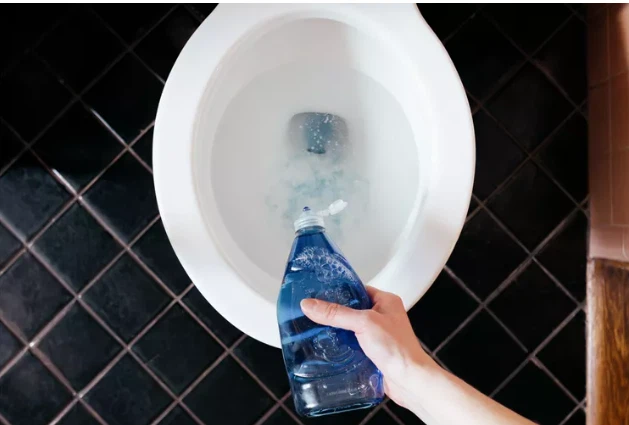
Pour approximately half a cup of liquid dish soap directly into the toilet bowl. Aim for the drain opening at the bottom. You'll see the soap sink slowly through the standing water - that's exactly what you want.
Now here's the part people skip: wait 10 to 15 minutes. The soap needs time to sink down, reach the clog, and begin coating and penetrating the blockage. Walk away. Do something else during this window. Patience is your most important tool here.
Step 2 - Add Hot Water (Not Boiling)
While waiting, heat a gallon of water in a large pot or kettle. You want it hot - around 140 to 150°F. If you see small bubbles forming on the bottom of the pot but it's not yet at a rolling boil, you're in the right range. Hot tap water at its maximum setting also works.
Do not use boiling water. Water at 212°F can thermal-shock porcelain, potentially causing hairline cracks that lead to leaks. That's an expensive mistake to make while trying to save yourself a plumber's visit.
Pour the hot water from waist height into the bowl. The elevation creates additional downward pressure that helps push the lubricated clog through. Use your bucket for this - do not try flushing the toilet handle at this stage.
Step 3 - Wait and Let Gravity Work
Set a timer for 15 to 30 minutes and leave the bathroom. The hot water activates the soap further, melts any grease in the clog, and the combined weight of water creates sustained pressure on the blockage.
When you return, look for these signs that the toilet clog removal is working: the water level has dropped noticeably, or you hear a slow gurgling sound from the drain. Both indicate the clog is loosening and water is beginning to seep past.
Step 4 - Flush and Confirm
Once the water level has visibly dropped, try a single flush. If water drains normally, congratulations - you're done. Give it one more flush to confirm everything's clear.
If the water level dropped partially but the flush is still sluggish, repeat the entire process from Step 1. Many stubborn clogs need two rounds. However, if you've tried three times with no improvement, move on to a different method - the clog may not be the soft, organic type this technique addresses.
Pro Tips To Make This Method More Effective
These enhancements can improve your success rate, especially with stubborn blockages that are right on the edge of clearing.
Add Baking Soda and Vinegar as a Booster
After the initial dish soap application, add one cup of baking soda followed by one cup of white vinegar. The fizzing reaction creates agitation that helps break apart compacted organic matter.
Let the fizzing subside (about 5 minutes), then proceed with the hot water flush as normal. This combination works particularly well for clogs involving a heavy toilet paper mass.
Use the Right Type of Dish Soap
Not all dish soaps are created equal for this purpose. Thicker, concentrated formulas perform significantly better than watered-down or ultra-light eco versions. Viscosity matters - a thicker soap clings to the clog surface longer, giving surfactants more time to do their job.
Dawn, Fairy, or similar concentrated brands are popular recommendations for good reason. If all you have is a thin, diluted soap, use a full cup instead of half.
Prevent Overflow Before You Start
Before adding anything to the bowl, take thirty seconds to protect yourself. Locate the water supply valve behind the toilet (the oval knob near the floor) and turn it clockwise until it stops. This prevents the tank from refilling if you accidentally trigger a flush.
Lay towels around the base. Check the current water level - if the bowl is already nearly full, remove some water with a disposable cup and bucket before adding soap and hot water. This step is crucial and overlooked in most guides.
What To Do If Dish Soap Doesn't Work
Dish soap is an excellent first-try method, but it isn't magic. If it hasn't worked after two or three attempts, here's your escalation path.
DIY Alternatives - Wire Hanger Snake, Wet/Dry Vacuum
An improvised drain snake works well for clogs just past the visible trapway. Unwind a wire coat hanger, leaving a small hook at one end. Wrap the hook end in a rag (secured with tape) to prevent scratching porcelain, then gently feed it into the drain opening while rotating. You're trying to break up or hook the blockage.
If you own a wet/dry shop vacuum, this is another powerful option. Set it to liquids mode, create a tight seal over the drain opening with the hose, and let the suction pull the clog back toward you. Never attempt this with a regular household vacuum.
When To Call a Plumber
Certain signs point to a problem beyond DIY fixes. Call a professional if you notice multiple drains backing up simultaneously, a sewage odor coming from drains, or the same toilet clogging repeatedly despite normal use.
These symptoms suggest a mainline blockage or structural pipe issue that requires professional camera inspection and equipment. A typical plumber visit for a toilet clog costs between $150 and $350, depending on complexity and location. That's money well spent compared to the water damage from ongoing overflow incidents.

How To Prevent Toilet Clogs in the Future
Fixing the immediate problem is great. Making sure it doesn't keep happening is even better.
The "One Flush Rule" for Toilet Paper
If you tend to use a lot of toilet paper, flush partway through rather than saving it all for one big flush. Folded paper breaks down faster than wadded bunches, so fold when possible.
And here's the biggest hidden culprit: "flushable" wipes are not truly flushable. They don't disintegrate like toilet paper and are responsible for a massive percentage of residential clogs. Toss them in the trash, always.
Monthly Maintenance With Hot Water and Soap
Once a month, pour a few tablespoons of dish soap into your toilet bowl, followed by a bucket of hot water, then flush. This 60-second habit prevents gradual buildup from forming in the trapway and keeps pipes lubricated. Think of it as an oil change for your plumbing - simple, cheap, and it saves you from bigger problems down the road.
Frequently Asked Questions
Q: Can Dish Soap Damage My Toilet Or Pipes?
A: No. Liquid dish soap is completely safe for porcelain toilets, PVC pipes, cast iron pipes, and septic systems. Unlike chemical drain cleaners that contain sodium hydroxide or sulfuric acid and gradually corrode pipe walls, dish soap is pH-neutral and biodegradable. You can use this method repeatedly without any risk to your plumbing.
Q: How Long Does It Take For Dish Soap To Unclog A Toilet?
A: Most clogs clear within 15 to 30 minutes using the hot water flush method. Stubborn blockages may need a second application, bringing total time to about an hour. For particularly compacted clogs, some people report success with an overnight soak - adding the soap before bed and flushing in the morning.
Q: Does This Method Work On All Types Of Toilet Clogs?
A: It works best on organic, soft clogs - toilet paper, human waste, and mild buildup. It will not clear hard foreign objects (toys, hygiene products, dental floss), severe mineral scale, or blockages deep in the mainline sewer pipe. Those situations call for a mechanical snake or professional help.
Q: Can I Use Hand Soap Or Body Wash Instead Of Dish Soap?
A: In a pinch, yes - but dish soap is significantly more effective. It contains higher concentrations of surfactants designed specifically to cut through grease and organic residue. Hand soap and body wash have lower surfactant levels plus added moisturizers that do nothing for the clog. If dish soap isn't available, use a generous amount of whatever liquid soap you have.
Q: Is Hot Water Safe To Pour Into A Toilet Bowl?
A: Yes, as long as it's below boiling point. Water at 140–150°F is perfectly safe for porcelain. The danger zone is above 212°F (a full, rolling boil), which can cause thermal shock and crack the bowl. A good rule: if you can briefly hold your hand over the pot and feel strong heat without steam burning you, the temperature is right.
Q: What If My Toilet Is Overflowing While Clogged?
A: Act immediately. Reach behind the toilet and turn the supply valve clockwise to shut off water flow. Do not flush again under any circumstances. If water is actively spilling, place towels to contain it. Use a bucket or disposable cup to remove excess water from the bowl until the level is manageable. Then proceed with the dish soap method as described above. If the overflow involves sewage backup from multiple fixtures, shut off your home's main water supply and call a plumber.