
History of Gua Sha Massage
Translated from the Chinese words “scrape sand,” gua sha was traditionally performed by Chinese medical practitioners who used tools of various materials (e.g., ivory, bone, buffalo horn, porcelain, metal, etc.) to vigorously scrape the patient’s skin until it turned red. Patients would develop petechiae—red or purple raised patches in the subcutaneous tissues —that indicated internal conditions of blood stasis or deficiency. By intentionally causing petechiae to appear, a traditional gua sha treatment helped to clear blood stasis to promote improved blood flow and circulation.
According to Chinaculture.org, gua sha therapy dates back to the Paleolithic age and was first documented in medical records during the Ming dynasty in the 14th century CE. Although gua sha remains one of the oldest forms of medical treatment in China, it continues to be highly regarded as an effective therapy for various ailments. Recent studies, for example, have reported promising results of gua sha therapy in alleviating perimenopausal symptoms, neck pain, and chronic back pain, as well as lessening the severity of diabetic peripheral neuropathy in patients.
Modern Gua Sha Use
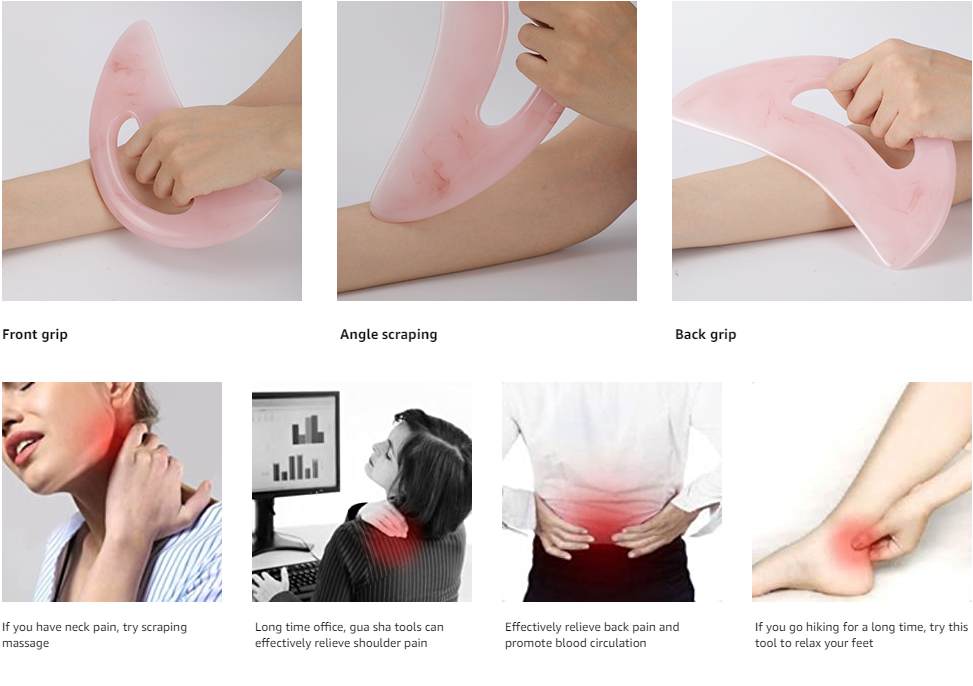
In ancient China, precious stones such as jade or bian were carved into slim tools for gua sha therapy. Now, with the rising popularity of crystals, gua sha tools carved out of rose quartz, amethyst, clear quartz, and blue spot jasper gemstones are now available. Five Flavors Herbs carries a variety of gemstone gua sha massage tools to satisfy your needs and preferences, whether you wish to perform gua sha on the body, face, or both. And if you’re wondering how to pick the right stone for you, check out this gua sha massage tool guide to see which shape and style is best for you!
This article will introduce the basics of facial gua sha, a modern variation of traditional gua sha therapy. Facial gua sha is a gentler massage technique that focuses on boosting lymphatic drainage by applying slow, light to medium pressure strokes to the face. This technique not only offers benefits for the skin and appearance, but also provides an opportunity to ground and practice mindfulness during this relaxing self-care ritual.
Although there are no peer-reviewed studies on facial gua sha to date, many users have reported favorable results when a facial gua sha massage is performed regularly.
Gua sha may reduce inflammation, so it’s often used to treat ailments that cause chronic pain, such as arthritis and fibromyalgia, as well as those that trigger muscle and joint pain.
Gua sha may also relieve symptoms of other conditions:
1. Hepatitis B
Hepatitis B is a viral infection that causes liver inflammation, liver damage, and liver scarring. Research suggests that gua sha may reduce chronic liver inflammation.
One case studyTrusted Source followed a man with high liver enzymes, an indicator of liver inflammation. He was given gua sha, and after 48 hours of treatment he experienced a decline in liver enzymes. This leads researchers to believe that gua sha has the ability to improve liver inflammation, thus decreasing the likelihood of liver damage. More research is underway.
2. Migraine headaches
If your migraine headaches don’t respond to over-the-counter medications, gua sha may help. In one studyTrusted Source, a 72-year-old woman living with chronic headaches received gua sha over a 14-day period. Her migraines improved during this time, suggesting that this ancient healing technique may be an effective remedy for headaches. More research is needed.
3. Breast engorgement
Breast engorgement is a condition experienced by many breastfeeding women. This is when the breasts overfill with milk. It usually occurs in the first weeks of breastfeeding or if the mother is away from the infant for any reason. Breasts become swollen and painful, making it difficult for babies to latch. This is usually a temporary condition.
In one studyTrusted Source, women were given gua sha from the second day after giving birth up until leaving the hospital. The hospital followed up with these women in the weeks after giving birth and found that many had fewer reports of engorgement, breast fullness, and discomfort. This made it easier for them to breastfeed.
4. Neck pain
Gua sha technique may also prove effective for remedying chronic neck pain. To determine the effectiveness of this therapy.