

For private label brands, developing shampoo bars for oily scalp, dry hair, curly hair and color-treated hair requires more than changing fragrance, color or packaging. Each hair type needs a different balance of cleansing, conditioning, foam, rinse feel, bar hardness and product positioning.
A shampoo bar for oily scalp should not feel the same as a shampoo bar for dry or curly hair. A color-care shampoo bar should not be developed like a strong daily cleansing bar. Fine hair, sensitive scalp and textured hair also require different formula decisions if the brand wants repeat purchases rather than one-time curiosity.
This is why one "suitable for all hair types" shampoo bar is rarely enough for a serious private label solid hair care line. A stronger approach is to develop targeted shampoo bar SKUs that match real consumer needs, clear retail positioning and practical OEM manufacturing requirements.
This guide explains how brands can develop custom shampoo bars for oily scalp, dry hair, curly hair and color-treated hair, while also considering additional SKU opportunities such as fine hair, sensitive scalp and shampoo bar sets. For a broader overview of formula selection, packaging, sampling and production planning, read our private label shampoo bar guide before starting your project.

Why Hair Type Matters in Shampoo Bar Development
Consumers may first notice shampoo bars because they are compact, travel-friendly and easier to package with less plastic. But repeat purchases depend on product performance.
A shampoo bar must foam properly, cleanse effectively, rinse cleanly and remain firm during use. More importantly, it must deliver an after-wash feel that matches the customer's hair and scalp needs.
A formula that feels rich and conditioning may work well for dry or curly hair, but it may feel too heavy on fine hair. A stronger cleansing formula may suit oily scalp positioning, but it may feel too dry for bleached, colored or textured hair. A heavily fragranced bar may be attractive for mainstream retail, but it may not fit a sensitive-scalp product line.
For private label buyers, this is where shampoo bar development becomes a product strategy issue, not just a formulation issue. The brand needs to define the target user, sales channel, price level, ingredient story and expected user experience before the laboratory starts adjusting the formula.
A well-planned line can help brands create more precise product names, stronger ecommerce keywords and clearer retail differentiation. Instead of selling a generic shampoo bar, the brand can build a functional solid hair care range around specific hair needs.
Start with Hair Type, Product Positioning and Sales Channel
Many product briefs begin with popular ingredients such as rosemary, argan oil, rice protein, biotin, tea tree or caffeine. These ingredients can support a marketing story, but they should not decide the whole formula.
The first step is to define the real product direction.
Is the product for oily scalp and frequent washing? Is it for dry lengths and a softer after-feel? Is it for curls that need better manageability? Is it for color-treated hair where the brand wants gentle cleansing and a premium salon-inspired image?
Hair type and scalp profile should also be considered separately. A consumer may have an oily scalp and dry ends at the same time. Another may have curly hair and a sensitive scalp. This means the formula often needs to balance scalp cleansing with hair feel, instead of focusing on only one visible concern.
Sales channel also matters. Amazon and Shopify products need clear functional positioning and searchable names. Salon and professional ranges need a more controlled performance story. Zero-waste retailers may care more about low-waste packaging and ingredient transparency. Gift sets may need stronger visual differentiation and matching conditioner bars.
| Hair / Scalp Need | Product Positioning | Formula Direction |
|---|---|---|
| Oily scalp | Fresh daily cleansing | Lightweight cleansing, clean rinse, less heavy after-feel |
| Dry hair | Moisturizing care | Softer rinse, improved combability, balanced conditioning |
| Curly hair | Smoothing and manageability | Mild cleansing, better slip, less dry feel |
| Color-treated hair | Gentle color-care positioning | Mild syndet direction, low-stripping wash feel |
| Fine hair | Lightweight volume | Clean rinse, minimal residue, less heavy conditioning |
| Sensitive scalp | Minimalist or low-fragrance care | Low-fragrance or fragrance-free direction |
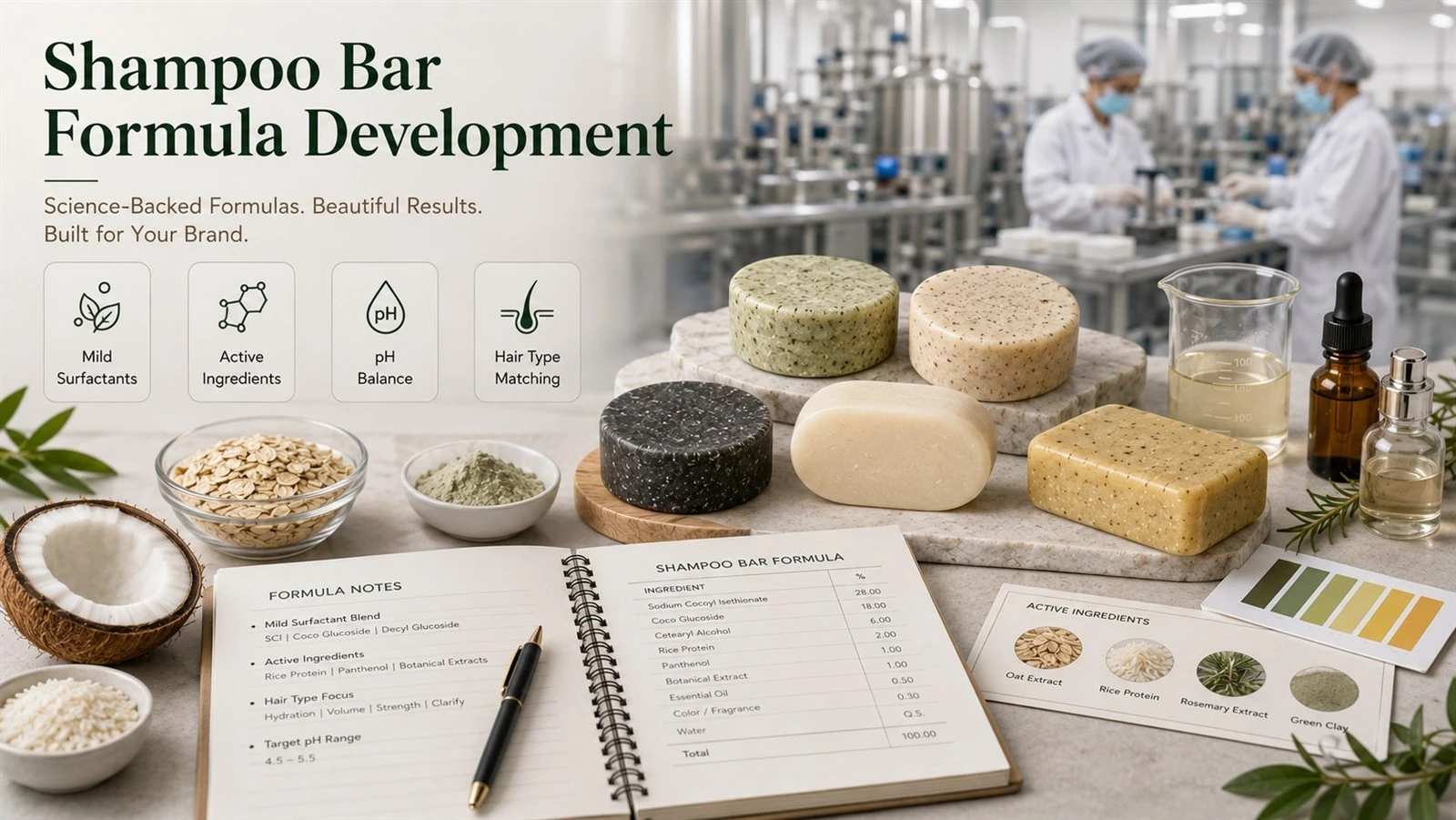
For most modern private label shampoo bar projects, syndet-based formulas provide more flexibility than traditional soap-based bars. A syndet shampoo bar can be developed with mild surfactants, controlled conditioning and a hair-friendly pH direction. Soap-based bars may still fit handmade or rustic brand stories, but they are usually less flexible for color-treated, curly or highly damaged hair positioning. Poleview also supports private label shampoo bar manufacturing for brands that need formula direction, fragrance, color, shape, logo embossing and packaging support.
Formula Development by Hair Type
The following table gives a practical development framework. It is not a fixed formula. Final percentages, ingredient combinations and processing details should always be confirmed through laboratory trials, sample testing and stability evaluation.
| Product Type | Main Formula Direction | Development Risk to Watch |
|---|---|---|
| Shampoo bar for oily scalp | Fresh cleansing, quick foam, lightweight rinse | Too much oil, butter or powder may create buildup or reduce foam |
| Shampoo bar for dry hair | Mild cleansing, softer after-feel, better combability | Too much conditioning may reduce foam or soften the bar |
| Shampoo bar for curly hair | Low-stripping wash, better slip, smoother feel | Insufficient conditioning may make hair feel rough |
| Shampoo bar for color-treated hair | Mild cleansing, controlled pH direction, lower-friction feel | Color-care claims should be supported by suitable testing |
| Volumizing shampoo bar | Lightweight cleansing with minimal residue | Heavy oils and strong deposition may flatten fine hair |
| Shampoo bar for sensitive scalp | Simplified formula with controlled fragrance and color | Avoid unsupported claims such as hypoallergenic or dermatologist tested |
This framework helps brands avoid a common mistake: using one base formula for all hair types and only changing the color or fragrance. Visual difference alone is not enough. Each SKU should have its own formula purpose, sensory target and claim direction. If your team is still deciding between a soap-based or syndet formula, compare both options in our soap-based vs syndet shampoo bars guide.
How to Develop a Shampoo Bar for Oily Scalp
A shampoo bar for oily scalp should create a fresh, clean after-wash feel without making the hair feel rough or overly dry.
The formula should focus on fast foam, effective cleansing and a lightweight rinse. Heavy butters, waxes and high oil levels should usually be limited because they may leave a coated feel, reduce volume or make the bar too soft.
Ingredients such as selected clays, starches, charcoal, zinc PCA, niacinamide, tea tree, mint or green tea can support the oil-control story. But these ingredients should support the formula, not replace the cleansing system. Too much clay or botanical powder can reduce foam, increase drag and make the bar more fragile.
For this category, fragrance direction often matters. Herbal, mint, citrus, tea, marine or green notes can help reinforce a fresh cleansing position. The bar color can also support the story, but it should not compromise formula stability or stain packaging.
A shampoo bar for oily scalp is suitable for warm-climate markets, active-lifestyle consumers, gym users, teenagers, styling-product users and brands that want a daily fresh-cleansing SKU. Brands that want a more targeted product range can explore our functional shampoo bar manufacturer page for oil-control, moisture, color-care and volumizing formula directions.
Suitable cosmetic-friendly claim directions include:
fresh scalp feel, lightweight rinse, cleanses excess oil, helps remove product buildup, leaves hair feeling clean.
Avoid disease-related claims such as treating dandruff, dermatitis or scalp disorders unless the product is developed under the relevant regulatory category.
How to Develop a Shampoo Bar for Dry Hair
A shampoo bar for dry hair requires more than adding a large amount of oil or butter.
Dry hair usually needs mild cleansing, lower friction and a softer after-feel. The formula may include mild surfactants, panthenol, betaine, hydrolyzed proteins, humectants, conditioning ingredients and a carefully controlled lipid phase.
The balance is important. Shea butter, cocoa butter, coconut oil, argan oil or avocado oil can support a moisturizing story, but high levels may reduce foam, soften the bar or create a heavy residue. A shampoo bar is still a cleansing product. It should not feel like a conditioner bar or hair mask.
For dry hair positioning, sample testing should focus on wet combability, dry hair feel, foam quality and bar hardness after repeated use. Some formulas look attractive during the first wash but become too soft after several uses or lose foam because the conditioning system is too heavy.
This product direction is suitable for naturally dry hair, heat-styled hair, mature consumers, dry climates and brands that want a soft-care or moisturizing solid hair care line.
For stronger merchandising, a dry-hair shampoo bar can be paired with a matching conditioner bar or solid hair mask. This creates a more complete routine and can increase perceived value.
How to Develop a Shampoo Bar for Curly Hair
Curly and coily hair often needs a different cleansing and conditioning balance. A shampoo bar for curly hair should clean the scalp while helping the hair feel more manageable after washing.
The formula should avoid an overly strong cleansing feel. Slip, wet combability and a smoother rinse are especially important. If the bar feels rough during washing, users may experience more tangling and a less comfortable wash experience.
A custom shampoo bar for curly hair may use a mild syndet system with conditioning support, humectants, hydrolyzed proteins, panthenol, aloe vera, lightweight oils or curl-friendly ingredient stories. The goal is not to make the hair feel coated. The goal is to support a smoother after-wash feel without weighing the hair down.
Curly hair is not one single category. A formula that works for loose waves may not provide enough conditioning for tighter curls or coily hair. If the product is intended for textured-hair consumers, sample testing should include more than one curl pattern whenever possible. For curl-focused or dry-hair collections, brands can pair shampoo bars with private label conditioner bars to build a more complete solid hair care routine.
This product category is suitable for curl-focused brands, textured-hair retailers, salons, premium DTC brands and private label lines that want to build a more specialized hair care identity.
A curly hair shampoo bar often works better when paired with a conditioner bar. Together, they create a routine story that is easier for consumers to understand.
How to Develop a Shampoo Bar for Color-Treated Hair
Color-treated and bleached hair has usually gone through chemical processing. A shampoo bar for color-treated hair should therefore focus on gentle cleansing, lower friction and a smoother after-wash feel.
For this direction, a mild syndet shampoo bar is usually easier to optimize than a traditional soap-based formula. The formula may include panthenol, amino acids, hydrolyzed proteins, antioxidant botanical extracts, chelating ingredients or conditioning support, depending on the final positioning and test plan.
The product should avoid a harsh or squeaky-clean feel. Wet and dry combing performance matters because friction can make processed hair feel rougher. Fragrance should also be considered carefully. A premium color-care line usually works better with a clean, elegant or salon-inspired scent profile rather than an overly strong fragrance.
Brands should be cautious with claims such as "color-safe," "color-protecting" or "prevents fading." These claims are stronger when supported by repeated-wash testing on colored hair tresses and comparison with a suitable benchmark product.
A safer positioning direction is:
gentle cleansing for color-treated hair, color-care shampoo bar, mild wash feel, helps hair feel smoother after washing.
This type of shampoo bar is suitable for salons, professional hair care brands, premium ecommerce ranges and consumers who frequently dye, bleach or chemically process their hair.
Additional SKU Opportunities: Fine Hair and Sensitive Scalp
Although the title of this article focuses on oily scalp, dry hair, curly hair and color-treated hair, many brands also consider fine hair and sensitive scalp when building a complete private label shampoo bar range.
A volumizing shampoo bar for fine hair should feel light, clean and easy to rinse. Fine-hair consumers often reject formulas that feel too rich or leave a coated after-feel. Heavy oils, high wax levels and strong conditioning deposition should usually be limited. More realistic claim directions include lightweight volume, clean root feel and helps hair feel fuller.
A shampoo bar for sensitive scalp should follow a simpler formula strategy. A low-fragrance, fragrance-free or essential-oil-free direction may be considered, depending on the target market. The formula should avoid unnecessary colorants, excessive botanical extracts and unsupported claims.
Sensitive-scalp claims require care. Words such as "hypoallergenic," "dermatologist tested" or "suitable for sensitive scalp" should only be used when the required testing and documentation are available.
These two SKU directions can be added after the first launch, especially if customer feedback shows demand for lighter formulas or lower-fragrance products.
Build One Technical Platform for Multiple Shampoo Bars
Developing six completely unrelated formulas can increase raw material complexity, testing cost and production risk.
A more efficient OEM shampoo bar development strategy is to create a shared technical platform. Several products can use the same main surfactant system, basic production process, bar weight or mold size while adjusting cleansing strength, conditioning level, fragrance, color and hero ingredients.
For example, a private label brand may begin with a focused four-SKU launch:
Clarifying Shampoo Bar for oily scalp and product buildup.
Moisture Shampoo Bar for dry or damaged-feeling hair.
Curl & Smooth Shampoo Bar for curly, wavy or frizz-prone hair.
Color Care Shampoo Bar for dyed or bleached hair.
This structure allows the brand to launch a complete shampoo bar product line without developing too many products at the beginning. Fine hair and sensitive scalp formulas can be added later according to sales data, customer reviews and channel feedback.
MOQ should be planned according to formula type, packaging requirements, customization level and launch strategy. A focused SKU plan is usually safer than launching too many formulas before the brand has clear market feedback.
Packaging and Market Positioning
Shampoo bar packaging must protect the product during storage, shipping and retail display. It should also explain the product clearly to the consumer.
Paperboard boxes, kraft cartons, paper sleeves, wraps, travel tins and gift boxes can all support solid hair care positioning. However, the selected packaging must also provide enough protection against moisture, pressure, friction and fragrance loss.
A plastic-reduced package is not successful if the bar arrives soft, broken or without scent. Packaging should therefore be tested together with the formula rather than selected only for appearance.
Different sales channels may require different packaging logic.
For Amazon and Shopify, the product name, front label and image clarity are important. Names such as "Shampoo Bar for Oily Scalp" or "Color Care Shampoo Bar" can help consumers quickly understand the product.
For boutique retail, packaging texture, color system and giftability may matter more. For salons, a cleaner and more professional visual system may be more suitable. For hotels, travel retail and subscription boxes, compact size, clear labeling and practical storage are often more important. Brands planning travel kits or seasonal bundles may also consider a solid shampoo bar gift set to increase perceived value and create a more complete retail offer.
Hot and humid markets require stronger attention to bar hardness, sweating, fragrance stability and moisture-resistant packaging.
Testing Requirements for Custom Shampoo Bars
A professional custom shampoo bar should be evaluated for more than appearance and fragrance.
Physical testing should include hardness, cracking, sweating, color stability, fragrance stability and weight loss during use. Performance testing should assess foam speed, foam texture, rinse feel, wet combability, dry hair feel and residue.
The bar should also be reviewed under the storage and shipping conditions expected for the target market. Temperature, humidity and long-distance transit can affect bar appearance, hardness and fragrance.
For hair-type-specific products, additional testing may be useful. A color-care product may require repeated-wash evaluation on dyed hair. A curly hair product may need testing across different curl patterns. A volumizing formula should be assessed for residue, root feel and next-day heaviness.
A shampoo bar sample should not be approved only because it looks good on the first day. Brands should test how it performs after repeated use, because softening, cracking, fragrance loss or residue may appear later.
Testing methods should match the final product claims. Stronger claims require stronger evidence.

Common Mistakes When Developing Shampoo Bars for Different Hair Types
One common mistake is using one formula base for every hair type and only changing the color or fragrance. This may reduce development time, but it often creates weak product differentiation.
Another mistake is adding too many oils, butters, powders or botanical extracts for marketing value. A long ingredient list may look attractive, but it can reduce foam, soften the bar or create a heavy after-feel.
Some brands also focus too much on the first-use experience. A shampoo bar may foam well during one test but soften after repeated use, crack during drying or lose fragrance during storage.
Packaging is another common issue. A box may look beautiful in photos but fail to protect the bar in humid conditions or during international shipping.
Finally, brands should avoid claims that go beyond normal cosmetic positioning. Claims about dandruff treatment, hair growth, scalp disease, permanent repair or guaranteed color protection require stronger regulatory review and supporting evidence.
A good shampoo bar development process should balance marketing, formula performance, production stability and compliance from the beginning.
Choosing an OEM Shampoo Bar Manufacturer
A reliable OEM shampoo bar manufacturer should do more than press a standard base into a custom mold.
The supplier should understand surfactant selection, pH direction, conditioning balance, fragrance compatibility, bar hardness, packaging protection and export requirements. For private label buyers, the manufacturer should also help translate market positioning into a realistic formula and production plan.
A professional development process may include formula brief review, benchmark analysis, sample development, fragrance and color selection, packaging confirmation, stability review, artwork check and mass-production quality control.
Brands should also ask whether the supplier can support both ready formulas and custom formulation, whether packaging can be customized, whether molds or logo embossing are available, and whether documents such as COA, SDS or MSDS can be provided according to project needs.
Price is important, but it should not be the only decision factor. A low unit price cannot compensate for unstable formula performance, poor packaging fit or inconsistent repeat production.
Develop Custom Shampoo Bars with Poleview
Poleview supports private label and OEM shampoo bar development for brands that want to build targeted solid hair care products.
Our team can help develop shampoo bars for oily scalp, dry hair, curly hair, color-treated hair, fine hair, sensitive scalp and complete shampoo bar product lines. Support can include formula direction, sample testing, fragrance selection, color adjustment, bar shape, logo embossing, packaging customization and bulk production planning.
Whether your brand needs a simple launch line or a more functional solid hair care collection, Poleview can help evaluate formula, packaging and production options before bulk manufacturing.
Share your target market, intended hair type, benchmark product, preferred formula direction, bar weight, packaging plan and estimated order quantity with our team. If your brand is ready to compare formula, packaging and sample options, visit our custom shampoo bar manufacturer page to start your private label project.
Contact Poleview to develop custom shampoo bars for your private label solid hair care line.
Frequently Asked Questions
Q: 1. Can one shampoo bar formula work for all hair types?
A: A general-purpose shampoo bar can serve a broad market, but it is unlikely to provide the best experience for oily scalp, dry hair, curly hair, fine hair and color-treated hair at the same time. A segmented product line usually gives clearer positioning and better product differentiation.
Q: 2. What type of shampoo bar is better for oily scalp?
A: A shampoo bar for oily scalp should focus on fresh cleansing, fast foam and a lightweight rinse. Heavy oils and butters should usually be limited because they may reduce volume or leave a coated feel.
Q: 3. What ingredients are commonly used in shampoo bars for dry hair?
A: Dry-hair shampoo bars may use ingredients such as panthenol, betaine, hydrolyzed proteins, humectants, aloe vera and carefully controlled oils or butters. The formula should improve softness without reducing foam or making the bar too soft.
Q: 4. Are syndet shampoo bars better for curly or color-treated hair?
A: Syndet shampoo bars often provide more formula control than traditional soap-based bars. They can be adjusted for pH direction, cleansing strength, rinse feel and conditioning balance, which makes them useful for curly hair and color-care positioning.
Q: 5. How many shampoo bar SKUs should a new brand launch first?
A: A new brand does not need to launch too many SKUs at once. A focused line of two to four products is usually easier to test, manage and promote. Additional SKUs can be added later based on sales data and customer feedback.
Q: 6. What should brands test before approving shampoo bar samples?
A: Brands should test foam speed, rinse feel, wet combability, dry hair feel, bar hardness, drying behavior, fragrance stability, color stability, repeated-use performance and packaging fit before moving into bulk production.
Related Shampoo Bar Guides & Product Pages
1. Private Label Shampoo Bar Guide: Formulas, Packaging, Manufacturing and Brand Development
2. Soap-Based vs Syndet Shampoo Bars: Which Formula Is Better for Private Label Brands?
3. Functional Shampoo Bar Manufacturer for Private Label Hair Care Brands