
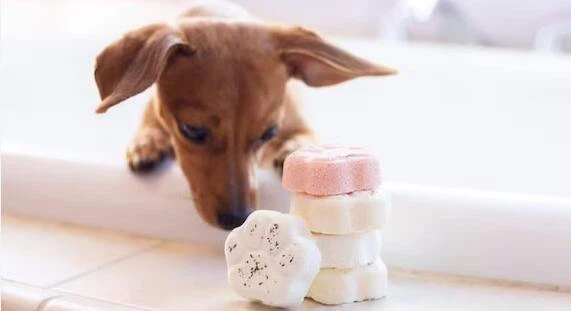
Your social media feed is probably full of them - adorable dogs sitting in pastel-colored water, fizzing bombs dissolving around a golden retriever who looks mildly confused but photogenic. It's tempting. You love your pet, you want to pamper them, and these products promise a spa day for your furry companion.
But here's the thing nobody's saying in those cute Instagram reels: animal skin sensitivity operates on completely different rules than ours. That lavender-scented, rainbow-hued bath bomb that leaves your skin silky? It could send your dog to the vet.
Let me walk you through what's actually going on with these products - the good, the bad, and the stuff that should make you pause before tossing anything fizzy into your pet's bathwater.
Why Pet Bath Bombs Are Trending - And Why That's a Problem
Pet pampering has gone mainstream. We're not just buying kibble anymore; we're investing in wellness routines for animals who would honestly be thrilled with a stick and a puddle. And look, there's nothing wrong with wanting nice things for your pet. The problem is when marketing outpaces safety research.
The Pet Grooming Product Boom (and Its Blind Spots)
The global pet care market continues its aggressive growth trajectory, with grooming products representing one of the fastest-expanding subcategories. New brands pop up weekly, many leaning heavily on aesthetics and "clean beauty" language borrowed from human skincare.
Here's what most people don't realize: regulation for non-toxic pet grooming products is shockingly thin compared to human cosmetics. The FDA doesn't pre-approve pet grooming items the way it oversees human products. A label that says "pet-safe" is often a marketing decision, not a regulatory certification. Nobody is necessarily checking.
How Your Pet's Skin Differs From Yours
This is where the science actually matters. Human skin sits at a pH around 5.5 - slightly acidic. Dogs hover between 7.0 and 7.5, which is more neutral to slightly alkaline. That difference sounds small but it's enormous in terms of how products interact with skin barriers.
Dogs also have thinner epidermis than we do. Stuff absorbs faster and penetrates deeper. And cats? Cats compound the problem by obsessively grooming themselves after a bath. Whatever's on their fur ends up in their mouth. You're not just dealing with skin contact - you're dealing with ingestion.
Ingredients That Should Raise Red Flags Immediately
Most articles give you a vague list and move on. I want to explain why each of these ingredients is problematic, because understanding the mechanism helps you make better decisions about any product, not just bath bombs.
Essential Oils Toxic to Pets - The Hidden Danger in "Natural" Products
This one frustrates me because "natural" has become shorthand for "safe" in people's minds. It isn't. Arsenic is natural. Hemlock is natural. And plenty of essential oils that smell wonderful to us are genuinely toxic to animals.
The major offenders include tea tree oil, eucalyptus, peppermint, cinnamon, citrus oils, and ylang-ylang. Tea tree is particularly nasty - even diluted concentrations can cause tremors, weakness, and vomiting in dogs. In cats, the danger is even more severe.
Why cats specifically? They lack certain liver enzymes (glucuronyl transferase, if you want to get technical) that metabolize phenolic compounds found in many essential oils. Their bodies literally cannot process these substances the way dogs or humans can. What passes through a dog's system might accumulate to toxic levels in a cat. Veterinary toxicologists have been sounding this alarm for years.
Artificial Dyes, Fragrances, and Foaming Agents
That gorgeous purple water? Synthetic colorants can trigger contact dermatitis in pets with sensitive skin. The word "fragrance" or "parfum" on an ingredient list is essentially a black box - it can represent dozens of undisclosed chemical compounds.
Sodium lauryl sulfate (SLS) is a common foaming agent that strips natural oils from skin. On an animal whose dermal barrier is already thinner than yours, that's a recipe for dryness, cracking, and itching. If your pet drinks the bathwater (and let's be honest, dogs will try), SLS can also cause gastrointestinal upset.
What About Baking Soda and Citric Acid - The "Safe" Base?
These are the two main ingredients that make bath bombs fizz. They're food-grade, they're in your kitchen, so they're fine... right?
Mostly, yes. But "mostly" isn't the same as "completely." Concentrated baking soda can irritate skin when it sits in prolonged contact, especially on animals with existing dermatitis or open micro-abrasions. Citric acid can sting eyes - and getting a dog to keep its face away from splashing water is an exercise in futility.
If your pet gulps down bath water containing dissolved citric acid and baking soda, you might see mild stomach upset. The verdict here: low risk, but not zero risk. Something to be aware of rather than panic about.

Precautions Before, During, and After Bath Time
If you've decided to use a pet bath bomb anyway - maybe you've found one with genuinely safe pet-safe bath bomb ingredients and you want to try it - here's how to minimize risk at every stage.
Before the Bath - Vetting the Product
Read the full ingredient list, not just the marketing copy on the front. If a product doesn't disclose its complete ingredient list, that's a red flag. Walk away.
Look for third-party testing certifications rather than self-awarded "natural" badges. If your pet has existing skin conditions or allergies, run the product past your vet first - no exceptions.
Do a patch test. Apply a small amount of dissolved product to the inner ear flap or inner elbow area. Wait 24 hours. If you see redness, swelling, or your pet obsessively licking that spot, the product isn't for them. Hypoallergenic pet bathing solutions are always a safer starting point for animals you haven't tested before.
During the Bath - Monitoring and Technique
Keep exposure time short - under ten minutes in the treated water. Avoid getting product anywhere near the face, ears, eyes, or genital area. These are mucous membrane zones with basically no protective barrier.
Watch your pet's behavior closely. Excessive scratching, whimpering, trying desperately to escape, or sudden redness are all immediate stop signals. Pull them out, rinse with clean water, done. No bath bomb is worth pushing through those signs.
And this should be obvious but I'll say it: never leave a pet unsupervised in treated water. Not even for thirty seconds while you grab a towel.
After the Bath - The Rinse You Can't Skip
This is the step people get lazy about, and it's the most important one. After draining the treated water, give your pet a thorough rinse with clean, lukewarm water. I mean thorough. Get into the skin folds, between toes, under the belly. Every trace of residue needs to go.
Towel-dry rather than air-dry when possible - it gives you a chance to feel for any raised bumps or hot spots you might not see. Then monitor their skin for 24 to 48 hours. Signs that warrant a vet call include persistent redness, hives, lethargy, vomiting, or any swelling around the face or paws.
Species-Specific Considerations Most Articles Miss
This is where I see the biggest gap in online advice. "Pet-safe" gets thrown around as if all pets are the same animal. They're not. What works for a 70-pound Labrador could be dangerous for a 9-pound cat or a 2-pound guinea pig.
Dogs - Size, Breed, and Coat Type Matter
Small breeds absorb more product relative to their body weight. A Chihuahua sitting in the same concentration of dissolved product as a Great Dane is getting a proportionally much higher exposure.
Breeds with skin folds - bulldogs, shar-peis, pugs - trap residue in those creases even after rinsing. You need to physically separate each fold and rinse individually. Double-coated breeds (huskies, collies, golden retrievers) require significantly more rinsing time because their dense undercoat holds product close to the skin.
Cats - When "Pet-Safe" Still Isn't Cat-Safe
I want to be direct here: most veterinarians lean toward recommending that bath bombs be avoided entirely for cats. The grooming-and-ingestion cycle makes every topical product an oral exposure risk. Combined with cats' metabolic limitations around phenols and terpenes, the risk-reward calculus just doesn't work out.
If you want to treat your cat to a nice bath experience (assuming your cat tolerates water at all, which - good luck), stick to plain warm water or a vet-approved, fragrance-free cat shampoo. That's it.
Small Animals and Exotics - Just Don't
Rabbits, guinea pigs, ferrets, birds - the answer here is a blanket no. These animals have extremely sensitive respiratory systems. The off-gassing from fizzing products alone can irritate their airways. Their skin is often more delicate than even cats'.
Most of these animals also shouldn't be bathed in the traditional sense anyway. Rabbits can go into shock from water immersion. Birds have complex feather oil systems that chemicals disrupt. Plain water or species-specific products recommended by an exotic vet. Full stop.
How to Choose Non-Toxic Pet Grooming Products That Actually Work
Let's pivot to solutions. If you want bath time to feel special without gambling on your pet's health, here's what to look for.
Ingredient Green Flags
Colloidal oatmeal is a standout - it's soothing, anti-inflammatory, and well-tolerated by most dogs. Coconut oil provides gentle moisturizing without chemical additives. Chamomile extract and aloe vera (for external use) are generally safe and calming for irritated skin.
Unscented formulations are almost always a safer bet. Remember: the pleasant smell is for your benefit, not your pet's. Dogs experience scent at roughly 10,000 times your sensitivity. What smells "lightly lavender" to you might be overwhelming to them.
The Bottom Line - Fun Shouldn't Come at Your Pet's Expense
Pet bath bombs aren't inherently evil. Some products are genuinely formulated with care, using minimal, well-researched ingredients appropriate for animal skin. But many aren't. And the burden of figuring out which is which falls entirely on you.
Here's the uncomfortable truth that nobody filming those cute bath videos mentions: the fizz, the color, the scent - all of that is for you. Your dog doesn't care. Your cat actively hates it. What they care about is not itching, not feeling sick, and not being stressed.
If you can find a genuinely safe product and follow proper protocols, go for it. But if you're unsure? Plain warm water and a good quality, vet-recommended pet shampoo will always be the safest choice. Your pet won't know the difference - but their skin will thank you.
FAQ
Q: Can I Use A Human Bath Bomb On My Dog Just Once?
A: No. Even a single use exposes your dog to pH-mismatched ingredients, concentrated essential oils, and synthetic fragrances their skin isn't equipped to handle. "Just once" is how most adverse reactions happen - because people assume one time can't do damage. It can.
Q: My Pet Licked The Bath Water - Should I Call The Vet?
A: It depends on what was in it and how much they drank. A small lap of water containing only baking soda and citric acid? Monitor for mild stomach upset but don't panic. If the product contained essential oils, artificial fragrances, or SLS, and your pet drank more than a small sip, call your vet or the ASPCA Animal Poison Control hotline. When in doubt, always call.
Q: How Often Can I Use Pet-Specific Bath Bombs?
A: Once a month maximum for most dogs, and honestly, less is better. Over-bathing strips natural protective oils from your pet's coat regardless of how "gentle" the product claims to be. Most dogs only need bathing every 4 to 6 weeks unless they've rolled in something unspeakable.
Q: Are Bath Bombs Safe For Puppies Or Kittens?
A: No. Young animals have developing immune systems, thinner skin, and higher surface-area-to-body-weight ratios that increase absorption risk. Wait until at least six months of age before introducing any non-essential grooming product, and consult your vet first. For kittens specifically, the answer remains no at any age.
Q: What Are Signs Of An Allergic Reaction After Using A Bath Bomb?
A: Watch for redness or inflammation of the skin, excessive scratching or licking, swelling (particularly around the face, paws, or ears), hives, lethargy, vomiting, or diarrhea. If you notice difficulty breathing, facial swelling, or collapse, this is an emergency - get to a veterinarian immediately. Don't wait to see if it "passes."