

For beauty brands developing a body care line, one common question is whether to launch a body butter, a lotion, or both. At first glance, these products may look similar because both are designed to moisturize the skin. However, they are very different in texture, formula structure, skin feel, packaging, target users, and market positioning.
Understanding the difference between body butter and lotion is important for product development. A rich body butter may be ideal for dry skin, winter care, premium self-care sets, and natural ingredient positioning. A lightweight lotion may be better for daily use, warm climates, fast absorption, and functional skincare claims such as brightening, smoothing, or barrier support.
This guide explains body butter vs lotion from both a consumer-use and Private Label product development perspective. It will help private label brands, wholesalers, ecommerce sellers, distributors, and body care startups choose the right product direction for their market.
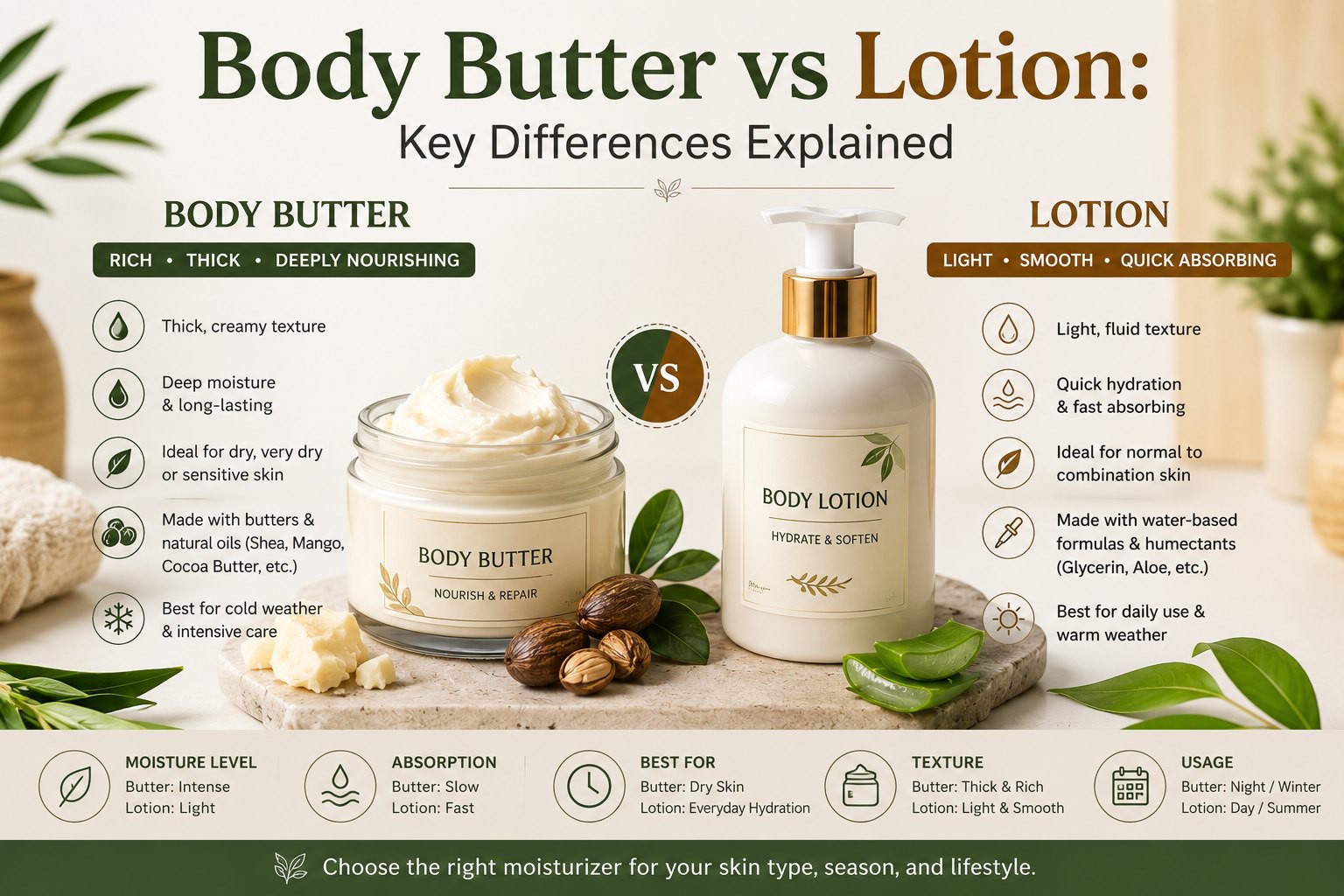
What Is Body Butter?
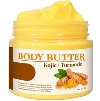
Body butter is a rich, thick moisturizer made mainly with plant-based butters and oils. Common ingredients include shea butter, cocoa butter, mango butter, kokum butter, coconut oil, jojoba oil, sweet almond oil, argan oil, and vitamin E.
Unlike lotion, body butter usually contains little water or has a much lower water phase. This gives it a dense, creamy, and non-pourable texture. When applied to the skin, body butter melts gradually and leaves a soft protective layer that helps reduce the feeling of dryness.
From a formulation perspective, body butter is usually more oil-rich and more occlusive than lotion. It is designed to help seal moisture into the skin and provide a longer-lasting nourishing feel.
Key Characteristics of Body Butter
- Thick, rich, creamy texture
- Usually made with a high level of oils and plant butters
- Lower water content than lotion
- Slower absorption
- Leaves a soft, nourishing skin feel
- Suitable for dry, very dry, or rough skin areas
- Often packaged in jars, tins, or tubes
- Popular for premium, natural, winter, or intensive care positioning
Best Uses for Body Butter
Body butter works especially well for:
- Dry to very dry skin
- Rough areas such as elbows, knees, heels, and hands
- Cold or dry climates
- Nighttime body care routines
- After-shower moisturizing
- Spa, self-care, and gift set products
- Natural body care lines featuring shea butter, cocoa butter, or mango butter
For brands, body butter is a strong choice when the product concept focuses on rich nourishment, indulgent texture, long-lasting moisture feel, and visible premium value.
What Is Lotion?
Lotion is a lightweight, water-based moisturizer. It is usually an emulsion, meaning water and oil are blended together with emulsifiers to create a smooth, spreadable formula.
Compared with body butter, lotion normally contains more water and a smaller oil phase. This gives it a fluid texture that spreads easily and absorbs quickly into the skin. Lotions are often used for daily body hydration because they feel lighter and less greasy.
A body lotion formula can also deliver water-soluble ingredients such as glycerin, hyaluronic acid, niacinamide, aloe vera, panthenol, or botanical extracts. This makes lotion a flexible format for everyday moisturizing, brightening, soothing, firming, or lightweight skincare positioning.
Key Characteristics of Lotion
- Lightweight, fluid, and easy to spread
- Higher water content than body butter
- Lower oil or butter content
- Fast absorption
- Fresh, non-greasy skin feel
- Suitable for daily use
- Often packaged in pump bottles, squeeze bottles, or tubes
- Good for functional body care formulas
Best Uses for Lotion
Lotion works especially well for:
- Normal, oily, or combination skin
- Warm or humid climates
- Daytime body care routines
- Customers who dislike heavy or greasy textures
- Fast-absorbing products used under clothing
- Functional products with active ingredients
- Larger daily-use body care SKUs
For brands, lotion is a strong choice when the product concept focuses on convenience, lightweight hydration, daily use, fresh skin feel, and broader consumer acceptance.
Body Butter vs Lotion: Key Differences
Although both products moisturize the skin, they serve different needs. The table below shows the main differences from a product development and market positioning perspective.
| Feature | Body Butter | Lotion |
|---|---|---|
| Texture | Thick, rich, creamy, non-pourable | Light, fluid, easy to spread |
| Water Content | Low or very low | High |
| Oil/Butter Content | High | Low to moderate |
| Absorption Speed | Slower | Faster |
| Skin Feel | Nourishing, soft, protective | Fresh, light, non-greasy |
| Moisture Feel | Longer-lasting, richer | Comfortable, daily hydration |
| Best Skin Type | Dry, very dry, rough skin | Normal, oily, combination skin |
| Best Climate | Cold, dry, low-humidity climates | Warm, humid, tropical climates |
| Best Season | Fall and winter | Spring and summer |
| Typical Packaging | Jars, tins, tubes | Pump bottles, squeeze bottles, tubes |
| Brand Positioning | Premium, natural, intensive care | Daily care, functional care, mass market |
| Common Ingredients | Shea butter, cocoa butter, mango butter, oils | Water, glycerin, hyaluronic acid, niacinamide, light oils |
| Ideal Sales Channels | Gift sets, spa, natural beauty, premium retail | Daily body care, ecommerce, supermarket, drugstore, salon retail |
Which Product Should Your Brand Choose?
The right choice depends on your target customer, sales channel, climate, price point, ingredient story, and packaging strategy.
Choose Body Butter If Your Brand Targets
Body butter is a better choice if your brand focuses on:
- Dry skin or very dry skin customers
- Cold or dry climate markets
- Natural or clean beauty positioning
- Rich texture and premium self-care experience
- Shea butter, cocoa butter, mango butter, or plant oil ingredient stories
- Gift sets, spa sets, winter care, or intensive body care collections
- Customers who prefer a more nourishing after-use feel
Body butter can help your brand create a more luxurious and sensory product experience. It also works well for smaller premium SKUs because consumers often associate the dense texture and jar packaging with richer care.
Choose Lotion If Your Brand Targets
Lotion is a better choice if your brand focuses on:
- Everyday body moisturizing
- Warm or humid markets
- Fast-absorbing body care
- Lightweight textures for daily use
- Normal, oily, or combination skin customers
- Functional body care with actives
- Pump bottle or family-size packaging
- Ecommerce, supermarket, salon, or mass retail channels
Lotion is often easier to position as a daily-use product. It can also support more functional formula directions, such as brightening body lotion, firming body lotion, sensitive skin lotion, or moisturizing lotion for all skin types.
Consider Offering Both If
Some brands do not need to choose only one. Offering both body butter and lotion can create a more complete body care line.
This strategy works well if:
- Your brand serves different skin types
- Your market includes both dry and humid climates
- You want seasonal product rotation
- You want to increase average order value
- You want to build a complete body care routine
- You want a lightweight daily product and a richer intensive care product
For example, a brand may offer lotion for daytime daily hydration and body butter for nighttime care or dry areas. This gives customers more flexibility and helps the brand cover more use scenarios.
How Body Butter and Lotion Work Differently on the Skin
Body butter and lotion moisturize in different ways because their formula structures are different.
Body Butter: Rich Nourishment and Moisture Sealing
Body butter usually contains a high level of plant fats and oils. These ingredients help create a soft, protective layer on the skin surface. This makes body butter suitable for areas that feel dry, rough, or uncomfortable.
For body care brands, this means body butter is best positioned around:
- Rich nourishment
- Dry skin care
- Soft and smooth skin feel
- Long-lasting comfort
- Winter body care
- Premium natural ingredients
Body butter should not feel too waxy or overly greasy. A good manufacturer can adjust the ratio of butters, oils, waxes, and sensory modifiers to create the right skin feel for your target market.
Lotion: Lightweight Hydration and Fast Absorption
Lotion contains more water and often includes humectants, which help attract and hold moisture. Ingredients such as glycerin, hyaluronic acid, aloe vera, and panthenol are commonly used in lotion formulas.
For body care brands, this means lotion is best positioned around:
- Daily hydration
- Lightweight moisture
- Fast absorption
- Non-greasy finish
- Functional body care
- Warm weather comfort
A good lotion formula should feel smooth, stable, and easy to apply. It should not separate, feel sticky, or leave an uncomfortable residue.
Popular Ingredients for Custom Body Butter
When developing a custom body butter, ingredient selection plays a major role in product positioning.
Common Base Butters
- Shea butter
- Cocoa butter
- Mango butter
- Kokum butter
- Cupuaçu butter
Common Carrier Oils
- Jojoba oil
- Argan oil
- Sweet almond oil
- Coconut oil
- Avocado oil
- Squalane
- Sunflower seed oil
Common Functional Ingredients
- Vitamin E
- Ceramides
- Oat extract
- Calendula extract
- Aloe extract
- Plant-based waxes
- Natural fragrance or essential oil blends
Body butter formulas can be adjusted from dense and rich to whipped and fluffy. For modern consumers, whipped body butter is popular because it offers a lighter texture while still keeping the nourishing body butter experience.
Popular Ingredients for Custom Body Lotion
Lotion gives brands more flexibility for water-soluble ingredients and functional body care positioning.
Common Hydrating Ingredients
- Glycerin
- Hyaluronic acid
- Aloe vera
- Panthenol
- Betaine
Common Barrier Support Ingredients
- Ceramides
- Niacinamide
- Squalane
- Oat extract
- Plant oils
Common Market Positioning Options
- Brightening body lotion
- Firming body lotion
- Moisturizing body lotion
- Sensitive skin body lotion
- Lightweight summer lotion
- Fragrance-free body lotion
- Vegan body lotion
- Clean beauty body lotion
For private label body lotion projects, the formula can be adjusted by texture, fragrance, active ingredients, skin feel, absorption speed, and packaging type.
Packaging Differences: Body Butter vs Lotion
Packaging should match the formula texture and customer use habit.
Body Butter Packaging Options
Body butter is usually thicker, so it is often packaged in:
- Plastic jars
- Glass jars
- Aluminum tins
- Squeeze tubes for softer formulas
- Gift set containers
- Refillable packaging
Jar packaging gives consumers easy access to thicker textures and creates a premium visual impression. However, brands should consider hygiene, shipping weight, and leakage control when choosing packaging.
Lotion Packaging Options
Lotion is lighter and more fluid, so it is often packaged in:
- Pump bottles
- Squeeze bottles
- Airless bottles
- Tubes
- Travel-size bottles
- Family-size bottles
Pump bottles work well for daily-use body lotion because they are convenient, clean, and suitable for larger volumes. Airless packaging can be used for more premium formulas or formulas with sensitive ingredients.
OEM/ODM Customization Options for Body Butter and Lotion
For private label brands, the biggest advantage of working with an OEM/ODM body care manufacturer is the ability to create a product that fits your market instead of simply reselling a generic formula.
Texture and Formula Customization
We can help customize:
- Classic dense body butter
- Whipped body butter
- Lightweight body lotion
- Rich body milk
- Hybrid butter-lotion textures
- Fast-absorbing body cream
- Fragrance-free formulas
- Natural or clean beauty formulas
- Vegan-friendly formulas
Ingredient Customization
Formula ingredients can be selected based on your brand positioning, such as:
- Shea butter, cocoa butter, mango butter
- Jojoba oil, argan oil, coconut oil, almond oil
- Glycerin, hyaluronic acid, niacinamide
- Ceramides, vitamin E, panthenol
- Botanical extracts
- Essential oil or custom fragrance blends
Market Positioning Customization
Your formula can be developed for:
- Dry skin care
- Sensitive skin care
- Brightening body care
- Firming body care
- Spa and wellness collections
- Natural body care
- Premium gift sets
- Daily family body care
- E-commerce beauty brands
- Salon and boutique retail channels
Packaging Customization
Packaging can be customized by:
- Bottle or jar type
- Cap, pump, or lid style
- Label design
- Box design
- Gift set structure
- Eco-friendly packaging
- Travel-size packaging
- Retail-ready packaging
- Private label logo and artwork
A professional body care manufacturer should help you match formula, packaging, MOQ, and market positioning into one complete product plan.
Wholesale Products Strategy: Body Butter, Lotion, or Both?
For brands, the decision should not only be based on formula preference. It should also consider business strategy.
Body Butter Strategy
Body butter is suitable for brands that want a higher perceived value, richer texture, and stronger ingredient story. It can work well as a hero product, seasonal product, winter product, or gift set item.
Best channels include:
- Natural beauty stores
- Spa and wellness retailers
- Premium ecommerce brands
- Gift box brands
- Boutique body care lines
Lotion Strategy
Lotion is suitable for daily use, repeat purchase, and larger customer groups. It is often easier to sell as an everyday body care product because it feels lighter and works across more climates.
Best channels include:
- Supermarkets
- Drugstores
- Ecommerce platforms
- Salon retail
- Family care brands
- Functional skincare lines
Dual-SKU Strategy
A dual-SKU strategy can help brands create a complete routine:
- Lotion for daily all-over body hydration
- Body butter for dry areas, nighttime care, or seasonal intensive care
This strategy gives consumers a clear reason to buy both products and helps the brand build a fuller body care collection.
FAQ: Body Butter vs Lotion
Q: Is Body Butter Better Than Lotion?
A: Body butter is not always better than lotion. They are designed for different needs. Body butter is richer and more suitable for dry skin, cold climates, and intensive care. Lotion is lighter, absorbs faster, and is better for daily use, warm climates, and customers who prefer a non-greasy feel.
Q: Which Is Better For Dry Skin, Body Butter Or Lotion?
A: For very dry or rough skin, body butter is usually the better choice because it contains more oils and butters and provides a richer skin feel. For mild dryness or daily hydration, a well-formulated lotion may be enough.
Q: Is Lotion Better For Humid Climates?
A: Yes, lotion is often more comfortable in humid climates because it is lighter and absorbs faster. Heavy body butter may feel too rich in hot or humid weather, especially for customers with oily or combination skin.
Q: Can Body Butter Be Used Every Day?
A: Yes, body butter can be used every day, especially on dry areas such as elbows, knees, heels, hands, and legs. For daytime use, a whipped body butter or lighter butter formula may feel more comfortable under clothing.
Q: What Is The Difference Between Body Butter And Whipped Body Butter?
A: Whipped body butter has air incorporated into the formula during processing, giving it a lighter and fluffier texture. It still contains nourishing oils and butters, but it usually feels less dense and spreads more easily than classic body butter.
Q: Can A Brand Offer Both Body Butter And Lotion?
A: Yes. Many body care brands offer both products because they serve different routines. Lotion can be positioned for daily use, while body butter can be positioned for dry areas, nighttime care, winter care, or premium self-care.
Q: Which Product Is Better For Private Label Body Care Brands?
A: It depends on your target market. If your customers want rich, natural, premium body care, body butter may be better. If your customers want lightweight, functional, daily hydration, lotion may be better. If your brand serves multiple skin types or climates, offering both can be a strong product strategy.
Final Thoughts
The difference between body butter and lotion is more than texture. It affects formula structure, ingredient selection, packaging, skin feel, customer targeting, pricing, and brand positioning.
Body butter is rich, nourishing, and ideal for dry skin, cold climates, premium self-care, and natural ingredient stories. Lotion is lightweight, fast-absorbing, and suitable for daily hydration, warm climates, functional body care, and broader market use.
For Private Label brands, the best choice depends on your target customers, sales channel, price point, climate, packaging plan, and long-term product strategy.
If you are developing a custom body butter, private label body lotion, or a complete body care line, our OEM/ODM team can support formula development, ingredient selection, packaging design, sampling, bulk production, and export-ready solutions for global beauty brands.
Request A Custom Body Care Quote