
Origin & Botany
Turmeric (Curcuma longa)
Source: The rhizome of Curcuma longa, from the Curcuma genus in the ginger family.
Other Names: Yellow ginger, Curcuma, Javanese turmeric.
Main Producing Regions: India, Southeast Asia, Sichuan (China). A key ingredient in curry.
Ginger (Zingiber officinale)
Source: The rhizome of Zingiber officinale, from the Zingiber genus in the ginger family.
Other Names: Fresh ginger, old ginger, young ginger.
Main Producing Regions: China, India, Southeast Asia, the Caribbean, and widely cultivated worldwide.
Appearance & Color
Turmeric
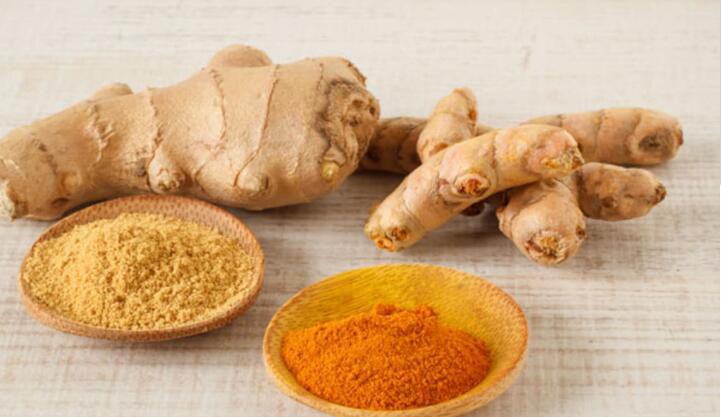
Rhizome: Deep yellow to orange, rough surface with ring-like markings and root scars.
Cross-section: Bright golden yellow.
Powder: Vibrant yellow, commonly used as a dye or seasoning.
Ginger
Rhizome: Pale yellow to gray-white, smoother skin, less fibrous.
Cross-section: Light yellow.
Powder: Pale yellow to off-white, darkens over time.
Aroma & Flavor
Turmeric
Aroma: Mild woody scent with peppery or citrus-like notes (similar to clove).
Flavor: Slightly bitter, less pungent, faintly sweet aftertaste. Needs larger amounts for noticeable taste.
Ginger
Aroma: Strong, fresh, and pungent, highly volatile.
Flavor: Spicy and warming, with a burning sensation. Raw ginger is sharper; cooking mellows the heat.
Key Compounds & Health Benefits
Turmeric
Active Compound: Curcumin (3–5%), known for antioxidant, anti-inflammatory, and antimicrobial effects.
Other Components: Volatile oils (e.g., cineole), polyphenols.
Traditional Uses: Promotes blood circulation, relieves menstrual pain.
Modern Research: Potential anticancer effects, may support Alzheimer's prevention, joint health (requires high doses or extracts).
Ginger
Active Compound: Gingerol (especially in fresh ginger), plus volatile oils (citral, camphor).
Other Components: Vitamin C, magnesium, potassium.
Traditional Uses: Warms the stomach, relieves nausea (motion sickness, morning sickness), used for colds and menstrual pain.
Modern Research: Helps reduce nausea, supports digestion, lowers inflammation, and may reduce cardiovascular risks.
Culinary Uses
Turmeric
Cooking: Essential for curry powders, turmeric rice (e.g., Indian Biryani), food coloring (e.g., Southeast Asian yellow cakes).
Pairings: Works well with black pepper and oils (enhance curcumin absorption).
Limitations: Mild taste, requires larger quantities for flavor or color. Excess may cause bitterness.
Ginger
Cooking: Widely used in Chinese cuisine (e.g., ginger scallion crab, ginger soup), Japanese/Korean dishes (e.g., sushi ginger), and Western recipes (e.g., gingerbread, tea).
Pairings: Blends well with brown sugar, lemon, honey to soften spiciness. Excellent for meat and seafood to reduce odor.
Medicinal/Culinary Uses: Ginger tea (sliced in hot water), candied ginger, or topical ginger juice for joint relief.
Selection & Storage
Turmeric
Selection: Choose firm rhizomes with bright orange interiors, free from mold. Powder should be pure and clean.
Storage: Keep in a cool, dry place away from light. Powder absorbs moisture easily-store in airtight containers or refrigerate.
Ginger
Selection: Opt for smooth-skinned, plump young ginger (tender and mild). Older ginger is more fibrous and pungent.
Storage: Store in a cool, ventilated area; bury in sand for freshness. Sliced ginger can be frozen (best used within one month).
Precautions
Turmeric
Excessive intake may cause digestive upset or stain skin/clothing.
Not recommended for pregnant women or those with gallstones (may stimulate the uterus or gallbladder).
Ginger
Eating on an empty stomach may irritate the stomach lining-best consumed after meals or with food.
Avoid excess if prone to mouth ulcers, heat symptoms, or insomnia (especially at night).