
When choosing skincare or cleansing products, one question often comes up: is soap acidic or base?
The answer isn't just a matter of chemistry-it directly affects your skin health, moisture balance, and even long-term skin condition.
This guide breaks it all down in a clear, practical way so you can make better product decisions (whether you're a consumer or in the personal care business).
Quick Answer: Is Soap Acidic or Basic?
Most traditional soap is alkaline (basic), not acidic.
Typical soap pH: 9–10
Skin's natural pH: 4.5–5.5 (slightly acidic)
This means that when you use regular soap, you are applying a product that is significantly more alkaline than your skin.
However, not all cleansing products are the same. Many modern alternatives-like pH-balanced cleansers or syndet bars-are designed to be closer to the skin's natural pH.
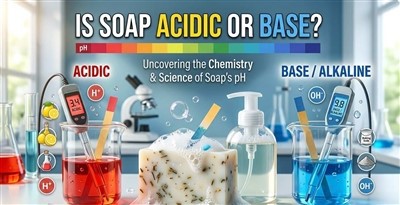
What Does pH Mean in Soap?
The pH scale measures how acidic or alkaline a substance is:
pH < 7 → Acidic
pH = 7 → Neutral
pH > 7 → Alkaline
Your skin naturally maintains a slightly acidic environment, often called the acid mantle, which:
Protects against bacteria
Maintains moisture
Supports the skin barrier
When a product's pH is too high (too alkaline), it can disrupt this balance.
Why Is Soap Usually Alkaline?
The answer lies in how soap is made.
The Saponification Process
Soap is created through a chemical reaction called saponification, where:
Oils or fats react with a strong base (like sodium hydroxide or potassium hydroxide)
This process naturally produces soap that is alkaline in nature.
Even after curing, true soap typically retains a pH above 8. This is why:
It cleans effectively (breaks down oils and dirt)
But may also strip natural skin oils
What Is the pH Level of Different Types of Soap?
Not all soaps are equal. Here's how different types compare:
1. Bar Soap
pH: 9–10
Most traditional and widely used
Strong cleansing ability, but can be drying
2. Liquid Soap
pH: 9–10 (sometimes slightly lower)
Made using potassium hydroxide
Generally milder in feel, but still alkaline
3. Handmade / Natural Soap
pH: 8–10
Often marketed as gentle
Still alkaline despite "natural" positioning
4. Castile Soap
pH: 9–10
Made from olive oil
Mild compared to some soaps, but not pH-balanced
5. Syndet Bars (Synthetic Detergent Bars)
pH: 5–7
Closest to skin's natural pH
Common in facial cleansers and sensitive skin products
Is Alkaline Soap Bad for Your Skin?
Not necessarily-but it depends on your skin type and frequency of use.
Potential Downsides
Using high-pH soap regularly may:
Disrupt the skin barrier
Cause dryness and tightness
Lead to irritation or sensitivity
Affect the skin microbiome
Why Some People Still Use It
Despite this, alkaline soap can still be suitable for:
Oily skin types
Body cleansing (less sensitive than facial skin)
Occasional deep cleaning
The key is balance and product selection.
Soap vs pH-Balanced Cleansers: What's the Difference?
Modern skincare has evolved beyond traditional soap.
Traditional Soap
Alkaline (pH 9–10)
Strong cleansing power
May disrupt skin barrier
pH-Balanced Cleansers
pH close to 4.5–5.5
Designed to protect skin barrier
Often used in facial skincare
Syndet Bars & Body Washes
Made with synthetic surfactants
Gentler on skin
Preferred for sensitive or dry skin
Bottom line: If skin health is your priority, pH-balanced products are usually the better choice.
How to Check the pH of Soap
If you want to verify a product's pH, here are a few methods:
1. pH Test Strips
Affordable and easy to use
Suitable for quick checks
2. Digital pH Meter
More accurate
Used in labs or manufacturing
3. DIY Testing
Dissolve soap in distilled water
Test the solution
Note: Most brands don't display pH on packaging, especially traditional soap products.
Which Soap Is Best for Different Skin Types?
Choosing the right cleanser depends heavily on skin type.
Sensitive Skin
Use pH-balanced cleansers
Avoid high-alkaline soap
Dry Skin
Choose moisturizing syndet bars or body washes
Look for added humectants
Oily Skin
Mild alkaline soap may help remove excess oil
Avoid over-cleansing
Acne-Prone Skin
Use low-pH cleansers to protect skin barrier
Combine with active ingredients if needed
Baby Skin
Always use mild, pH-balanced products
Avoid traditional soap
Frequently Asked Questions (FAQ)
Is Dove soap acidic or alkaline?
Most beauty bars like Dove are syndet-based, meaning they are closer to neutral or slightly acidic pH rather than traditional alkaline soap.
Can soap be pH neutral?
True soap is rarely neutral. If a product is pH 7 or below, it's usually not real soap but a synthetic cleanser.
Why is soap not recommended for the face?
Because facial skin is more delicate and sensitive to pH changes, alkaline soap can:
Disrupt the skin barrier
Cause dryness and irritation
Are natural soaps less alkaline?
Not necessarily. Even natural or handmade soaps are typically alkaline due to the saponification process.
Is liquid soap less alkaline than bar soap?
In most cases, no. Both are usually alkaline unless formulated as a pH-balanced cleanser.
Conclusion
So, is soap acidic or base?
Most traditional soap is alkaline, with a pH between 9 and 10.
While it remains an effective cleansing option, it may not always be the best choice for maintaining healthy skin-especially for sensitive or facial use.
As the personal care industry evolves, pH-balanced cleansers and syndet-based products are becoming the preferred solution for both consumers and brands aiming to protect the skin barrier.
FAQ
Q: Is soap acidic or alkaline?
A: Most traditional soap is alkaline, with a pH between 9 and 10 due to the saponification process. It is not acidic like the skin's natural pH.
Q: What is the pH level of soap?
A: The pH of most soaps ranges from 9 to 10, making them more alkaline than the skin, which typically has a pH of 4.5 to 5.5.
Q: Is alkaline soap bad for your skin?
A: Alkaline soap can disrupt the skin's natural barrier, leading to dryness and irritation, especially for sensitive or dry skin types. However, it may still work for oily skin or body cleansing.
Q: Can soap be pH balanced?
A: True soap is usually not pH balanced. Products labeled as pH-balanced are often synthetic cleansers (syndet) rather than traditional soap.
Q: Why is soap alkaline instead of acidic?
A: Soap becomes alkaline due to the chemical reaction between fats and strong bases (like sodium hydroxide) during saponification.
Is liquid soap less alkaline than bar soap?
No, both liquid and bar soaps are typically alkaline unless specifically formulated as pH-balanced cleansers.
Q: Is soap suitable for facial skin?
A: Traditional soap is generally not recommended for the face because its high pH can damage the skin barrier and cause dryness.
What type of cleanser is best for sensitive skin?
For sensitive skin, pH-balanced cleansers or syndet bars are the best choice, as they help maintain the skin's natural acidity.