


Why Turmeric Soap Is Having a Moment
You've probably noticed turmeric popping up in everything lately - lattes, face masks, supplements, and now soap. It's not just hype. People are getting tired of reading ingredient labels that look like a chemistry exam, and turmeric offers something refreshingly simple: a single golden root with centuries of skincare history behind it.
Add to that the surge in DIY skincare interest over the past few years, and you've got a perfect storm. People want to know exactly what's touching their skin.
The Skin Benefits People Actually Talk About
Here's what real users actually report (not the hype you'll find on overblown product pages): breakouts that calm down, a softer post-shower glow, and noticeably less redness around irritated spots. Turmeric contains curcumin, a compound with well-documented anti-inflammatory properties.
Some people notice their skin looks more even after a few weeks. Others reach for it specifically to deal with body acne. Just don't expect overnight miracles - skincare rarely works that way.
Store-Bought vs. Homemade: Is It Really Worth the Effort?
A decent artisan turmeric bar runs anywhere from $8 to $15. Making your own? Once your supplies are sorted, you're looking at maybe $2-3 per bar. And you control every single ingredient that goes in.
The trade-off is time and a small learning curve. But if you enjoy hands-on projects, it's genuinely fun.
What You'll Need Before You Start
Let me walk you through this like I'm right there in your kitchen with you. Don't overthink it - you've probably already got half of what you need sitting in a drawer.
Core Ingredients
The basics: turmeric powder (or fresh root, if you're feeling fancy), a soap base, a carrier oil, and any optional add-ins. Quality really does matter here. Cheap grocery-store turmeric works fine for cooking, but the pigment tends to be weaker. Go for organic, deep-orange powder, ideally sourced from India or Indonesia.
Choosing Your Soap Base
If you're taking the easy route, your melt-and-pour soap base will be the foundation of everything. Goat milk base is gentle and works well for sensitive skin. Shea butter base is rich and ideal for dry skin. Glycerin base is clear, letting the turmeric color show through beautifully, and it suits most skin types. African black soap base brings extra detoxifying power for acne-prone skin.
I personally go back and forth between goat milk and shea butter, depending on the season.
Picking the Right Natural Skincare Ingredients
Want to upgrade your bar? Add raw honey for moisture, finely ground oatmeal for gentle exfoliation, virgin coconut oil for lather, and a few drops of vitamin E to extend shelf life. Small additions, noticeable difference.
Essential Oils for Soap: What Pairs Well With Turmeric
Turmeric carries a faintly earthy scent, so what you pair it with really matters. Lavender brings a calming note and suits just about any skin type. Tea tree sharpens the acne-fighting angle. Lemongrass lifts both the aroma and your mood. Frankincense lends a luxurious, almost spa-like feel.
Start with 15-20 drops per pound of soap. You can always add more, but you can't take it back.
Tools and Equipment
You'll need a silicone mold (loaf-style or individual cavities), a double boiler or a microwave-safe glass bowl, a stirring spoon you don't mind staining, a kitchen thermometer, and gloves. An old apron isn't a bad idea, either. Turmeric stains. I really cannot stress that enough.

The Easy Method: Melt and Pour Turmeric Soap
This is where 90% of beginners should start. It's quick, forgiving, and you'll have usable bars within the hour.
Step 1: Prep Your Workspace
Cover your counter with parchment paper or an old towel. Measure out everything before you start melting - once that base goes liquid, you've got limited time to fumble around.
Step 2: Melt the Base
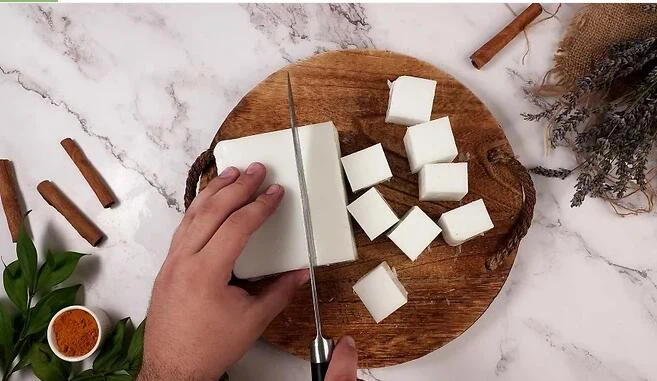
Cut your soap base into 1-inch cubes so it melts evenly. In a microwave, heat in 30-second bursts and stir between each one. With a double boiler, keep the water at a gentle simmer. You're aiming for roughly 120-140°F. Go any hotter and you risk a rubbery texture.
Step 3: Add Turmeric and Oils
The golden ratio (pun intended) works out to roughly 1 teaspoon of turmeric per pound of soap base. To keep it from clumping, blend the turmeric into a tablespoon of warm carrier oil first, then stir that slurry into your melted base. Save the essential oils for last, adding them once the mixture has cooled a bit to around 120°F.
Step 4: Pour, Set, and Unmold
Pour into your mold and immediately spritz the top with rubbing alcohol - this pops any surface bubbles. Let it sit undisturbed for 4-6 hours, or overnight if you can resist checking on it. Once firm, pop them out and store in a breathable container.
The Advanced Route: Cold Process Soap Making
Once you've got the melt-and-pour method down, you might feel the itch to go deeper. Cold process soap making is where the craft really opens up - full control over your recipe, genuine artisan quality, and bars that cure harder and milder over time.
Understanding Lye Safety First
Let's be honest: lye (sodium hydroxide) is caustic. Mishandle it and you can burn your skin or damage your lungs. Still, millions of people work with it safely every single day. Goggles, gloves, long sleeves. Add the lye to the water (never the other way around) in a well-ventilated space. Keep vinegar within reach for spills. That's about it.
A Simple Cold Process Turmeric Soap Recipe
Here's a beginner-friendly recipe that makes roughly 6–8 bars:
16 oz olive oil
10 oz coconut oil
6 oz shea butter
4.4 oz lye
10 oz distilled water
2 tsp turmeric powder
1 oz essential oil blend
Cool both the oils and the lye-water to about 100°F, keeping them separate. Combine the two and blend until you hit "trace" - the point where the mixture leaves a trail on the surface, a bit like thin pudding. Mix in the turmeric and essential oils, pour into your mold, then cover and leave undisturbed for 24-48 hours.
Curing and Patience
Here's the part nobody warns you about: cold process soap has to cure for 4-6 weeks. During that stretch, the water evaporates, and the bar gets harder and milder on skin. Use it too soon and it'll melt away quickly and feel harsh. Trust me, the wait pays off.
Common Mistakes I See People Make
I've made every one of these mistakes myself. Save yourself the trouble.
Using Too Much Turmeric
I get the temptation-more turmeric must mean more benefits, right? Wrong. Past a certain point, all you're making is a bar that temporarily tints your skin orange. Stick to the recommended ratios.
Skipping the Patch Test
Before lathering a new bar across your face, rub a little on your inner arm and give it 24 hours. Sensitive skin can react to essential oils, or even to turmeric itself. Two minutes of testing now spares you days of regret later.
Storing It Wrong
Sunlight will fade that beautiful yellow color, humidity causes the bars to sweat, and heat cuts shelf life short. Store your bars somewhere cool and dry, ideally wrapped in parchment or kept in a paper box.
How to Customize Your Bar
Here's where it gets fun. Once you've nailed the base recipe, you can tweak it to fit whatever your skin needs.
For Acne-Prone Skin
Add 10-15 drops of tea tree oil, a teaspoon of neem powder, and a tablespoon of activated charcoal. This combination really does work on stubborn breakouts.
For Dry or Mature Skin
Bump up the shea butter, stir in a tablespoon of raw honey, and add a few drops of rosehip oil. The bar comes out almost buttery to the touch.
For Brightening and Even Tone
Pair turmeric with licorice root powder or papaya enzyme. Both are gentle, natural options that complement turmeric without being harsh.
How Long Does Homemade Turmeric Soap Last?
Melt and pour bars typically last 6-12 months. Cold process bars, properly cured, can last 12-18 months - and they actually improve during the first few months. Signs your soap has gone bad include orange spots (known as "DOS," or dreaded orange spots), a rancid smell, or a slimy texture. When in doubt, toss it.
Final Thoughts: Is Making Turmeric Soap Worth It?
Honestly? Yes. There's something deeply satisfying about lathering up with a bar you made yourself - knowing exactly what went into it, having tweaked the recipe to suit your skin. It isn't just about saving money (though that's a nice perk). It's about reclaiming a small piece of your daily routine.
Your first batch probably won't be Instagram-perfect. Mine sure wasn't - I ended up with something that looked like a brick of mustard. By batch three, though, I was hooked. Start simple, experiment as you go, and don't be afraid to mess up. That's literally how every soap maker I know got good at this.
Go stain your kitchen yellow. You'll thank yourself later.
FAQ
Q: Will Turmeric Soap Stain My Skin Or Towels?
A: It can if you use too much or let it sit on your skin too long. Stick to the recommended ratio, rinse thoroughly, and dry off with older towels. Light staining usually washes off within a day or two.
Q: Can I Use Fresh Turmeric Root Instead Of Powder?
A: Yes, but it's a bit trickier. You'll need to grate it finely and steep it in your carrier oil for several days to infuse the color. Fresh root produces a more natural pigment, though it has a shorter shelf life. Powder is easier for beginners.
Q: Is Homemade Turmeric Soap Safe For The Face?
A: Generally yes, particularly the gentler melt-and-pour versions built on a goat milk or shea butter base. Limit use to once a day on your face, steer clear of the eye area, and always follow up with a moisturizer.
Q: How Often Should I Use Turmeric Soap?
A: Most people see good results using it 3-4 times a week. Daily use is fine on the body, but for the face, alternating with a gentle cleanser tends to work better.
Q: Can Kids Use Turmeric Soap?
A: For kids over 3, a gentler version without essential oils usually works well. Skip tea tree and other strong oils for younger children, and always do a patch test first. For babies, stick with cleansers your pediatrician recommends.
Q: Why Did My Soap Turn Brown Instead Of Golden Yellow?
A: Most likely causes: overheating during the melt, oxidation from air or light exposure, or sub-par turmeric to begin with. Drop your melting temperature, keep finished bars out of direct light, and source fresh turmeric powder with deep pigmentation.


