


There's a quiet little movement happening in laundry rooms these days. People are skipping the detergent aisle entirely and mixing up their own soap on the kitchen counter. If that sounds like too much fuss, stick with me for a minute.
The truth is, making laundry soap is easier than baking cookies. No special skills, no weird gadgets. Just a few cheap ingredients and about fifteen minutes of your time. And yes, your clothes come out clean. Really clean.
This guide walks you through the whole thing, from why folks bother to the exact steps for both powder and liquid versions. Let's get into it.
Why People Are Making Their Own Laundry Soap
I'll be honest, I rolled my eyes the first time a friend told me she made her own detergent. It sounded like one of those overly ambitious hobbies. Then she showed me her grocery bill, and I started paying attention.
A few things are pushing people in this direction. Detergent prices have crept up year after year. Folks are reading ingredient labels more closely. And there's a genuine satisfaction in making something useful with your own hands.

The Cost Factor
Here's the part that surprises everyone. A commercial detergent might run you 20 to 30 cents per load. A homemade batch? Often under 5 cents.
The upfront cost feels a touch higher because you're buying ingredients in bulk. But those boxes of washing soda and borax stretch across months and months of laundry. You buy once and forget about it for a long while.
Cleaner Ingredients, Fewer Surprises
Some people just like knowing what's in their wash. When you make it yourself, there's no mystery list of dyes, fillers, or fragrances you can't pronounce.
This matters a lot in households with sensitive skin, eczema flare-ups, or babies. You control every single thing that touches your family's clothes. That kind of peace of mind is hard to put a price on.
What You'll Need: Natural Laundry Detergent Ingredients
Before any mixing happens, let's talk shopping. The good news is the list is short, and you'll find most of it at any grocery or hardware store.
The Three Building Blocks
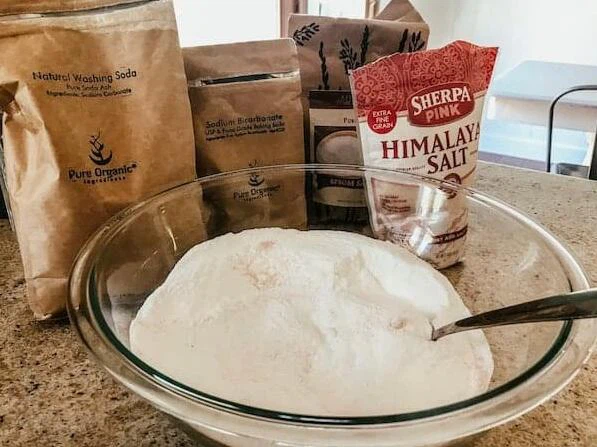
The whole system rests on three items. Washing soda softens water and lifts grime. Borax boosts cleaning power and helps with odors. And grated bar soap is the workhorse that actually breaks down dirt and oils.
That's the core trio. Washing soda and borax do the heavy lifting on stains, while the grated soap handles the everyday gunk. Together they cover almost everything a regular load throws at them.
Optional Add-Ins
A few extras can elevate your batch, though none are required. A handful of drops of essential oil gives your laundry a light scent. Oxygen bleach helps keep whites bright.
Think of these as nice-to-haves. Your soap works perfectly fine without them, so don't feel pressured to buy everything at once.
Tools You Probably Already Own
No fancy equipment here. You need a cheese grater, a large bucket or jar, a spoon for stirring, and some kind of container to store the finished product.
That's genuinely it. If you've got a kitchen, you've already got what you need.
How To Make Powdered Laundry Soap
Let's start with powder because it's the most forgiving recipe for first-timers. There's no melting, no waiting, and almost nothing can go wrong.
Step-by-Step Homemade Laundry Detergent Recipe
Grate one bar of soap using the fine side of your cheese grater. You want small flakes that mix in easily.
Add one cup of washing soda and one cup of borax to the grated soap.
Stir everything together thoroughly until the mixture looks even and consistent.
Pour it into an airtight container and you're done.
This basic batch yields roughly 30 to 40 loads. Want more? Just keep the same ratio and scale it up. A bigger bucket lasts most households a couple of months.
How Much To Use Per Load
Here's where people trip up. They're so used to those big detergent scoops that they overdo it badly.
You only need one to two tablespoons per load. That's it. A little goes a long way with homemade soap, and using more won't make clothes any cleaner.
How To Make DIY Liquid Laundry Soap
If you prefer something pourable, or you've got an HE washer, the liquid version might suit you better. It takes a bit more effort but works beautifully.
The Melt-and-Mix Method
Start by dissolving your grated bar soap in about four cups of hot water on the stove. Stir gently until it fully melts and the water turns cloudy.
Then mix in your washing soda and borax, stirring until everything dissolves. Pour this into a larger container with more water to dilute. As it cools, don't panic when it turns into a strange gel-like texture. That's completely normal.
Storing and Shaking
Liquid batches tend to separate over time, with the gel settling at the bottom. The fix is simple: give the container a good shake before each use.
An old detergent jug or a large glass jar works great for storage. A well-made batch keeps for several weeks without trouble.
Powder vs. Liquid: Which Should You Choose?
Both clean well, so it really comes down to your situation. Powder is faster to make and stores forever, which makes it the easy default.
Liquid dissolves better in cold water and tends to play nicer with hard water. If your machine struggles with powder residue, or you wash a lot of cold loads, liquid is worth the extra step.
| Factor | Powder | Liquid |
|---|---|---|
| Prep time | About 15 minutes | 30 to 40 minutes |
| Shelf life | Many months | A few weeks |
| Cold water | Can leave residue | Dissolves well |
| Storage space | Compact | Bulky |
Tips For Better Results
A good batch and a great batch usually come down to a few small details. Here's what I've picked up along the way.
Match It To Your Water
Water hardness changes everything. Hard water needs a little more soap to cut through the minerals, while soft water needs noticeably less.
If you're not sure what you've got, start small and adjust. You'll figure out your sweet spot within a few loads.
Tackling Stains and Odors
Homemade soap handles daily dirt fine, but tough stains still deserve a pre-treat. Rub a little of the soap directly on the spot before washing.
For stubborn odors or dingy whites, toss in a scoop of oxygen bleach. It brightens without the harsh edge of chlorine bleach.
What To Avoid
The biggest mistake is using too much soap, which leaves residue and stiff clothes. Less truly is more here.
Also, choose your bar soap wisely. Skip the heavily moisturizing bars, since the added oils can build up in fabric. And never skip the grating step, because chunks won't dissolve properly.
Is Homemade Laundry Soap Safe For All Machines?
This is where things get a little contested, so let me be straight with you. High-efficiency (HE) washers are designed for low-sudsing detergent, and that's exactly where homemade soap raises eyebrows.
The good news? Homemade soap is naturally low-sudsing, which actually fits HE machines well. The trick is using less than you think and making sure everything dissolves fully.
If you're nervous, lean toward the liquid recipe and use a smaller amount. Plenty of HE owners run homemade soap without a hitch, but it's smart to start conservatively and watch how your machine responds.
Frequently Asked Questions
Q: Does Homemade Laundry Soap Really Clean As Well As Store-Bought?
A: For everyday laundry, yes, it holds its own nicely. Commercial detergents do have an edge on heavy grease and set-in stains thanks to enzymes. But for normal dirt, sweat, and general freshening, a homemade batch with washing soda and borax does the job well.
Q: Can I Use It In A High-Efficiency (HE) Washer?
A: You can, with a couple of tweaks. Use less soap than you would in a standard machine, and favor the liquid version so it dissolves completely. Since homemade soap doesn't suds up much, it's generally compatible, just go light to be safe.
Q: Is It Safe For Sensitive Skin And Babies?
A: It can be one of the gentler options, especially when you make it fragrance-free with a plain bar soap. That said, everyone's skin is different. Wash a small item first and watch for any reaction before committing to the whole laundry pile.
Q: How Long Does A Batch Last?
A: Powder keeps for many months in an airtight container since it stays dry and stable. Liquid is more perishable and is best used within a few weeks. Either way, store it sealed and away from moisture.
Q: What's The Difference Between Washing Soda And Baking Soda?
A: People mix these up constantly. Baking soda is sodium bicarbonate, gentle and mild, good for deodorizing. Washing soda is sodium carbonate, far stronger and more alkaline, which is what gives it real cleaning power. They're cousins, not twins, so don't swap one for the other in your recipe.


