
If you've ever stared at a shower wall and wondered whether you're looking at glass or some kind of frosted, crusty fossil - welcome. This guide is for you. No miracle promises, no sponsored fluff. Just what actually works on buildup that's been quietly growing for years.
What Soap Scum Really Is?
Most everyday sprays don't stand a chance against years of buildup. There's a reason for that, and it has nothing to do with how hard you scrub.
The Chemistry Behind the Crust
When soap meets hard water, the calcium and magnesium in that water react with the fatty acids in the soap. The result? A waxy, chalky film that bonds to surfaces almost like a coat of varnish. Given enough time, that film dries, hardens, and flat-out refuses to budge.
Think of it less like dirt and more like a thin coat of paint - one that builds up a little more with every shower.
Why Old Buildup Is So Stubborn
Here's what nobody warns you about: soap scum builds in layers. Every shower deposits another thin film over the last one. After a few years, you're not scrubbing one layer-you're scrubbing dozens, cemented together by body oils, dead skin, and limescale.
That's why it can feel more like cement than ordinary grime.
Soap Scum vs. Hard Water Stains vs. Mildew
Quick check before you reach for a product. Soap scum looks waxy and whitish. Hard water stains are chalky, sometimes with rust or rainbow tones mixed in. Mildew is fuzzy, dark, and tends to settle into corners. Each one calls for a different approach, so take a close look before you start spraying.
Before You Start: A Quick Prep Checklist
Boring? Sure. But skip it, and you'll either wreck a surface or end up with a headache. Literally.
Safety First
Open a window. Switch on the fan. Put gloves on. And please - never mix bleach with vinegar or ammonia. Those fumes are no joke. Safety glasses aren't overkill either, especially when you're scrubbing overhead.
Tools That Make a Real Difference
Non-scratch scrub pads (never steel wool)
An old toothbrush for grout lines and corners
A plastic putty scraper - your go-to weapon when buildup gets thick
A few microfiber cloths
A spray bottle you won't mind setting aside just for cleaning
Know Your Surface
This part trips people up. Acidic cleaners will etch natural stone. Vinegar can dull brushed nickel. Abrasive pads will scratch acrylic tubs into oblivion. And colored grout? It can fade if you go too aggressive. When in doubt, test a hidden corner first.
The DIY Method: Vinegar and Baking Soda Cleaning (For Real This Time)
Yes, it's the internet's favorite combo. But most people rush through it and then wonder why it didn't work. Let's slow down.
Step 1: Heat the Vinegar
Warm white vinegar works dramatically better than cold. Pop a cup or two in the microwave for about a minute. You want it hot enough that you can feel the warmth through the bottle, but not boiling.
Step 2: Soak, Don't Spray-and-Wipe
This is where most people get it wrong. Soak paper towels or old rags in warm vinegar, then press them flat against the buildup. Leave them for 30 to 60 minutes, giving them another spray of vinegar if they start to dry out. A little patience now saves an hour of scrubbing later.
Step 3: Bring in the Baking Soda Paste
Mix baking soda with a few drops of dish soap until the consistency resembles cake frosting. Pull off the vinegar towels and spread the paste directly over the softened scum. You'll hear a faint fizz - that's the reaction breaking the bond loose.
Step 4: Scrub in Circles, Not Lines
Circular motion breaks the seal of old scum far better than back-and-forth strokes. Straight lines just shove the gunk around. Circles lift it.
Step 5: Rinse with Hot Water
Cold water can actually re-harden the mineral residue. Hot water flushes everything out clean. A handheld shower head makes this job a lot easier.
When DIY Isn't Enough: Going Commercial
Sometimes baking soda just can't cut through a decade of grime. No shame in calling in reinforcements.
One rule: read the label, then read it again.
Choosing a Hard Water Stain Remover
Check the active ingredient first. Phosphoric acid hits hard and fast. Sulfamic acid works much the same way, just a bit gentler. Citric acid is the mildest, and it's the safest pick for routine use - that's what shows up in the more eco-friendly products. When you're dealing with years of buildup, phosphoric or sulfamic usually comes out ahead.
The Dish Soap + Vinegar Spray Hybrid
Mix equal parts warm vinegar and blue dish soap in a spray bottle, then shake gently. This combo has earned its reputation for good reason. The soap helps the vinegar cling to surfaces instead of sliding right off, and together they cut through moderate buildup with surprisingly little scrubbing.
Surface-by-Surface Cleaning Guide
A glass door and a fiberglass tub call for completely different approaches. Treating them the same is exactly how surfaces get ruined.
Glass Shower Doors
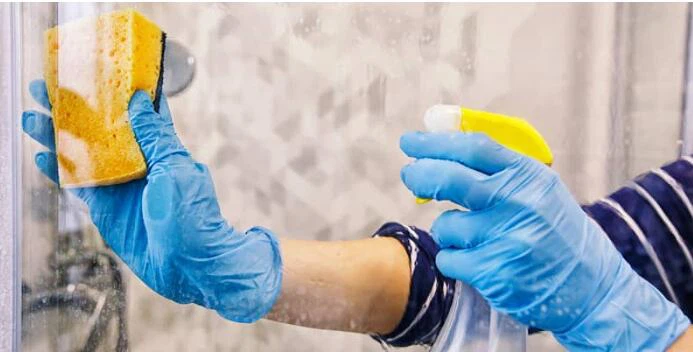
Start with the vinegar soak, then tackle any stubborn spots using a plastic scraper held at a shallow angle. Finish up with a Magic Eraser, applying only light pressure, and the glass will come back to that clear, nearly-new finish. Steer clear of abrasives.
Tile and Grout
Grout is porous, so it needs a longer soak - sometimes a full hour with a baking soda paste. Then go after it with an old toothbrush. Honestly, this beats most "miracle" grout products out there.
Fiberglass and Acrylic Tubs
Gentle is the rule. Skip abrasives. Don't let acidic cleaners sit longer than 10 minutes, or you risk dulling the finish. A paste of baking soda and dish soap is usually all it takes.
Chrome Fixtures and Showerheads
Here's the classic trick: fill a plastic bag with vinegar, tie it around the showerhead so the nozzles sit fully submerged, and let it soak overnight. Rinse it off in the morning. The mineral buildup pretty much washes right away.
How To Keep Soap Scum From Coming Back
This is the part most articles skip. A one-time cleaning means nothing if the scum is back in three weeks.
The 60-Second Daily Habit
Keep a squeegee in the shower. Once you're done bathing, run it across the walls and door. It takes less time than brushing your teeth, and it's the single biggest reason some showers stay crystal clear for years.
Switch to Liquid Body Wash
Bar soap is the main culprit here. Liquid washes contain far fewer of the fatty acids that bind to hard water minerals. Switch over and you'll cut buildup by more than half.
Consider a Water Softener
If your home deals with seriously hard water, this is the real long-term fix. Yes, it's an investment, but it ends the war instead of just winning one battle. Your appliances will thank you, too.
Weekly Maintenance Spray Recipe
Mix one cup of warm water, one cup of white vinegar, and a tablespoon of dish soap in a spray bottle. Once a week, give the walls a spritz after your shower. No need to rinse - just walk away. It stops anything from settling in.
Mistakes That Make Soap Scum Worse
A few things to steer clear of: steel wool on glass (you'll scratch it instantly), mixing bleach with anything acidic (toxic fumes), scrubbing dry surfaces (all you're doing is grinding grit into them), and reaching for a dirty cloth that just smears the film around instead of lifting it off. One more: spraying cleaner and wiping it off right away. Give the product time to sit. That's where the real work happens.
FAQ
Q: Can Years Of Soap Scum Permanently Damage My Shower?
A: Yes, unfortunately. Left long enough, the acidic byproducts in old scum can etch glass into a permanent foggy haze. Grout starts to crumble. Metal fixtures pit over time. Past a certain point, no cleaner will bring the surface back - the material itself has been altered. So sooner is always better than later.
Q: How Long Should I Let Vinegar Sit On Soap Scum?
A: For light buildup, 15 to 20 minutes does the job. On years-old scum, stretch it to 45 to 60 minutes and re-wet as needed. Going past an hour brings diminishing returns and can dull certain surfaces.
Q: Is It Safe To Use A Magic Eraser On Glass Shower Doors?
A: Yes, with light pressure. Magic Erasers are mildly abrasive at the microscopic level, which is exactly why they work. Just keep them away from glossy paint, brushed metal, or natural stone, since they can dull the finish.
Q: What's The Fastest Commercial Bathroom Shower Cleaner For Thick Buildup?
A: Acidic cleaners (phosphoric or sulfamic acid based) cut through mineral-heavy buildup the fastest. Alkaline cleaners do a better job on greasy, oily scum. Not sure which one you're up against? Start with an acidic cleaner - most years-old buildup is mineral-heavy.
Q: Why Does Soap Scum Come Back So Quickly After Cleaning?
A: Three things stacking on top of each other: hard water, bar soap, and skipping the daily wipe-down. Take any one of those out of the picture and you'll slow it down dramatically. Take all three out and it pretty much stops coming back.
Q: Can I Use A Steam Cleaner Instead?
A: Steam works wonders on softer, recent buildup and grout grime, loosening everything without chemicals. But on years-old hardened scum, steam by itself falls short. It softens the surface, yet it won't dissolve the mineral bond. Pair it with vinegar for the best results.